
Quick answer
February is one of the best months for Kalpitiya. Dolphin watching is at its peak, with large pods of spinner dolphins, sometimes hundreds strong, seen offshore on many trips. The sea is calm and the weather dry. Kitesurfing is possible in the lighter secondary season, roughly December to March, though the main windy season is May to October. Beaches are quiet. Kalpitiya is about three hours from the airport and an hour from Wilpattu, making it easy to combine with a safari.
Key takeaways
- February is peak dolphin season off Kalpitiya.
- Pods of spinner dolphins can number in the hundreds.
- Kitesurfing is possible in the lighter December to March season.
- Beaches are quiet, with few visitors.
- Wilpattu is about an hour away, easy to combine.
Kalpitiya's weather in February
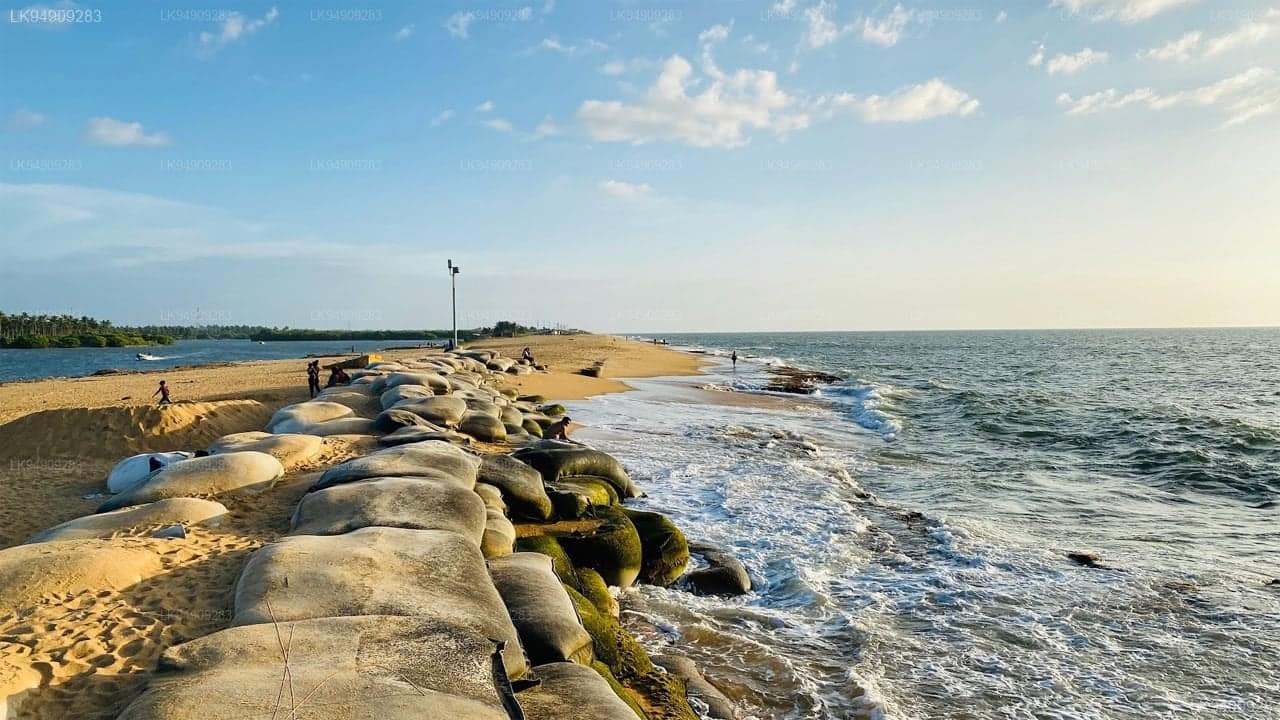
Kalpitiya lies in the dry zone on the north-west coast. February is one of its driest months, with sunny days around 30 to 31°C and warm nights.
The sea is calm on most mornings, which is ideal for dolphin watching. Winds pick up in the afternoon, giving kitesurfers lighter winds than in the main season.
The landscape is flat and sandy, with lagoons, salt pans and coconut palms.
The peninsula has a different feel from the rest of the coast. Fishing villages, small churches and mosques sit among coconut groves, and the lagoon shore is lined with salt pans and prawn farms. Life moves slowly, which suits a short break between the Cultural Triangle and the airport.
- →Dry and sunny, 30 to 31°C.
- →Calm seas in the morning.
- →Light afternoon winds.
Dolphin watching
Kalpitiya's dolphin season runs roughly from November to March or April, and February is often its peak. Large pods of spinner dolphins, sometimes hundreds strong, are seen leaping and spinning offshore. Bottlenose dolphins and occasionally whales are also seen.
Boats leave early in the morning, around 6 to 7am, when the sea is calmest. Trips last about two to three hours. Sightings are very common in February but not guaranteed.
Choose operators that keep a respectful distance and do not chase or surround the dolphins.
Seeing a big pod is an extraordinary experience. Dolphins surround the boat, leaping and spinning in all directions, sometimes for half an hour or more. Photographs rarely do it justice, so many visitors put the camera down for at least part of the encounter.
- →Season: November to March or April.
- →Pods can number in the hundreds.
- →Boats leave early in the morning.
Kitesurfing
Kalpitiya is one of the best kitesurfing spots in South Asia. The main season, with strong, steady winds, runs from about May to October. A lighter secondary season runs from about December to March.
In February the winds are lighter and less consistent, but kitesurfing is still possible on many afternoons, especially on the lagoon, which has flat, shallow water ideal for beginners.
Kite schools offer lessons and equipment rental. Check wind forecasts and school schedules before booking.
- →Main season: May to October.
- →Secondary season: December to March.
- →Lagoon: flat and shallow for beginners.
Beaches and other activities
Kalpitiya's beaches are long, wide and quiet, with few visitors even in February. Swimming is possible on calm days, though there are few facilities.
Bar Reef, offshore, is one of Sri Lanka's largest coral reefs, though its health has been affected by bleaching. Snorkelling trips can be arranged on calm days.
The lagoon and salt pans are good for birdwatching, with flamingos and other waders seen in some years.
Accommodation is mostly in eco-lodges, kite camps and small boutique hotels set along the beach or the lagoon. Many offer cabanas, simple restaurants and arranged excursions, and the overall feel is relaxed and low-key rather than resort-led.
Combining Kalpitiya with Wilpattu
Wilpattu National Park is about an hour from Kalpitiya by road, or by boat across the lagoon to some entrances. February is a good month for Wilpattu, as the park is drying out and wildlife gathers at the waterholes.
A combination of two nights in Kalpitiya and one or two nights near Wilpattu makes a rewarding wildlife-focused break.
The planners at Lankan Stays & Trails often suggest Kalpitiya and Wilpattu together in February for travellers who want dolphins, leopards and quiet beaches away from the classic route.
Frequently asked questions
Is February a good time to visit Kalpitiya?
Yes. February is often the peak of the dolphin season, with large pods of spinner dolphins seen on many trips. The sea is calm, the weather dry and the beaches quiet. Kitesurfing is possible in the lighter secondary season.
When is dolphin season in Kalpitiya?
Roughly from November to March or April, with February often the peak. Large pods of spinner dolphins, sometimes hundreds strong, are seen offshore. Boats leave early in the morning, when the sea is calmest.
Can I kitesurf in Kalpitiya in February?
Yes, in the lighter secondary season, roughly December to March. Winds are lighter and less consistent than in the main season from May to October. The lagoon has flat, shallow water ideal for beginners. Check forecasts and school schedules.
How far is Kalpitiya from Wilpattu?
About an hour by road, or by boat across the lagoon to some entrances. February is a good month for Wilpattu, and many travellers combine the two for a wildlife-focused break with dolphins, leopards and quiet beaches.
How far is Kalpitiya from the airport?
About three hours by road, depending on traffic. Kalpitiya can be visited at the start or end of a trip, or combined with Wilpattu and Anuradhapura on a route through the north-west.
Is Kalpitiya quiet in February?
Yes. Even in peak season, Kalpitiya sees few visitors compared with the south coast. Beaches are long and empty, and accommodation is spread out. Kite camps are the busiest places, but the atmosphere stays relaxed.
How many nights should I spend in Kalpitiya?
Two nights is enough for a dolphin trip, a lagoon outing and some quiet beach time. Kitesurfers often stay a week or more. Adding one or two nights near Wilpattu makes a rewarding wildlife-focused break of four to five nights in total.
Can I see whales from Kalpitiya?
Occasionally. Sperm whales and other species are sometimes seen on longer boat trips from Kalpitiya, mainly from about December to March. Dolphins are the main attraction and are far more reliable. For blue whales in February, Mirissa on the south coast is the better choice.