
Quick answer
February is a good month for Wilpattu. The north-east monsoon rains have ended, the forest is green and the villus, natural lakes, are full but starting to shrink, drawing wildlife to their edges. Leopards, sloth bears, elephants, spotted deer, crocodiles and many birds are seen, though sightings take patience in the dense forest. Wilpattu is much quieter than Yala. Full-day or half-day drives start at about 6am, and the park is about an hour from Anuradhapura or Kalpitiya.
Key takeaways
- Wilpattu is drying out in February, with wildlife gathering at the villus.
- Leopards and sloth bears are present, though sightings take patience.
- The park is much quieter than Yala, with fewer jeeps.
- Full-day drives give the best chance of seeing the park's highlights.
- Anuradhapura and Kalpitiya are both about an hour away.
Wilpattu in February
Wilpattu lies in the north-western dry zone and receives most of its rain from the north-east monsoon, between about October and January. By February the rain has usually stopped, the days are dry and sunny, and temperatures reach about 30 to 32°C in the afternoon.
The forest is still green after the rains, and the villus are full. As February goes on, water levels begin to drop and the grass around the lakes shortens, which makes animals easier to see. The best months for wildlife are usually from about February to September, before the next monsoon.
Mornings are cool and fresh in the jeep, while afternoons can be hot. A light layer for the early start and a hat and sunscreen for later are both useful.
- →Dry and sunny, 30 to 32°C by afternoon.
- →Green forest, full villus.
- →Wildlife viewing improving through the month.
The villus and the landscape
The villus are shallow, rain-fed lakes that give Wilpattu its name, which is often translated as land of lakes. There are dozens of them across the park, surrounded by open grass and backed by dense forest. They are the centre of life in the dry months.
Driving from one villu to the next, through forest tracks of red sand, is the rhythm of a Wilpattu safari. Animals emerge from the trees to drink and graze, and patient waiting at a villu often pays off more than driving fast between them.
The landscape feels wilder and more enclosed than Yala's open scrub, with fewer roads and long stretches of forest without another jeep in sight.
- →Dozens of rain-fed lakes.
- →Red sand tracks through dense forest.
- →Wait at the villus for wildlife.
Wildlife to look for
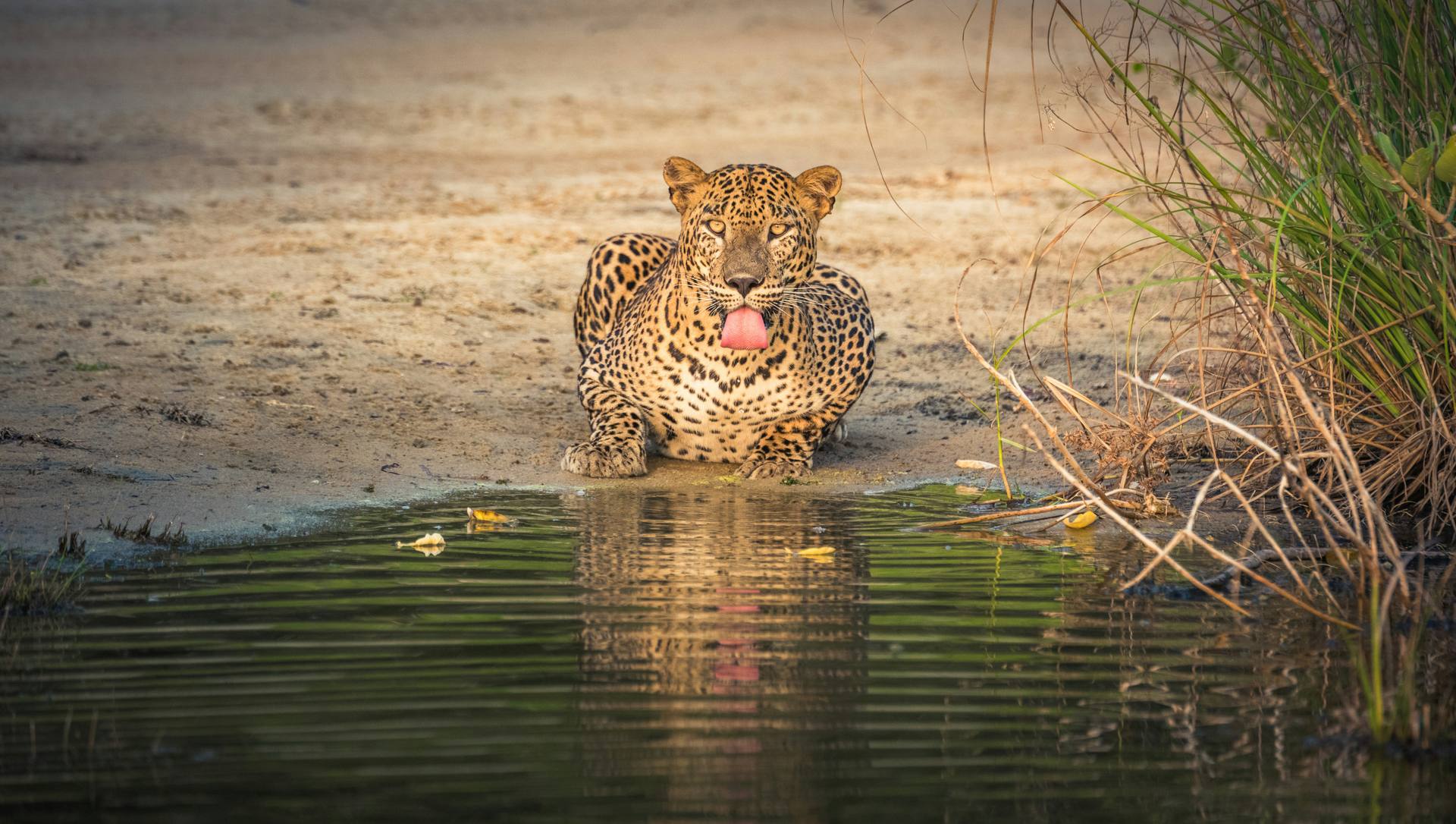
Leopards are Wilpattu's most famous residents, and the park has a healthy population. Sightings are less frequent than in Yala's busiest block because the forest is dense and the park large, but encounters, when they happen, are often uncrowded and long.
Sloth bears are seen more often in Wilpattu than in most other parks, especially later in the dry season when the palu trees fruit. Elephants, spotted deer, sambar, wild boar, mugger crocodiles and water buffalo are common.
Birdlife is excellent, with painted storks, eagles, peacocks, junglefowl and kingfishers around the villus. Migrant birds are present in February.
- →Leopards: present, sightings take patience.
- →Sloth bears: better odds than most parks.
- →Elephants, deer, crocodiles and birds.
Planning your drives
The park opens around 6am, and the main entrance at Hunuwilagama is about 45 minutes from Anuradhapura. Because Wilpattu is so large, a full-day drive, from opening until the afternoon with a packed lunch, gives the best chance of reaching the more distant villus.
Half-day drives, in the morning or afternoon, cover the closer areas. Morning drives tend to have the best wildlife activity and the most comfortable temperatures.
Jeeps and trackers can be arranged through hotels and lodges near the entrance. Entry tickets are bought at the park gate on the day.
Why Wilpattu feels quieter than Yala
Wilpattu receives far fewer visitors than Yala, partly because it is further from the classic route and partly because its dense forest makes sightings less instant. In February it is still quiet, even at the peak of the season.
That quiet is the main reason many travellers choose it. When a leopard is found, there may be only a handful of jeeps rather than dozens, and the experience is calmer for both visitors and animals.
For travellers who have already seen Yala, or who prefer a wilder feel, Wilpattu is often the more memorable park.
- →Far fewer jeeps.
- →Calmer sightings.
- →Wilder atmosphere.
Combining Wilpattu with other places
Wilpattu is about an hour from Anuradhapura, which makes a natural pairing with the ancient city and the Cultural Triangle. It is also about an hour from Kalpitiya, where February is peak season for spinner dolphins.
A route of Negombo, Kalpitiya, Wilpattu and Anuradhapura makes a rewarding start to a trip before continuing to Sigiriya and the classic route.
The planners at Lankan Stays & Trails often build a north-western loop for February travellers who want leopards without the crowds, with a full-day drive in Wilpattu and dolphins at Kalpitiya.
Where to stay
Lodges, safari camps and guesthouses sit just outside the park near Hunuwilagama, making early starts easy. Some offer tented camps with a sense of being in the wild, while others are simple and practical.
Anuradhapura, about 45 minutes away, has more choice of hotels and is a good base if you are combining the park with the ancient city.
Book a few months ahead for February, as the best lodges near the entrance have few rooms.
Frequently asked questions
Is February a good time to visit Wilpattu?
Yes. The monsoon rains have ended, the forest is green and the villus are full but starting to shrink, drawing wildlife to their edges. Viewing improves through the month and into the dry season. Wilpattu is also much quieter than Yala, even in February.
Can I see leopards in Wilpattu in February?
Yes, there is a good chance, though sightings take more patience than in Yala's busiest block because the forest is dense and the park large. A full-day drive improves the odds. When leopards are found, there are usually far fewer jeeps around them.
Is Wilpattu better than Yala?
It depends on what you want. Yala has more frequent leopard sightings but is busy, especially in Block 1. Wilpattu is larger, quieter and wilder, with good odds of sloth bears. Many wildlife lovers prefer Wilpattu for its calm and atmosphere.
Should I do a full-day or half-day safari in Wilpattu?
A full-day drive gives the best chance of reaching the more distant villus and seeing the park's highlights, as Wilpattu is very large. Half-day drives cover the closer areas and suit travellers short on time. Morning drives usually have the best wildlife activity.
How far is Wilpattu from Anuradhapura?
About 45 minutes to an hour to the main entrance at Hunuwilagama. That makes Wilpattu easy to combine with the ancient city. Kalpitiya, the dolphin and kitesurf area, is also about an hour away.
Can I see sloth bears in Wilpattu?
Yes, Wilpattu is one of the better parks for sloth bears. Sightings are more common later in the dry season, when the palu trees fruit, but they are possible in February. Bears are shy, so patience and a good tracker help.