
Quick answer
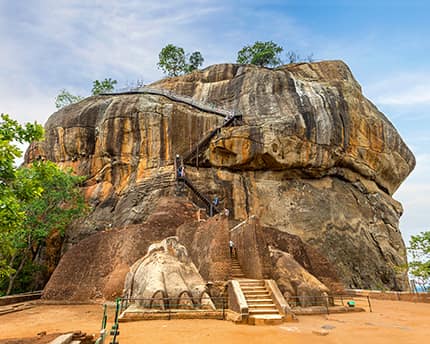
Day 3 of the 10-day Sri Lanka itinerary for Turkish travellers is dedicated to climbing Sigiriya Rock, a fifth-century royal citadel roughly 200 metres above the surrounding plain, reached via roughly 1,200 steps and taking around three to four hours return at a comfortable pace. Starting by 7am, ideally earlier, avoids both the midday heat and the largest tour groups, and the climb passes the Mirror Wall, ancient frescoes and the Lion's Paw entrance before reaching the summit ruins. The rest of day three is left free for lunch and rest, since the climb itself is the day's main activity.
Key takeaways
- Sigiriya Rock rises roughly 200 metres above the plain and is climbed via approximately 1,200 steps, some of them steep metal staircases.
- Starting by 7am, or earlier, is the single best way to avoid both the heat and the busiest tour-group periods, roughly mid-morning onward.
- The climb passes the Mirror Wall and the surviving Sigiriya frescoes before reaching the Lion's Paw entrance to the final ascent.
- A return climb takes roughly three to four hours at a comfortable pace, including time to rest and take in the views.
- Sigiriya is a UNESCO World Heritage Site and the single most recognisable landmark of Sri Lanka's Cultural Triangle.
Why an early start matters more than anything else
Sigiriya has almost no shade for most of the ascent, and by mid-morning both the heat and the number of visitors climb noticeably. A start by 7am, arranged the evening before with your driver-guide, is the single decision that most affects how enjoyable the climb feels.
An early start also means reaching the summit while the light is still soft, generally the best time for photographs across the surrounding forest and the Cultural Triangle's flat plain stretching toward the horizon.
What the climb actually involves
The ascent covers roughly 1,200 steps in total, a mix of stone stairways through the lower gardens and steeper metal staircases fixed to the rock face for the final stretch. It is not a technical climb, but it does require reasonable fitness and a head for heights on the exposed upper sections.
Along the way, the route passes the Mirror Wall, once polished enough to reflect the king's image, and a sheltered gallery holding the surviving Sigiriya frescoes, before reaching the Lion's Paw platform where the final staircase to the summit begins.
- →Total steps: roughly 1,200, including stone stairways and metal staircases.
- →Return time: roughly three to four hours at a comfortable pace with rest stops.
- →Key waypoints: the Mirror Wall, the Sigiriya frescoes gallery, and the Lion's Paw entrance.
At the summit
The summit holds the foundations of the fifth-century royal palace built by King Kashyapa, along with a small pool cut into the rock and sweeping views over the surrounding forest and, on a clear day, toward Pidurangala rock nearby.
It is worth spending genuine time at the top rather than rushing back down; the summit is the reward for the climb, and the crowds that build later in the morning make an early visit noticeably calmer.
Practicalities for the climb
Comfortable closed shoes with grip are worth prioritising over sandals given the metal staircases, and a hat, sunscreen and at least a litre of water per person are essential given the lack of shade on most of the route.
Entry tickets for foreign visitors are priced separately from the local resident rate, standard practice at Sri Lankan heritage sites, and are best purchased through your driver-guide or in advance to avoid queuing at the entrance in the heat.
- →Footwear: closed shoes with grip, not sandals, for the metal staircases.
- →Water: at least one litre per person; there is minimal shade on the ascent.
- →Tickets: foreign-visitor pricing applies; confirm current rates before travel.
How day 3 fits the wider trip
Because Sigiriya is the most physically demanding day of the whole ten-day route, the afternoon is deliberately left light, lunch back at the hotel and rest, before day four's combination of Dambulla's cave temples and either Polonnaruwa or a Minneriya safari.
Lankan Stays & Trails schedules Sigiriya as the first activity of day three specifically to protect the early start, rather than pairing it with another site on the same day.
Frequently asked questions
How many steps are there up Sigiriya?
Roughly 1,200 steps in total, combining stone stairways through the lower gardens with steeper metal staircases fixed to the rock face for the final ascent to the summit.
What time should you start the Sigiriya climb?
By 7am, or earlier if possible. An early start avoids both the midday heat, which builds quickly with almost no shade on the ascent, and the largest tour groups, which typically arrive from mid-morning onward.
How long does it take to climb Sigiriya Rock?
Roughly three to four hours for a comfortable return climb, including time to rest, view the Sigiriya frescoes and Mirror Wall, and spend genuine time at the summit before descending.
Is Sigiriya Rock difficult to climb?
It is not technical, but it does require reasonable fitness and comfort with heights on the exposed metal staircases near the top. Most reasonably fit travellers of most ages complete it without serious difficulty.
What is at the top of Sigiriya?
The foundations of a fifth-century royal palace, a small rock-cut pool, and sweeping views over the surrounding forest and plain, including Pidurangala rock nearby on a clear day.
What should you wear to climb Sigiriya?
Closed shoes with grip rather than sandals, given the metal staircases, along with a hat and sunscreen. Carry at least a litre of water per person since there is minimal shade on most of the ascent.