
Quick answer
A 12-day Sri Lanka itinerary for Canadian travellers takes the standard Cultural Triangle, Kandy, hill country, safari and south-coast route and adds two extra nights, either slowing the pace with a longer stay in each region or extending east to Arugam Bay instead of doubling back to the south coast. Twelve days removes almost all the driving pressure of a ten-day trip and suits Canadian travellers who want real downtime built in, not just an extra sightseeing stop, and it still works comfortably within a standard two-week vacation once travel days are counted.
Key takeaways
- Twelve days adds two nights over the standard ten-day route, most often used to slow the pace rather than add a whole new region.
- One strong variation swaps the return to the south coast for the east coast around Arugam Bay, avoiding a backtrack.
- The extra time removes nearly all the driving pressure that makes a ten-day trip feel efficient rather than relaxed.
- Twelve days on the ground plus roughly two travel days each way still fits inside a standard two-week Canadian vacation.
- December to March remains the strongest season for the south-coast version; May to September suits the east-coast variation better.
The day-by-day route
This 12-day Sri Lanka itinerary follows the same regional order as the ten-day route, Cultural Triangle, Kandy, hill country, safari, coast, but stretches each base by roughly half a day to a full extra day, which changes the character of the trip more than the map suggests.
The result is a route with genuine downtime rather than a itinerary that is simply longer; pool afternoons, an unplanned half-day, and slower mornings all become realistic additions rather than a compromise on coverage.
The extra two days are deliberately not assigned to a specific new activity in this base version, which is the whole point: they exist to be spent however the trip is actually going, rather than being pre-booked into another transfer.
A common way to use them is a second night at the safari base for an additional game drive, or a fourth night at the final beach for a genuinely lazy final stretch before the long flight home.
- →Days 1-2: Arrive Colombo/Negombo, rest, transfer to the Cultural Triangle.
- →Days 2-4: Sigiriya Rock, Dambulla cave temples, an unhurried extra half-day in the region.
- →Days 5-6: Kandy, Temple of the Tooth, a lakeside evening.
- →Days 7-8: Hill country around Ella or Nuwara Eliya, including the scenic train, with a slower pace than the ten-day version.
- →Day 9: Wildlife safari at Yala or Udawalawe.
- →Days 10-12: South-coast beach base (Mirissa, Unawatuna or Galle) with a genuine rest stretch before flying home.
The east-coast variation
For Canadian travellers whose dates fall in the May-to-September window, when the east coast is in season instead of the south and west, twelve days works well as a one-way loop: Cultural Triangle, Kandy, hill country, then east to Trincomalee or Arugam Bay rather than back down to the south coast.
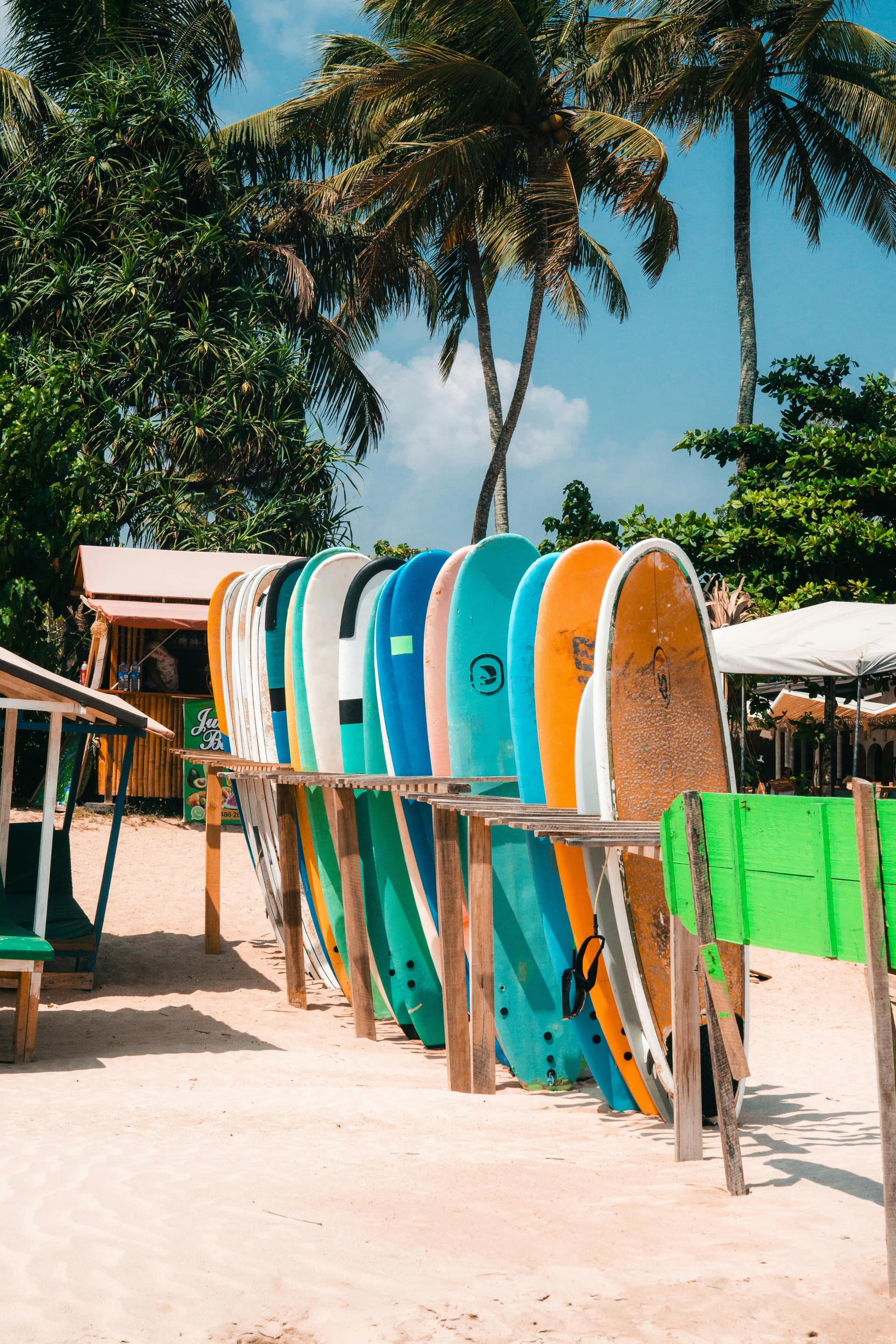
This version avoids the backtrack that a shorter trip would require and gives a genuinely different beach experience, calmer waters and a laid-back surf-town feel around Arugam Bay, quieter, wide sand around Trincomalee and Nilaveli.
The drive from hill country to the east coast takes roughly four to five hours, so this leg is best treated as a half-touring, half-transfer day rather than squeezed into a short afternoon alongside other activities.
Pigeon Island, off the coast near Trincomalee, is a worthwhile half-day addition for snorkelling if this variation is chosen, and it fits comfortably into a three-night east coast base without disrupting the rest of the twelve-day schedule.
- →Suits May-to-September travel dates, when the east coast is in its dry season.
- →Avoids backtracking to the south coast; the route flows Cultural Triangle to Kandy to hill country to east coast.
- →Arugam Bay suits surfers specifically; Trincomalee and Nilaveli suit a quieter beach stay.
Why twelve days instead of ten or fourteen
Twelve days is the length to choose when the standard ten-day route feels right in scope but too tight in pace, rather than when a traveller wants to see meaningfully more of the island; that call belongs to the fourteen-day route instead.
It is a particularly good fit for Canadian travellers managing jet lag carefully, since the extra two days can be spent entirely as slower mornings and pool afternoons rather than additional sightseeing, without feeling like wasted vacation time.
Honeymooners and couples celebrating an anniversary often gravitate to twelve days specifically, since it allows the same core route as the ten-day trip with two extra nights that can be spent entirely at the final beach base rather than added elsewhere on the route.
- →Choose twelve days if the ten-day route's scope is right but the pace feels rushed.
- →Choose fourteen days instead if a genuinely new region, such as the north, is the priority.
Fitting the route to a flight from Canada
As with shorter trips, most Gulf and European connections from Toronto, Vancouver or Montreal land in Colombo in the morning or early afternoon, supporting a genuine rest day one before the Cultural Triangle leg begins. With twelve days on the ground, there is enough slack to absorb a delayed connection or a missed onward flight without reshuffling the whole itinerary.
Given the additional time, it is also worth considering an overnight stop in the connecting hub, Doha, Abu Dhabi or Dubai, rather than a tight same-day transfer, which can meaningfully ease the overall fatigue of the outbound journey.
What a 12-day trip roughly costs
A 12-day Sri Lanka trip for a Canadian traveller carries the same two cost categories as any length of trip: the flight from Canada, usually the largest single expense, and on-the-ground costs, which are inexpensive relative to Canadian prices. Adding two days over the standard ten-day route increases the ground cost only modestly, since it mostly means extra nights at an existing base rather than new activities or transfers.
This is one of the clearer value arguments for extending a trip from ten to twelve days rather than keeping the shorter version: the fixed cost of the flight is the same either way, so the marginal cost of two more relaxed days is relatively small against the total trip budget.
Tour and accommodation pricing from Sri Lankan operators is commonly quoted in USD, giving Canadian travellers a stable reference point even as the Canadian dollar figure moves with the exchange rate. The extra two days, spread over a flight cost that stays fixed, further improve the effective daily value of the trip compared with a shorter one.
- →Flights: the largest single cost from Canada; book well ahead of December-to-March or May-to-September peak dates.
- →Ground costs: two extra nights at an existing base add modestly to the total compared with a full new region.
- →Treat any CAD figure as a rough conversion; tour pricing is usually quoted in USD.
Booking it
Confirm the Electronic Travel Authorisation (ETA) before travel, and book the safari vehicle and hill-country train seats ahead regardless of which variation is chosen, as both are the two most time-sensitive bookings on this route.
Decide the south-coast or east-coast variation as early as possible in the planning process, since it changes which accommodation needs booking and, in peak season, which properties still have availability by the time travel dates are confirmed. This is one decision worth making before, not after, booking flights.
Lankan Stays & Trails builds this 12-day route as a private, driver-guided itinerary for Canadian travellers, adjusted for whichever coast suits the travel dates and paced deliberately slower than the standard ten-day version.
Frequently asked questions
Is 12 days enough for Sri Lanka from Canada?
Yes, and it is a comfortable length. Twelve days covers the same regions as a ten-day trip but at a noticeably slower, less driving-heavy pace, or it can extend to the east coast instead of returning to the south, depending on the season.
What is a good 12-day Sri Lanka itinerary?
The Cultural Triangle, Kandy, hill country with the scenic train, a wildlife safari at Yala or Udawalawe, and a slower south-coast finish, or the same route continuing east to Arugam Bay or Trincomalee during the May-to-September season instead of the south coast.
Is 12 days too long for a first trip to Sri Lanka?
No. Given the roughly 20-to-26-hour flight from Canada, twelve days makes good use of the journey, and the extra time over a ten-day trip is generally used for genuine rest rather than additional sightseeing, which suits most first-time travellers well.
Should I do the south coast or east coast on a 12-day Sri Lanka trip?
It depends on the season. December to March favours the south and west coasts; May to September favours the east coast around Trincomalee and Arugam Bay. Check the travel dates against the season before choosing which variation of the route to book.
How is a 12-day itinerary different from a 10-day one?
The regions covered are usually the same; the difference is pace. Twelve days adds roughly two extra nights, spent easing the daily drive times and adding genuine downtime rather than new sightseeing stops along an already full ten-day route through the island.
Do you need a rest day on a 12-day Sri Lanka trip from Canada?
It is worth building in at least one, ideally near the airport on arrival. The roughly 20-to-26-hour journey from Canada and the significant time difference mean a rest day noticeably improves how the rest of the trip feels from day two onward.
Does a 12-day Sri Lanka trip cost much more than a 10-day one?
Only modestly. The flight from Canada, usually the largest single cost, stays the same regardless of trip length, and two extra nights at an existing base add relatively little to the total, which is part of why extending the trip is often good value.