
Quick answer
A 14-day Sri Lanka itinerary for Canadian travellers covers a full island loop: the Cultural Triangle for Sigiriya and Dambulla, Kandy, hill country around Ella or Nuwara Eliya with the scenic train, a wildlife safari at Yala or Udawalawe, either the north around Jaffna or the east coast depending on season, and a proper south-coast finish. Fourteen days gives three-night bases throughout with minimal backtracking, and it makes clear sense of the roughly 20-to-26-hour journey from Canada by spreading it over a genuinely comprehensive trip rather than a partial one.
Key takeaways
- Fourteen days allows a genuine full-island loop, adding either the north around Jaffna or the east coast to the standard ten-day route.
- Three-night bases throughout keep daily drive times reasonable across a route covering six or more distinct regions.
- The choice between north and east depends mainly on season: north works year-round with care, the east coast suits May to September.
- This length spreads the roughly 20-to-26-hour flight from Canada over enough days that the journey feels genuinely worthwhile.
- December to March remains the strongest window for the south and west coast legs, which anchor either version of this route.
The day-by-day route
This 14-day Sri Lanka itinerary follows a clockwise or anticlockwise loop of the island depending on the season chosen, moving through the Cultural Triangle, Kandy, hill country, a safari, one of the north or east, and finishing on the south coast before flying home from Colombo.
The extra four days over a ten-day trip go almost entirely into either the north or east coast leg and an additional rest day, rather than compressing the core route further.
This route is deliberately built to avoid backtracking: each leg moves the traveller further along the loop rather than returning to a previous base, which keeps total driving time reasonable despite covering roughly six distinct regions across the fourteen days. The result reads almost like a circuit of the island rather than a series of out-and-back day trips from a single base.
- →Days 1-2: Arrive Colombo/Negombo, rest, transfer to the Cultural Triangle.
- →Days 2-4: Sigiriya Rock, Dambulla, and Polonnaruwa or Minneriya National Park.
- →Days 5-6: Kandy and the Temple of the Tooth.
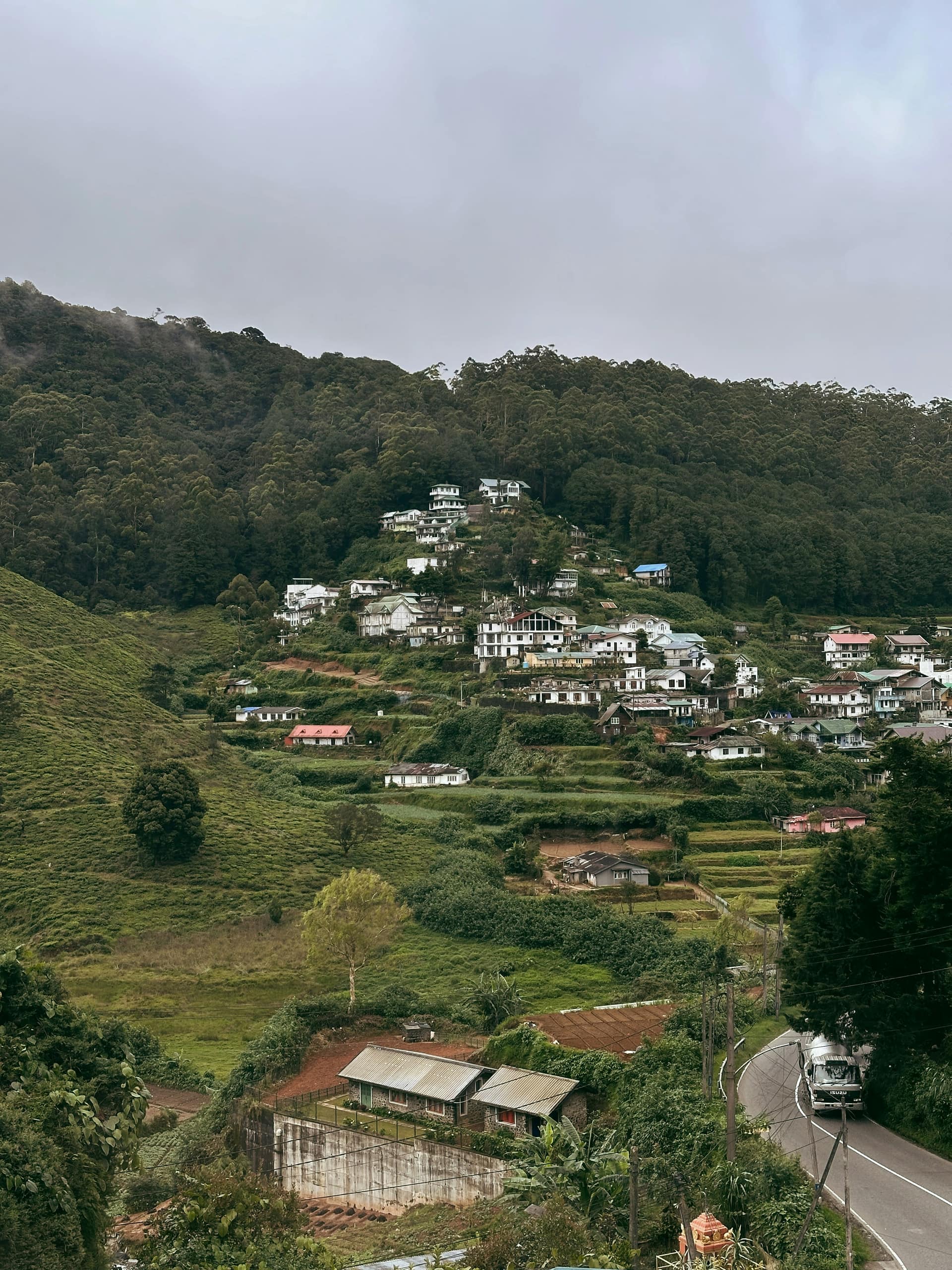
- →Days 7-8: Hill country around Ella or Nuwara Eliya, including the scenic train.
- →Day 9: Wildlife safari at Yala or Udawalawe.
- →Days 10-11: North to Jaffna, or east to Trincomalee/Arugam Bay depending on season.
- →Days 12-14: South-coast beach finish (Mirissa, Unawatuna or Galle) before flying home.
Choosing the north or the east coast
Jaffna and the north, once the least visited part of Sri Lanka for international travellers, offer a genuinely different atmosphere: Hindu temple architecture, a strong Tamil culinary tradition, and colonial-era Dutch and Portuguese forts, with far fewer tourists than the south. It works reasonably year-round, though it is a long drive from the Cultural Triangle and worth factoring into the pacing.
The east coast, around Trincomalee, Nilaveli and Arugam Bay, is a stronger fit specifically for May-to-September travel dates, when it is in its dry season and the south and west coasts are not. It suits travellers prioritising beach time and, at Arugam Bay, a genuine surf culture over a cultural detour.
Neither choice is objectively better; the decision comes down mostly to the travel dates available and, secondarily, whether cultural depth or beach time matters more to the specific travellers on this trip. Photographers and history-focused travellers tend to lean toward Jaffna; surfers and those wanting a second, quieter beach stretch tend to lean toward the east coast.
- →Jaffna and the north: distinct Tamil culture, temples and forts; reasonable year-round; a long drive from the Cultural Triangle.
- →East coast (Trincomalee, Nilaveli, Arugam Bay): best May to September; strong for beach time and surf.
- →Pick based on season first, personal interest second, given how much the east coast's appeal depends on timing.
Why the pacing works better at this length
Fourteen days removes nearly all the compromises a ten-day trip has to make. Three-night bases become standard rather than the exception, which matters given how much of Sri Lanka's road network runs on two-lane roads through hill and coastal terrain rather than motorways.
It also gives enough buffer to absorb a full rest day on arrival and, ideally, a slower final day before the flight home, both of which matter more for Canadian travellers than for a shorter-haul European trip given the larger time difference involved.
Average daily drive times on this route stay under three hours in most segments, with the longer transfers, to Jaffna in particular, best treated as a full day rather than squeezed alongside sightseeing at either end of that leg.
- →Three-night bases throughout minimise the number of transfer days across the whole route.
- →One rest day on arrival and, ideally, a slower final day before departure.
- →Roughly six distinct regions covered without any one-night stops.
Fitting the route to a flight from Canada
At fourteen days, it is worth treating the outbound and return flights themselves as part of the trip planning rather than an afterthought. An overnight stop in the connecting hub, Doha, Abu Dhabi, Dubai, London or Frankfurt, can meaningfully ease the fatigue of the journey compared with a tight same-day transfer, particularly on the outbound leg into a trip this long.
Given the length of this itinerary, there is also enough slack in the schedule to absorb a delayed or rebooked connection without materially disrupting the route, which is not the case on a tighter seven-day trip. Toronto and Montreal generally offer more frequent Gulf connections than Vancouver, which is worth factoring in when comparing fares and routings for a trip of this length.
What a 14-day trip roughly costs
A 14-day Sri Lanka trip for a Canadian traveller carries the flight from Canada as its largest single cost, typically booked several months ahead for the best fares, alongside ground costs, driver-guide, accommodation, meals and park entry fees, that are inexpensive relative to Canadian prices across the extra regions this route covers. Tour and accommodation pricing from Sri Lankan operators, including Lankan Stays & Trails, is commonly quoted in USD, giving a stable reference point that does not shift with daily exchange-rate movements the way a rupee or CAD figure would. Treat any CAD total as an approximate conversion rather than the number to plan a budget around.
Spread over fourteen days rather than seven or ten, the fixed flight cost is diluted further, which is one of the clearer arguments for extending a trip once the time is available, alongside the genuinely different regions it opens up. Domestic transport costs stay proportionally small even across a six-region loop, since a single private driver-guide covers the whole route rather than requiring separate bookings for each leg.
- →Flights: the largest single cost from Canada; book several months ahead of December-to-March or May-to-September travel.
- →Ground costs: driver-guide, accommodation and entry fees across six or more regions, inexpensive relative to Canadian prices.
- →Treat any CAD figure as a rough, exchange-rate-dependent conversion rather than the reference price.
Booking it
Confirm the Electronic Travel Authorisation (ETA) before travel, and book the safari vehicle, hill-country train seats, and any Jaffna or east coast accommodation well ahead for December-to-March or May-to-September peak dates respectively, since both windows see demand from several markets at once.
Pack for a wider range of conditions than a shorter trip: warm and humid on both coasts and in the Cultural Triangle, noticeably cooler evenings in the hill country, and generally drier, dustier conditions in Jaffna and the far north.
Lankan Stays & Trails builds this full-loop 14-day route as a private, driver-guided itinerary for Canadian travellers, choosing between the north and east legs based on the specific travel dates.
Frequently asked questions
Is 14 days enough to see Sri Lanka from Canada?
Yes. Fourteen days allows a genuine full-island loop, covering the Cultural Triangle, Kandy, hill country, a wildlife safari, either the north or east coast, and a south-coast finish, without one-night stops throughout the entire route across the island of Sri Lanka.
What is a good 14-day Sri Lanka itinerary?
The Cultural Triangle, Kandy, hill country with the scenic train, a wildlife safari at Yala or Udawalawe, either Jaffna in the north or the east coast depending on season, and a proper south-coast beach finish before flying home from Colombo.
Should I add the north or the east coast on a 14-day Sri Lanka trip?
It depends mainly on season. The east coast around Trincomalee and Arugam Bay suits May-to-September travel; Jaffna and the north work reasonably year-round but involve a longer drive from the Cultural Triangle, so check travel dates against the season first.
Is 2 weeks in Sri Lanka too long?
No, particularly from Canada. Given the roughly 20-to-26-hour flight each way, two weeks makes good use of the journey and allows a genuinely comprehensive loop of the island rather than a partial view of just two or three regions of it.
How many regions can you cover in 14 days in Sri Lanka?
Around six: the Cultural Triangle, Kandy, hill country, a safari region, either the north or east coast, and a south-coast finish, each with a three-night base and minimal backtracking across the full length of this fourteen-day route around the island.
Do I need to book flights within Sri Lanka for a 14-day trip?
Generally no. A private driver-guide covers the entire route by road, which is the standard approach for a trip of this length. Domestic flights exist to a few destinations but are not necessary for this itinerary in most typical cases.
How much does a 14-day Sri Lanka trip cost from Canada?
The flight is usually the largest single cost given the distance from Canada. Ground costs, driver-guide, accommodation, meals and entry fees across six or more regions, are inexpensive relative to Canadian prices, and pricing from operators is commonly quoted in USD.