
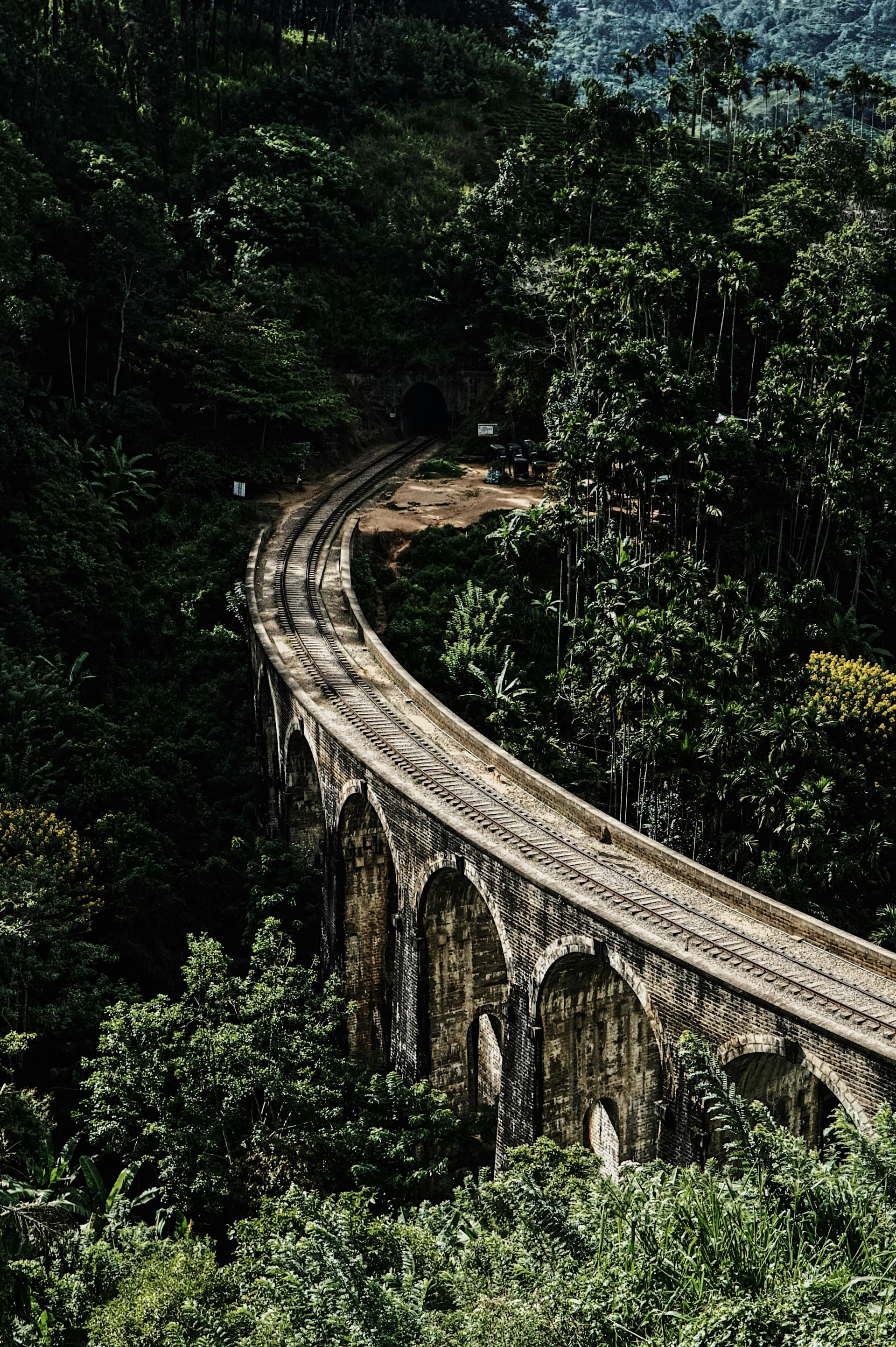
Quick answer
Sri Lanka's trains usually keep running in the monsoon, but heavy rain brings delays, and long rain can trigger landslides that suspend the hill line between Kandy, Nanu Oya and Badulla for a day or more, most often in May to June and October to December. Views from the hill line are often misty on the western section in the southwest monsoon and on the Ella side in the northeast monsoon. The coastal line south of Colombo can be delayed by flooding.
Key takeaways
- Trains usually run in the monsoon, but delays of an hour or more are common after heavy rain.
- Landslides can suspend the hill line for a day or more, most often in May to June and October to December.
- Views on the western section of the hill line are mistiest in the southwest monsoon.
- The Ella side is mistiest in the northeast monsoon and the second inter-monsoon.
- A road transfer as a backup is the simplest way to protect a train day in the rainy season.
Which lines are affected
Three railway lines matter most to visitors. The main line runs from Colombo through Kandy, Hatton, Nanu Oya and Ella to Badulla, climbing into the hills on a single track cut into steep slopes. The coastal line runs south from Colombo along the sea through Bentota, Hikkaduwa and Galle to Matara and Beliatta. The northern line runs to Anuradhapura, Jaffna and Kankesanthurai.
The hill line is the most exposed. Its cuttings and embankments are vulnerable to landslides and falling rock after long rain, especially between Ambewela, Ohiya, Idalgashinna and Haputale. The coastal line is flat but low, and heavy rain can flood the track near Colombo and in river estuaries. The northern line runs through the dry zone and is affected mostly in November and December.
- →Hill line: landslides, rockfalls, mist.
- →Coastal line: flooding near Colombo and river mouths.
- →Northern line: occasional flooding in November and December.
When disruption is most likely
Disruption follows the heaviest rain. On the hill line, the riskiest periods are the onset of the southwest monsoon in late May and June, and the second inter-monsoon and northeast monsoon from October to December, when both sides of the hills receive rain. Suspension usually lasts from a few hours to a few days while the track is cleared.
Delays are much more common than suspensions. After heavy rain, trains often run slowly through sections with standing water or debris, and a late running train can lose its booked connections. Planning at least an hour of slack after a train arrival in the rainy seasons is sensible.
- →Riskiest: late May to June, October to December.
- →Most common problem: delays rather than cancellations.
- →Suspensions: usually hours to a few days.
The view in the rain
The views are the bigger change for most passengers. In the southwest monsoon, from May to September, the western section of the line from Hatton through Nanu Oya to Pattipola is often wrapped in mist, while the Ella side after Haputale is often clearer. In the northeast monsoon and the second inter-monsoon, the pattern reverses, with the Ella side mistier.
Mist has its own beauty, with tea slopes appearing and vanishing in the cloud, but the long views across the valleys are less likely. The morning trains from Kandy and Nanu Oya usually have clearer views than the afternoon ones, when cloud builds.
The open doors and windows that make the trip famous let in rain on wet days. A light rain jacket is useful, and cameras need protection.
Planning a backup
The simplest protection for a train day in the rainy seasons is a car and driver on standby or following the train by road. If the line is suspended, the drive between Kandy and Ella takes roughly five to six hours, or less from Nanu Oya. Many visitors take the train for the most scenic section only, from Nanu Oya to Ella, and use a road transfer for the rest.
Railway announcements are made at stations and on the official railway pages, and drivers and hotel staff usually know about suspensions quickly.
- →Keep a road transfer as backup.
- →Ride the most scenic section only.
- →Allow slack time after arrival.
Booking train days in the monsoon
Book reserved seats as usual, and choose morning departures for the best chance of clear views. In the southwest monsoon, consider riding from Ella towards Nanu Oya, so the clearer section comes first.
Lankan Stays & Trails books hill line train days with a car and driver as backup in the rainy seasons and checks the line status the evening before travel.
Frequently asked questions
Do trains run in Sri Lanka during the monsoon?
Yes, usually. Delays are common after heavy rain, and landslides can suspend the hill line between Kandy, Nanu Oya and Badulla for a few hours to a few days. Suspensions are most likely in late May to June and October to December. A road transfer is the usual backup.
Is the Kandy to Ella train worth it in the rainy season?
Often, yes. Views can be misty, especially on the western section in the southwest monsoon and on the Ella side in the northeast monsoon, but the tea slopes in cloud have their own atmosphere. Morning trains usually have clearer views than afternoon ones.
What happens if a train is cancelled because of a landslide?
The line is closed while the track is cleared, which can take from a few hours to a few days. Passengers usually continue by road. The drive between Kandy and Ella takes roughly five to six hours. Having a car and driver on standby avoids long waits at stations.
When are landslides most likely on the hill railway?
After long heavy rain, most often at the onset of the southwest monsoon in late May and June and during the second inter-monsoon and northeast monsoon from October to December. The section between Ambewela, Ohiya, Idalgashinna and Haputale is among the most exposed.
Is the coastal train affected by the monsoon?
Sometimes. Heavy rain can flood the coastal line near Colombo and at river mouths, causing delays. The southwest monsoon also brings rough seas alongside the track, and spray can reach the carriages. Full suspensions are less common than on the hill line.
Which direction is better for the hill train in the monsoon?
In the southwest monsoon, from about May to September, the Ella side is usually clearer, so starting from Ella towards Nanu Oya puts the best views first. In the northeast monsoon, the western side around Nanu Oya and Hatton is often clearer.
How does Lankan Stays & Trails handle train days in the rainy season?
Hill line train days in the rainy seasons are booked with a car and driver as backup, morning departures are chosen where possible, and the line status is checked the evening before. If the line is suspended, guests continue by road without losing the day.