
Quick answer
Sri Lanka's Big Five are the Asian elephant, Sri Lankan leopard, sloth bear, blue whale and sperm whale. On the culture, wildlife and beach route, elephants are close to certain at the Cultural Triangle parks and Udawalawe, leopards are a good chance on the full Yala day, sloth bears are possible in Yala (best around May to July), and blue and sperm whales are often seen off Mirissa in roughly December to April. Seeing all five is possible but never guaranteed.
Key takeaways
- Sri Lanka's Big Five are the Asian elephant, Sri Lankan leopard, sloth bear, blue whale and sperm whale.
- Elephants are close to certain on this route, at the Cultural Triangle parks and Udawalawe.
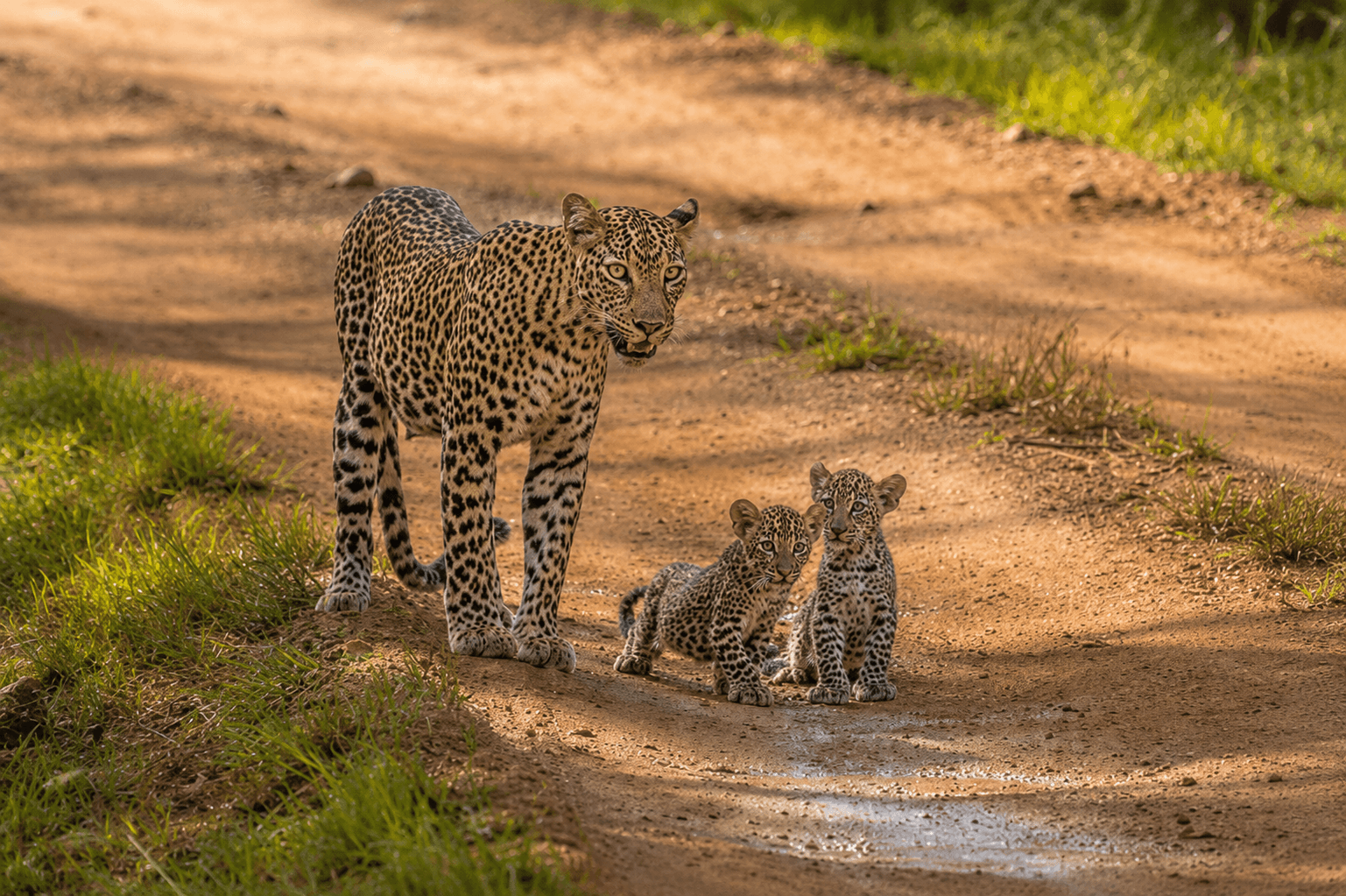
- Leopards are a good chance in Yala, especially with a full day.
- Sloth bears are the hardest of the five, most often seen around May to July.
- Blue whales and sperm whales are seen off Mirissa in roughly December to April.
The five animals
The Asian elephant is Sri Lanka's most iconic animal, and the island has one of the highest densities of wild elephants in Asia. The Sri Lankan leopard, a subspecies found only on the island, is the top predator. The sloth bear, shaggy and shy, feeds on termites, fruit and honey.
At sea, the blue whale is the largest animal ever known to have lived, and the sperm whale, with its huge square head, is the largest toothed predator. Both are seen off the south coast in season. The combination of land and sea is what makes Sri Lanka's Big Five unique.
- →Asian elephant: the largest land animal in Asia.
- →Sri Lankan leopard: found only on the island.
- →Sloth bear: shy and often nocturnal.
- →Blue whale: the largest animal on Earth.
- →Sperm whale: the largest toothed predator.
Elephants: close to certain
Elephants are the easiest of the five. The day 3 safari in the Cultural Triangle shows herds around the ancient reservoirs, and Udawalawe on day 8 is one of the most reliable places in Asia for close encounters. Yala has elephants too, and they are sometimes seen beside the roads in the dry zone.
Sightings on this route are close to certain. The challenge is not finding elephants but watching them well, from a respectful distance, with the engine off.
Leopards: a good chance
Yala has one of the highest densities of leopards in the world, particularly in Block 1. Leopards are most active around dawn and dusk, and are often seen resting on rocks or walking along tracks. The route's full Yala day, with a dawn drive and an optional afternoon drive, gives a good chance.
Many visitors see a leopard on a full day in Yala, but not all. A skilled tracker and some luck matter as much as time. Wilpattu, in the May to September version, is another good leopard park, quieter but with less frequent sightings.
Patience is rewarded. Some of the best leopard sightings come after long waits at a likely spot.
- →Best park: Yala, especially Block 1.
- →Best time: dawn and late afternoon.
- →A full day roughly doubles the chances.
Sloth bears: the hardest
Sloth bears are the hardest of the five to see. They are shy and often active at night, and spend much of the day in dense cover. In Yala, they are seen most often around May to July, when the palu trees fruit and the bears come out to feed, which falls outside the standard route's main window.
On the December to April route, a sloth bear sighting is possible but a bonus. Early morning drives give the best chance. Wilpattu is also good for sloth bears in the May to September version.
Travellers determined to see a sloth bear should consider a trip around June, combining Yala with the east coast.
- →Most visible: around May to July.
- →Early mornings give the best chance.
- →Wilpattu also good.
Blue and sperm whales
The continental shelf drops away close to Sri Lanka's south coast, bringing deep-water whales near to shore. Off Mirissa, in roughly December to April, blue whales are seen on many mornings, and sperm whales are seen regularly too, sometimes in groups. The route's day 13 whale-watching trip gives a good chance at both.
Choose a responsible operator that keeps its distance and never chases whales. Lankan Stays & Trails books operators that follow guidelines and, where possible, offer a second trip if no whales are seen. Spinner dolphins are a common bonus.
- →Off Mirissa: roughly December to April.
- →Blue whales on many mornings.
- →Sperm whales regularly.
- →Dolphins common.
Your odds of all five
On the standard route, elephants are close to certain, blue whales likely, leopards and sperm whales a good chance and sloth bears possible but uncertain. Seeing all five in one fortnight is possible and happens, but it is never guaranteed.
The best approach is to enjoy each sighting rather than chase a checklist. Sri Lanka's wildlife includes much more than five animals: crocodiles, water buffalo, deer, monkeys, monitor lizards and hundreds of bird species.
Travellers set on all five should consider a wildlife-heavy version of the route, with extra Yala nights.
Frequently asked questions
What are Sri Lanka's Big Five?
The Asian elephant, the Sri Lankan leopard, the sloth bear, the blue whale and the sperm whale. The term is a playful nod to Africa's Big Five, and reflects Sri Lanka's unusual mix of land and marine wildlife within a small island.
Can I see all of the Big Five in two weeks?
It is possible on this route, but never guaranteed. Elephants are close to certain, blue whales likely, leopards and sperm whales a good chance and sloth bears possible. Luck and timing play a large part.
Which of the Big Five is hardest to see?
The sloth bear. It is shy, often nocturnal and spends much of the day in dense cover. In Yala, it is seen most often around May to July, when the palu trees fruit, which is outside the standard route's main window.
Where is the best place to see leopards?
Yala, especially Block 1, has one of the highest densities of leopards in the world. Wilpattu is quieter and also good. On this route, the full Yala day gives the best chance, with a dawn drive and an optional afternoon drive.
When can I see blue whales off Mirissa?
Roughly December to April, when the sea on the south coast is calm. Blue whales are seen on many mornings in season, though sightings are never guaranteed. From roughly May to September, whale watching moves to Trincomalee.
Is the Big Five a reason to choose this route?
It is a good reason. The route includes three safari parks and whale watching, giving a chance at all five. But the best way to enjoy it is to treat the Big Five as a bonus, and appreciate everything else you see.