
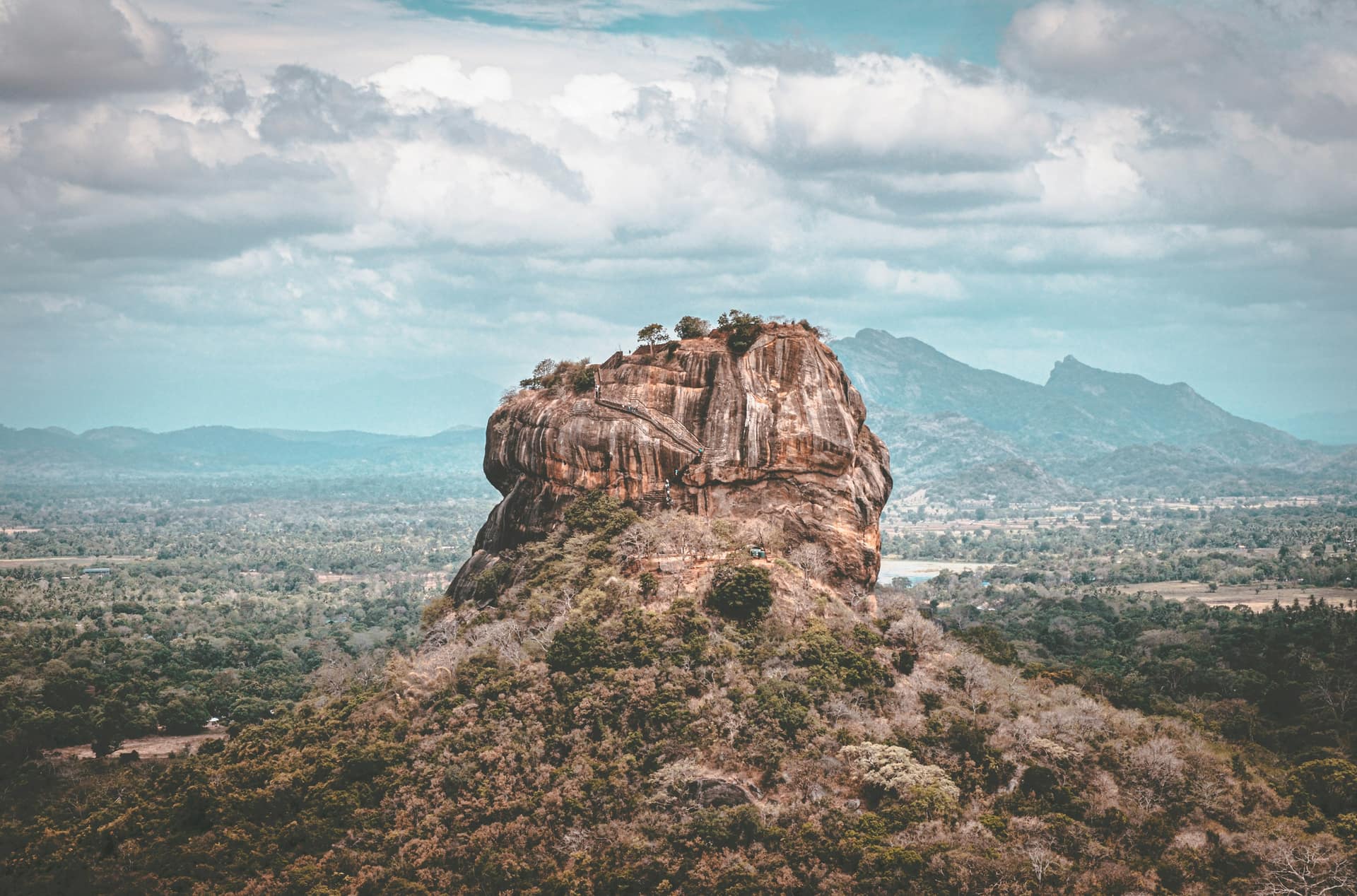
Quick answer
The Sigiriya tank bund is the earth embankment of the Sigiriya Wewa, the reservoir south of the rock. At sunrise it gives a flat, easy view north to Sigiriya, with reflections on still mornings, waterbirds and village life. Go by tuk-tuk about 20 minutes before sunrise, which falls roughly between 5.50 am and 6.30 am, stay on the bund, keep back from the water and leave before full darkness if you return at dusk.
Key takeaways
- The Sigiriya Wewa lies south of the rock, and its embankment gives an open view north to Sigiriya.
- Sunrise here side-lights the rock from the east, with reflections on still, windless mornings.
- The walk is flat and easy, which suits families, older travellers and anyone avoiding a climb.
- Waterbirds, fishermen and villagers bathing make the scene as much about life as light.
- Travel by tuk-tuk in the dark, and keep back from the water, which can be deep and has crocodiles in places.
What the tank bund is
The Sigiriya tank bund is the long earth embankment that holds back the Sigiriya Wewa, a reservoir south of the rock. Tanks like this one were built across the dry zone over many centuries to store monsoon rain for rice fields, and many are still in use. The Sigiriya Wewa was part of the water system that fed the gardens and moats around the rock.
Today the bund carries a footpath and track along its top, with water on one side and paddy fields and scrub on the other. From it, Sigiriya rock rises to the north above the trees, often reflected in the water on calm mornings.
The archaeology of the tank and the moats is covered in detail elsewhere on this site. This guide is about the bund as a place to watch the day begin.
What sunrise looks like
Sunrise from the Sigiriya tank bund looks very different from the classic Pidurangala view. The sun rises in the east, to your right as you face the rock, so it side-lights Sigiriya rather than silhouetting it. As the light grows, the eastern face warms first and the water turns from grey to silver and gold.
On windless mornings, the rock is mirrored in the tank, which is the picture most people come for. A light breeze breaks the reflection but brings ripples of colour instead. In the wetter months, mist sometimes lies on the water at dawn.
Sunrise falls roughly between 5.50 am and 6.30 am, depending on the month. Arrive about 20 minutes before to catch the first colour.
- →Light: side-lit rock, warming from the east.
- →Reflections: best on still, windless mornings.
- →Mist: possible in the wetter, cooler months.
- →Arrive: about 20 minutes before sunrise.
Birds and village life
Birds and village life are what make the tank bund special. Egrets, herons, cormorants and kingfishers work the water's edge at dawn, and darters dry their wings on dead branches. Painted storks and pelicans sometimes appear, depending on water levels and the season. A pair of binoculars adds a lot.
Village life starts early too. Fishermen go out in small boats or wade with nets, cattle and buffalo come down to drink, and people arrive to bathe and wash clothes. This is daily life rather than a show, so watch quietly and ask before photographing anyone.
- →Birds: egrets, herons, cormorants, kingfishers, darters.
- →Sometimes: painted storks and pelicans.
- →People: fishermen, bathers, farmers with cattle.
- →Bring: binoculars and a quiet manner.
Getting there and safety
Getting to the Sigiriya tank bund before dawn is easiest by tuk-tuk, which takes a few minutes from most of Sigiriya village. Agree the fare and a return time, or ask the driver to wait. Walking there in the dark is not advisable, because elephants sometimes come down to tanks to drink at dawn and dusk, and the roads are unlit.
On the bund itself, stay on the path and keep children well back from the water. Tanks can be deep close to the edge, and crocodiles live in many of them. Do not swim, even if local people are bathing in the shallows.
If you see an elephant, keep well away, stay quiet and return to your tuk-tuk. Your driver will know what to do.
- →Tuk-tuk before dawn, not a walk.
- →Stay on the path along the bund.
- →Keep back from the water; no swimming.
- →Give any elephant a very wide berth.
Who it suits
The Sigiriya tank bund suits anyone who wants a sunrise with Sigiriya rock without a climb. Families with young children, older travellers, people nervous of heights and anyone recovering from the previous day's climb find it ideal. It also suits photographers who want reflections rather than silhouettes.
Birdwatchers often prefer it to Pidurangala, as the dawn hour at a tank is one of the richest for birds in the dry zone. Couples enjoy the quiet. It is less dramatic than a summit view, but far more peaceful.
Pairing it with the rest of the day
Pairing a tank bund sunrise with the rest of the day is easy. Walk along the bund for half an hour after sunrise, then head straight to the Sigiriya ticket office for opening at around 7 am. The tank lies close to the southern side of the site, so you can be climbing within minutes.
Alternatively, go back for breakfast and a slow morning. At Lankan Stays & Trails, we often use the tank bund for a first-morning sunrise, when guests are still adjusting to the time difference and a scramble feels too much.
Frequently asked questions
Where is the Sigiriya tank bund?
The Sigiriya tank bund is the earth embankment of the Sigiriya Wewa, the reservoir to the south of Sigiriya rock. It lies close to the southern side of the archaeological site and is a few minutes by tuk-tuk from most of Sigiriya village.
Can you see Sigiriya rock reflected in the tank?
Yes, on still, windless mornings the rock is mirrored in the Sigiriya Wewa. Reflections are best around sunrise, before the breeze picks up. On breezy days the reflection breaks up, but the light on the water and the rock is still attractive.
Is the Sigiriya tank bund a good sunrise spot for families?
Yes. It is flat, easy and needs no climbing, which makes it ideal for young children and older travellers. Travel there by tuk-tuk, keep children well back from the water's edge and do not let anyone swim, as tanks can be deep and have crocodiles.
Are there elephants at the Sigiriya tank?
Wild elephants sometimes come to tanks in the Sigiriya area to drink at dawn and dusk. Encounters on the bund itself are uncommon, but you should travel by tuk-tuk rather than walking unlit roads, and give any elephant a very wide berth.
What birds can you see at the Sigiriya tank at dawn?
Common sightings include egrets, herons, cormorants, darters and several kingfishers. Painted storks, pelicans and birds of prey such as fish eagles are sometimes seen, depending on the season and water levels. Binoculars make a big difference.
Can I go to the Sigiriya tank bund at sunset?
Yes. Sunset lights Sigiriya rock from the west, and the water reflects the colours of the sky. Leave before full darkness, which follows within about half an hour of sunset, as elephants may come to the water in the evening.
How long should I spend at the tank bund?
Allow about 45 minutes to an hour: 20 minutes before sunrise, the sunrise itself and a short walk along the bund afterwards. Birdwatchers often stay longer. From there, it is a short trip to Sigiriya's ticket office for opening at around 7 am.