
Quick answer
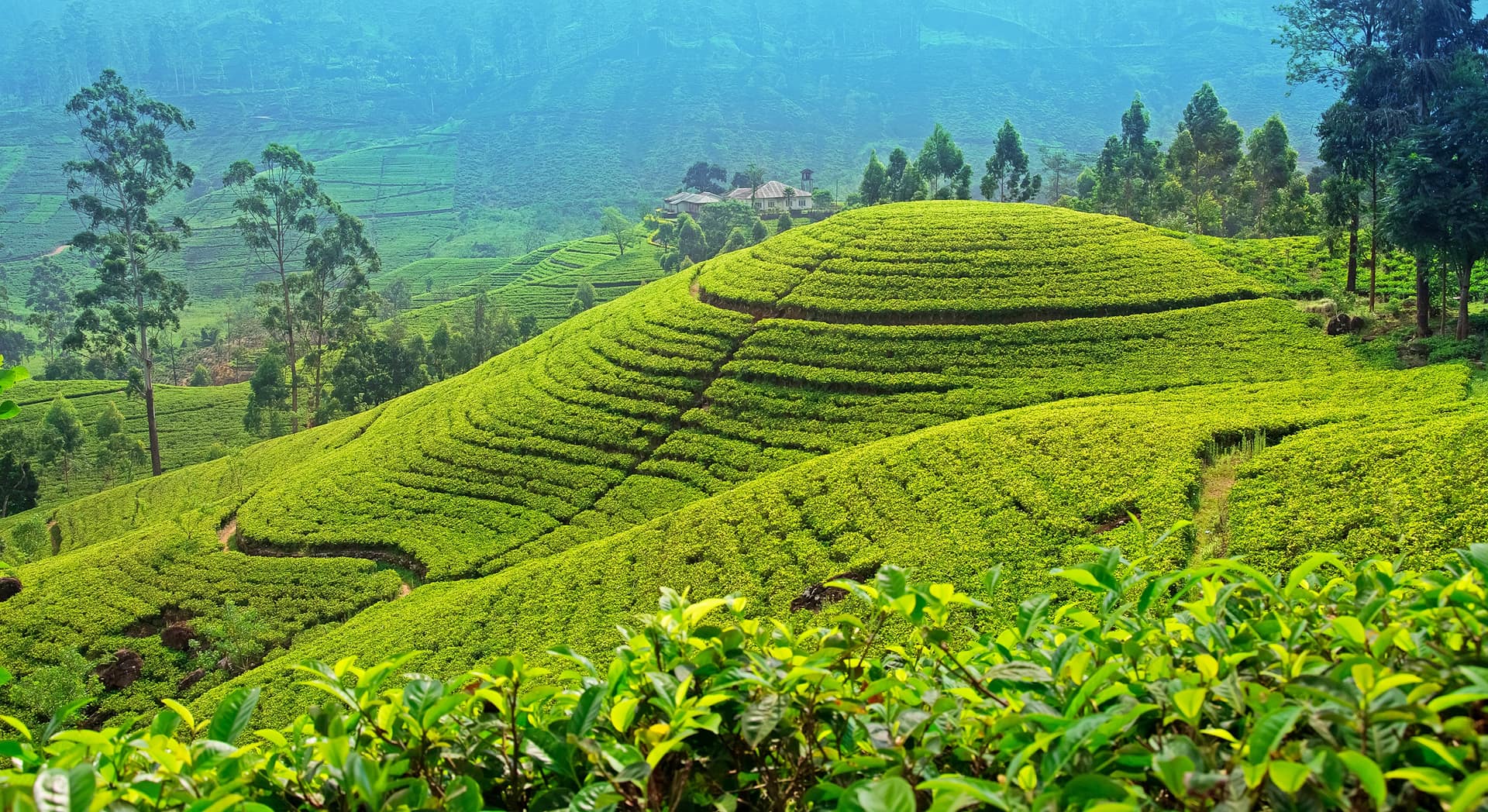
A tea-estate bungalow in Sri Lanka is typically a restored colonial-era planter's house on or near a working tea estate in the hill country, mainly around Nuwara Eliya and Ella, offering a handful of individually furnished rooms, estate walks, plantation views and a noticeably cooler climate than the coast. Most stays run two to three nights and pair naturally with the Kandy-to-Ella scenic railway. Because many bungalows hold fewer than a dozen rooms, couples travelling in the December to March peak season should book three to four months ahead.
Key takeaways
- Tea-estate bungalows cluster around Nuwara Eliya and Ella at elevations of roughly 1,200 to 2,000 metres, keeping evenings cool enough for a log fire for much of the year.
- Most bungalows hold only a handful of rooms, often under a dozen, making them suited to couples wanting a quiet, personal stay rather than a larger hotel atmosphere.
- A typical tea-estate bungalow stay includes an estate walk or factory visit, arranged directly through the property's staff, many of whom have worked the estate for years.
- The Kandy-to-Ella scenic railway runs directly through this hill-country tea belt, and reserved seating for it is worth booking as soon as travel dates are fixed.
- December to March is the hill country's own peak season, so couples wanting a specific small bungalow in that window should book roughly three to four months ahead.
What a tea-estate bungalow stay actually involves
A tea-estate bungalow is typically a restored colonial-era planter's house, originally built for the manager of a working tea estate, now converted into a small guest property with anywhere from two or three rooms up to around ten or twelve. The furnishings tend to lean into the period, dark wood, brass fittings, deep verandas built for sitting rather than for a pool, and many bungalows still sit on or beside an active estate.
Estate staff, some of whom have worked the property for years, can usually arrange a walk through the tea rows or a visit to the estate's own processing factory, giving a couple a genuine sense of how the tea they are drinking each morning is actually grown and made. Meals are typically taken in the bungalow itself, often a set menu built around what is fresh that day, and many properties will arrange a private dinner on the veranda on request.
This is a quieter, more personal style of stay than a resort, closer to a private country house than a hotel, which is exactly what draws many couples away from the coast for a few nights partway through a trip.
- →Individually furnished rooms in a genuinely restored colonial-era property, often under a dozen total.
- →An estate walk or factory visit, typically arranged directly through the bungalow's own staff.
- →Meals taken in the bungalow, often set menus, with a private veranda dinner available on request.
Where the hill country's bungalows sit
The main concentration is around Nuwara Eliya, a former British hill station at roughly 1,800 to 2,000 metres elevation, and Ella, a smaller and more relaxed town at a somewhat lower elevation. Both sit within the same tea-growing belt but carry a different character: Nuwara Eliya keeps more of its colonial-era architecture and formal gardens, while Ella leans toward a younger crowd drawn by walking trails and viewpoints.
Both towns sit within roughly a half-day's drive of Kandy, useful for stitching a bungalow stay into a wider itinerary that also covers the Cultural Triangle and the coast.
- →Nuwara Eliya: more formal colonial-era character, cooler nights, closer to Horton Plains.
- →Ella: smaller, scenic-walk focused, near Little Adam's Peak and the Nine Arches Bridge.
- →Both within roughly a half-day's drive of Kandy for a wider itinerary.
What the cooler climate actually feels like
Nuwara Eliya's elevation brings evening temperatures down to roughly 10 to 15 degrees Celsius outside the warmest months, a genuine and often surprising contrast to the coast's steady 28 to 32 degrees, and most bungalows have a working fireplace for exactly this reason. Ella is milder but still noticeably cooler than the lowlands, particularly in the early morning.
For a couple who has spent the earlier part of a trip on the coast or in the hot, dry Cultural Triangle, the hill country's cool evenings and quieter pace genuinely change the register of the trip, which is part of why a tea-estate bungalow works best as a deliberate contrast rather than the whole itinerary.
Pairing a bungalow stay with the Kandy-to-Ella train
The Kandy-to-Ella scenic railway runs directly through this tea-growing region, and building it into an itinerary that includes a bungalow stay turns what could be a plain transfer day into one of the trip's more memorable legs. Reserved seating on the more scenic services sells out well ahead of travel, particularly across the December to March peak season, so it is worth booking as soon as travel dates are confirmed rather than leaving it until arrival.
Couples basing themselves at a Nuwara Eliya or Ella bungalow can use the train as either the arrival or departure leg for the hill-country stretch, with a private driver-guide handling the other direction and any luggage that would otherwise need to be carried on board.
Booking lead time and length of stay
Two to three nights is the typical length for a tea-estate bungalow stay, long enough for an estate walk, a factory visit and at least one unhurried evening, without stretching the hill-country leg past its natural interest within a broader itinerary. Because many of the best-known bungalows hold only a handful of rooms, availability rather than price is often the real constraint in peak season.
For December to March travel, booking roughly three to four months ahead is a sensible rule of thumb for a couple set on a specific small property. Shoulder-season travel generally allows more flexibility, though the smallest and most characterful bungalows can still book out with relatively little notice given how few rooms they hold.
Fitting a tea-estate stay into the wider trip
A tea-estate bungalow works best as one leg of a wider itinerary rather than the whole trip, typically following a Cultural Triangle or Kandy stretch and preceding a run down to the south coast. The contrast between cool hills and warm coast is part of what makes a Sri Lanka itinerary feel varied for a couple rather than repetitive.
Lankan Stays & Trails generally places a hill-country bungalow stay after the cultural sites and before the coast, timed so the scenic railway becomes the transition between the two rather than just a travel day.
Frequently asked questions
What is a tea-estate bungalow in Sri Lanka?
It is typically a restored colonial-era planter's house on or near a working tea estate in the hill country, converted into a small guesthouse with a handful of individually furnished rooms, estate staff, and views across the tea terraces.
Where are Sri Lanka's tea-estate bungalows for couples?
Mainly around Nuwara Eliya and Ella in the hill country, at elevations of roughly 1,200 to 2,000 metres. Both sit within the same tea-growing belt and are within roughly a half-day's drive of Kandy.
How many nights should a couple spend at a tea-estate bungalow?
Two or three nights is typical, enough time for an estate walk, a factory visit and at least one unhurried evening, without stretching the hill-country leg of a wider itinerary that also covers culture, wildlife and coast.
Can we combine a tea-estate bungalow stay with the Kandy to Ella train?
Yes, the scenic railway runs directly through this hill-country tea region and pairs naturally with a bungalow stay. Reserved seating sells out well ahead in peak season, so book it as soon as travel dates are fixed.
How far ahead should we book a tea-estate bungalow?
Roughly three to four months ahead for December to March peak season, since most bungalows hold only a handful of rooms and availability, not price, is the main constraint during that window.
Is it cold at a tea-estate bungalow in Sri Lanka?
Yes, particularly around Nuwara Eliya, where evenings can drop to roughly 10 to 15 degrees Celsius. Most bungalows have a working fireplace for this reason, and a light jacket or jumper is worth packing.
What activities are included at a tea-estate bungalow?
Most properties arrange an estate walk through the tea rows and a visit to the estate's own processing factory directly through the bungalow's staff. Meals are typically taken on site, often as a set menu using produce grown or sourced locally.