
Quick answer
The history of Nuwara Eliya as a town begins in the early nineteenth century: British officers are said to have come upon the plateau around 1819 during a hunting trip. Governor Edward Barnes built a residence there in the late 1820s, and the explorer Samuel Baker set up an English-style farming settlement in the 1840s. Coffee planting spread until leaf rust from about 1869 destroyed it, and tea replaced it from the 1870s. Workers brought from South India built the estates, and the town grew into Little England.
Key takeaways
- British officers are said to have come upon the Nuwara Eliya plateau around 1819.
- Governor Edward Barnes built a residence in Nuwara Eliya in the late 1820s, encouraging its growth as a sanatorium.
- Samuel Baker established an English-style farming settlement near Nuwara Eliya in the 1840s.
- Coffee leaf rust from about 1869 devastated Ceylon's coffee plantations, and tea replaced coffee from the 1870s.
- Hill Country Tamil workers brought from South India built and worked the estates around Nuwara Eliya.
Before the British
Before the British, the Nuwara Eliya plateau was largely forest and grassland on the edge of the Kandyan kingdom. Hunters, gem miners and pilgrims passed through, and legends, including those of the Ramayana, attached to places such as Sita Eliya and Hakgala. Permanent settlement was limited by the cold.
Before 1815, the hills were part of the Kandyan kingdom, which fell to the British that year. Opening the interior with roads followed in the 1820s, bringing the plateau within reach of colonial officers.
Discovery and the sanatorium
The British story of Nuwara Eliya begins around 1819, when officers on a hunting trip are said to have come upon the plateau. Its cool climate made it attractive as a sanatorium for soldiers and officials suffering in the lowland heat.
Governor Edward Barnes built a residence in Nuwara Eliya in the late 1820s, and others followed. The building, much altered, survives as a hotel. By the 1830s, the plateau was a small retreat for the colonial elite, reached by a long ride from Kandy.
- →Around 1819: the plateau noted by British officers.
- →Late 1820s: Governor Barnes's residence.
- →1830s: a small hill retreat for officials.
Samuel Baker's English farm
In the 1840s, Samuel Baker, later famous as an explorer of the Nile, brought settlers, livestock and farm equipment to Nuwara Eliya to create an English-style farm. The project struggled, but it introduced crops and animals and shaped the town's English character.
Baker's experiment helped establish the vegetables and temperate farming that still define the area, and his writing popularised Nuwara Eliya's hunting and scenery in Britain.
Coffee, collapse and tea
Coffee planting spread across Ceylon's hills in the mid-nineteenth century, including around Nuwara Eliya. From about 1869, coffee leaf rust devastated the plantations, ruining many planters within a decade.
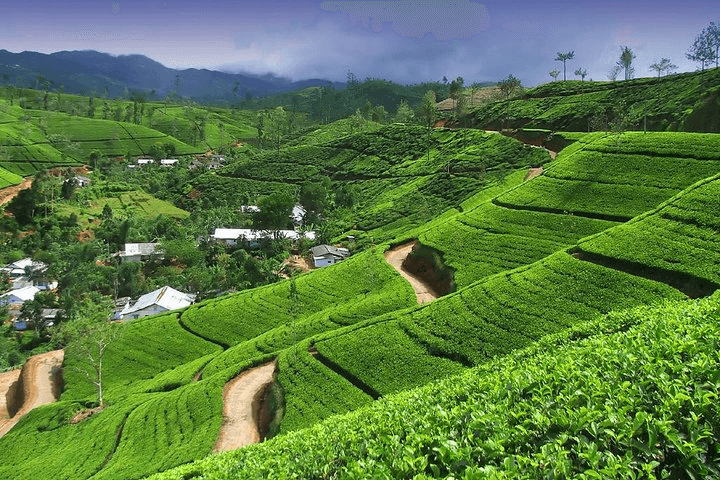
Tea replaced coffee from the 1870s. James Taylor's pioneering tea at Loolecondera near Kandy, from 1867, proved the crop, and estates around Nuwara Eliya were soon planted. High-grown Nuwara Eliya tea became prized for its delicate flavour.
Coffee and tea both depended on labour brought from South India. Hill Country Tamil workers cleared forests, planted estates and built the infrastructure that made the town possible.
- →From about 1869: coffee leaf rust.
- →From the 1870s: tea replaces coffee.
- →Gregory Lake created in the 1870s.
The hill station era
The hill station era made Nuwara Eliya what visitors see today. In the late nineteenth century came Gregory Lake, the golf course, the racecourse, clubs, churches and the red-brick post office. The railway reached Nanu Oya in the 1880s, making the town far easier to reach.
The hill station era ended with independence in 1948, but its legacy remains in the architecture, the April season and the town's English nickname. Lankan Stays & Trails includes this history in guided town walks on hill country routes.
Nuwara Eliya today
Nuwara Eliya today is a busy district capital, a centre of vegetable farming and tea, and Sri Lanka's favourite domestic hill retreat. The Hill Country Tamil community, long denied citizenship after independence, has gained rights and representation, though estate wages and housing remain live issues.
Nuwara Eliya's history explains both its charm and its contradictions: a beautiful colonial town built on hard labour. Seeing both makes a visit richer.
- →Holy Trinity Church: memorials to planters and their families.
- →The post office and racecourse: the hill station era in brick and turf.
- →An estate visit: the labour behind the tea.
Frequently asked questions
Who founded Nuwara Eliya?
Nuwara Eliya was not founded by a single person. British officers are said to have come upon the plateau around 1819, Governor Edward Barnes built a residence there in the late 1820s and Samuel Baker set up a farming settlement in the 1840s.
When was Nuwara Eliya founded?
Nuwara Eliya grew as a British settlement from the 1820s, after officers came upon the plateau around 1819 and Governor Edward Barnes built a residence there. It developed into a hill station and tea town later in the nineteenth century.
Why is Nuwara Eliya called Little England?
Nuwara Eliya is called Little England because the British built it to resemble an English country town, with mock-Tudor houses, a golf course, a racecourse, churches and gardens, in a cool and often misty climate.
What role did Samuel Baker play in Nuwara Eliya?
Samuel Baker, later famous as a Nile explorer, established an English-style farming settlement near Nuwara Eliya in the 1840s, bringing settlers and livestock. The project struggled but helped introduce temperate farming and popularise the area in Britain.
When did tea come to Nuwara Eliya?
Tea came to Nuwara Eliya from the 1870s, after coffee leaf rust from about 1869 devastated Ceylon's coffee estates. Tea proved suited to the high, cool climate and became the area's main crop.
Who are the estate workers of Nuwara Eliya?
Most estate workers around Nuwara Eliya are Hill Country Tamils, descendants of labourers brought from South India in the nineteenth century to work coffee and tea plantations. Wages and housing remain important issues.