
Quick answer
February is a good month for Udawalawe. The weather is dry and sunny, and elephants are seen on almost every drive, often in family groups with calves. Water buffalo, crocodiles, jackals and many birds, including migrants, are also common. Morning and afternoon drives last about three hours. The Elephant Transit Home, nearby, has viewing at feeding times. Udawalawe is about two hours from Ella and Tangalle, making it a convenient stop between the hills and the coast.
Key takeaways
- Elephants are seen on almost every drive in Udawalawe.
- February is dry and sunny, with easy viewing in open grassland.
- Migrant birds add to the variety in February.
- The Elephant Transit Home has viewing at feeding times.
- Udawalawe is about two hours from Ella and Tangalle.
Why February suits Udawalawe
Udawalawe lies in the dry zone, and February is one of its drier months. The park is still green after the rains, but the grass is shorter and wildlife easier to see than in the wetter months.
Elephants are present all year, and Udawalawe is the most reliable park in Sri Lanka for seeing them. February adds migrant birds and comfortable temperatures for morning drives.
Unlike Yala, Udawalawe does not usually close for a dry season break, so it is always an option.
- →Dry, green and open.
- →Elephants all year.
- →Migrant birds in February.
Elephants and other wildlife
Udawalawe has hundreds of elephants, often seen in family groups with calves near the reservoir and in the grassland. Bulls sometimes approach jeeps, so drivers keep a respectful distance.
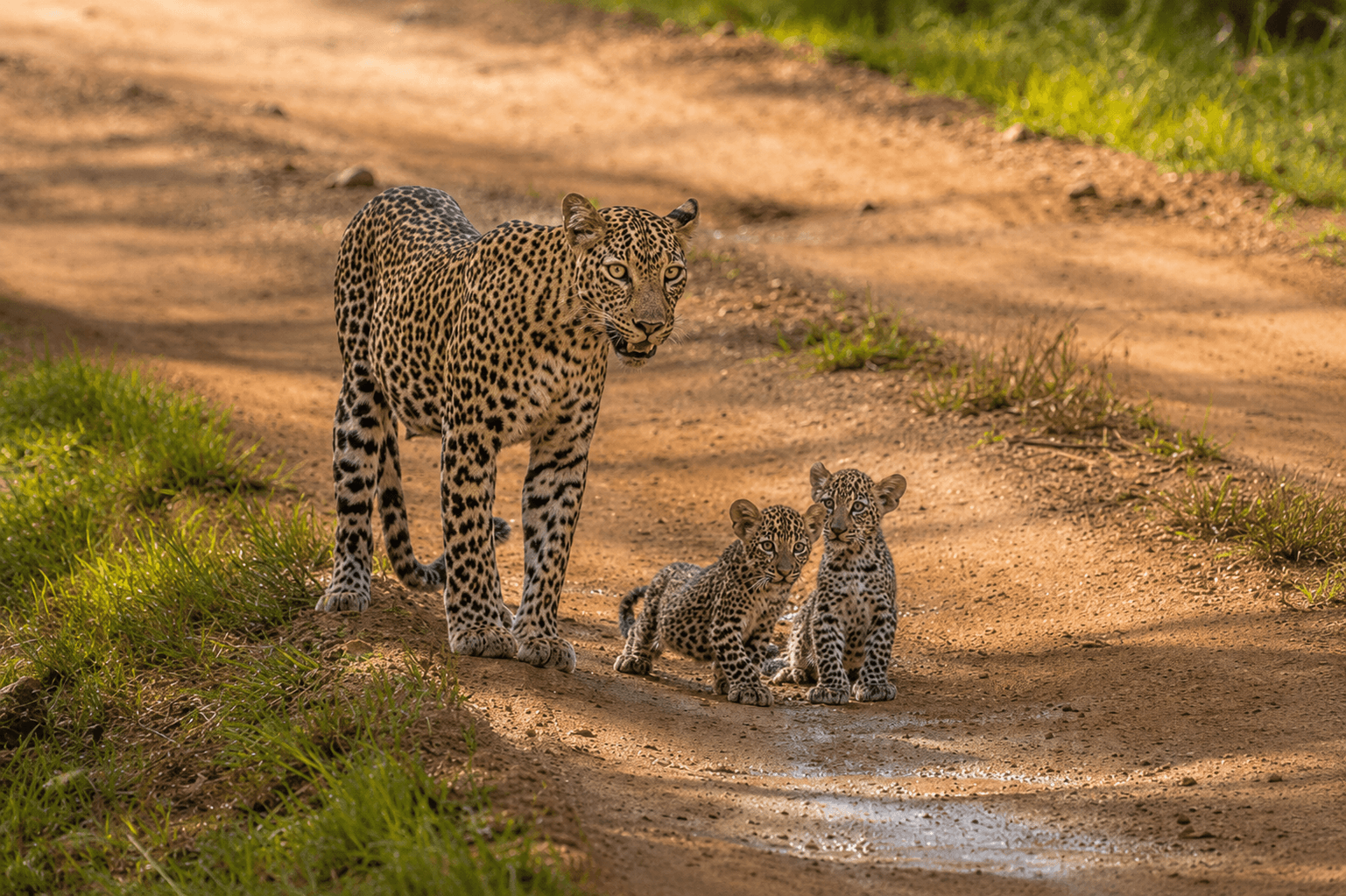
Water buffalo, spotted deer, crocodiles, jackals and mongooses are common. Leopards live in the park but are rarely seen.
Birdlife is excellent, with eagles, peacocks, bee-eaters and kingfishers, as well as migrant birds from about October to March.
Watching an elephant family is one of the pleasures of Udawalawe. Calves stay close to their mothers, older females lead the herd to water and young males play-fight at the edges. Drivers who know the park well can often position the jeep so the herd crosses nearby without being disturbed.
- →Hundreds of elephants.
- →Buffalo, deer, crocodiles.
- →Eagles, peacocks, migrants.
Drives and timing
Drives usually last about three hours, in the morning from about 6am or in the afternoon from about 2.30pm. Morning drives are cooler, and the light is good for photography.
Afternoon drives work well when travelling between Ella and the coast, as you can arrive for lunch and drive in the afternoon.
Jeeps can be arranged through hotels or at the park entrance. Entry tickets are bought at the gate.
Udawalawe's jeep tracks are mostly flat and open, so drives are less bumpy than in some parks. The reservoir viewpoints offer wide views across the water, especially beautiful in the late afternoon when elephants come down to drink.
- →Morning or afternoon, about three hours.
- →Jeeps via hotels or at the gate.
- →Tickets at the entrance.
The Elephant Transit Home
The Elephant Transit Home, near the park entrance, rehabilitates orphaned elephant calves and releases them into the wild when they are ready. Visitors can watch from a viewing platform at feeding times, usually several times a day.
It is a better alternative to places that keep elephants in captivity for tourism, such as Pinnawala.
Check feeding times before visiting, as they change from time to time.
The calves arrive at feeding time in a rush, drinking milk from large bottles before wandering back into the scrub. Early feeding sessions are often less crowded than the later ones, which are popular with day visitors.
Fitting Udawalawe into a route
Udawalawe is about two hours from Ella and two hours from Tangalle or Mirissa, making it a natural stop between the hill country and the south coast.
Many travellers do an afternoon drive on the way south and stay one night near the park, or combine it with Yala for two different safari experiences.
The planners at Lankan Stays & Trails often include Udawalawe on February routes from Ella to the coast, with an afternoon drive and a night nearby.
Accommodation near the park ranges from simple guesthouses to safari camps and comfortable hotels. Staying overnight allows a morning drive, when animals are most active, before continuing to the coast or the hills.
Frequently asked questions
Is February a good time to visit Udawalawe?
Yes. February is dry and sunny, with green but open grassland that makes wildlife easy to see. Elephants are seen on almost every drive, and migrant birds add variety. It is one of the most comfortable months for safari there.
Will I see elephants in Udawalawe?
Almost certainly. Udawalawe is the most reliable park in Sri Lanka for elephants, with herds seen on almost every drive, often with calves. Sightings are never fully guaranteed, but they are very likely in February.
How long is a safari in Udawalawe?
Usually about three hours, either in the morning from about 6am or in the afternoon from about 2.30pm. Morning drives are cooler, and afternoon drives suit travellers passing between Ella and the coast.
What is the Elephant Transit Home?
A rehabilitation centre near Udawalawe for orphaned elephant calves, which are released into the wild when ready. Visitors watch from a viewing platform at feeding times. It is a better alternative to places that keep elephants in captivity for tourism.
Is Udawalawe better than Yala?
For elephants, yes. Udawalawe is more reliable for elephants and less crowded. Yala is better for leopards and offers more variety. Many travellers visit both, as they are about two hours apart.
How far is Udawalawe from Ella?
About two hours by road. Udawalawe is also about two hours from Tangalle and Mirissa, making it a natural stop between the hill country and the south coast, with an afternoon drive on the way.
Is Udawalawe crowded in February?
It is busier than in the shoulder months, but far less crowded than Yala's Block 1. Jeeps spread out across the open grassland, and elephant sightings do not usually draw large gatherings of vehicles. Morning drives are generally calmer than afternoon ones.
Can I see leopards in Udawalawe?
Leopards live in Udawalawe, but sightings are rare because the park's population is small and the cats are shy. Yala and Wilpattu are much better for leopards. Udawalawe's strengths are elephants, open views and birdlife, which make it rewarding even without big cats.