
Quick answer
The culture, wildlife and beach route visits six of Sri Lanka's eight UNESCO World Heritage Sites: the Sacred City of Anuradhapura (day 2), the Ancient City of Sigiriya (day 3), the Ancient City of Polonnaruwa (day 4), the Golden Temple of Dambulla (day 5), the Sacred City of Kandy (days 5 and 6) and the Old Town of Galle and its Fortifications (day 14). The two left out are natural sites: Sinharaja Forest Reserve and the Central Highlands.
Key takeaways
- Sri Lanka has eight UNESCO World Heritage Sites: six cultural and two natural.
- The route visits all six cultural sites in the order Anuradhapura, Sigiriya, Polonnaruwa, Dambulla, Kandy and Galle.
- Five of the six are seen in the first six days; Galle comes on the last morning.
- The two natural sites, Sinharaja and the Central Highlands, are left out.
- Each site has its own entry ticket, and the main ones are among the costliest in South Asia.
Six sites in one fortnight
Few two-week routes anywhere in Asia include six World Heritage Sites without long flights. The culture, wildlife and beach route manages it because the Cultural Triangle is compact: Anuradhapura, Sigiriya, Polonnaruwa and Dambulla are all within two hours of each other, and Kandy is a short drive south. Galle sits on the road to the airport.
The route's order is also historical, so the sites tell a story. The first five trace the Sinhalese kingdoms and Buddhism; Galle tells the story of the European trading powers.
- →Day 2: Sacred City of Anuradhapura.
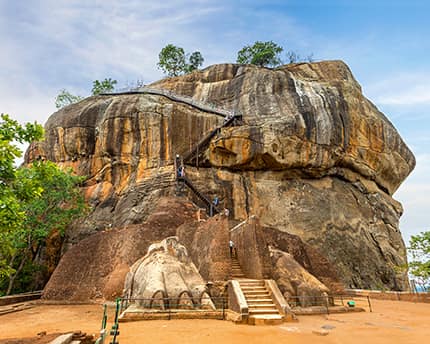
- →Day 3: Ancient City of Sigiriya.
- →Day 4: Ancient City of Polonnaruwa.
- →Day 5: Golden Temple of Dambulla.
- →Days 5 and 6: Sacred City of Kandy.
- →Day 14: Old Town of Galle.
The four Cultural Triangle sites
The Sacred City of Anuradhapura was inscribed for its role as a political and religious capital for over a thousand years, and for the sacred Bo tree. Sigiriya, the Ancient City, is recognised for its unique combination of palace, gardens and frescoes on and around a rock. Polonnaruwa is recognised as a medieval capital with exceptional monuments, including the rock-cut figures of Gal Vihara.
Dambulla, the Golden Temple, is a cave monastery in use for over two thousand years, with an extraordinary collection of Buddhist paintings and statues. Together, the four make the Cultural Triangle one of the richest heritage regions in Asia.
Each site needs its own ticket, and allowing enough time at each matters more than seeing them all in a rush.
- →Anuradhapura: the sacred city and Bo tree.
- →Sigiriya: palace, gardens and frescoes.
- →Polonnaruwa: the medieval capital.
- →Dambulla: the painted cave temples.
Kandy
The Sacred City of Kandy was inscribed as the last capital of the Sinhalese kings and the home of the Temple of the Sacred Tooth Relic. The site includes the temple, the royal palace complex and the lake, and the city's traditions, including the Esala Perahera, are part of its value.
Unlike the ruined capitals, Kandy is a living city, and the temple is busy with worshippers every day. The evening puja on day 5 is the best introduction.
The best way to see Kandy as a World Heritage city is on foot. Walk around the lake in the late afternoon, past the old royal buildings and the Queen's Bath, then enter the temple for the evening puja. The next morning, the museum within the temple complex and the old palace buildings add depth.
Galle
The Old Town of Galle and its Fortifications was inscribed as an outstanding example of a fortified city built by Europeans in South and South-East Asia, showing the interaction between European architecture and South Asian traditions. The Portuguese first fortified the site, and the Dutch built most of what survives.
Galle is the only site on the route not associated with the Sinhalese kingdoms or Buddhism, and it makes an interesting contrast at the end. The morning visit on day 14 covers the ramparts and main landmarks.
The two sites left out
The two natural sites, Sinharaja Forest Reserve and the Central Highlands, are left out. Sinharaja is the island's last large area of lowland rainforest, rich in endemic birds and plants. The Central Highlands include Horton Plains and the Peak Wilderness around Adam's Peak.
Both can be added. Sinharaja is roughly two and a half hours from Tangalle or Mirissa via Deniyaya, and fits by replacing a beach night. The Central Highlands need the hill country, which this route deliberately leaves out. Lankan Stays & Trails can build a version with all eight sites for travellers who want them.
Travellers wanting the full set should consider three weeks.
- →Sinharaja: lowland rainforest, endemic birds.
- →Central Highlands: Horton Plains and Peak Wilderness.
- →Both possible over three weeks.
Frequently asked questions
How many UNESCO sites are in Sri Lanka?
Eight: six cultural sites (Anuradhapura, Sigiriya, Polonnaruwa, Dambulla, Kandy and Galle) and two natural sites (Sinharaja Forest Reserve and the Central Highlands). This route visits all six cultural sites in fourteen days.
Can I see all eight UNESCO sites in two weeks?
It is possible but rushed. Adding Sinharaja and the Central Highlands means giving up Udawalawe, a beach night and part of the route's wildlife focus. Three weeks is a better length for all eight.
Which UNESCO site is the best?
Sigiriya is the most famous and dramatic, but many travellers find Polonnaruwa's Gal Vihara, Dambulla's painted caves or the atmosphere at Anuradhapura's Bo tree more moving. Each is different, so seeing several is the best approach.
Do UNESCO sites need separate tickets?
Yes. Each has its own entry ticket for foreign visitors, and the main Cultural Triangle sites are among the costliest in South Asia. Prices change, so check current rates. Kandy's temple and Galle Fort's walls have separate arrangements.
Is Galle Fort worth visiting on the last day?
Yes. Galle Fort sits on the road to the airport, roughly two and a half to three hours away, and a morning on the ramparts and lanes rounds off the culture theme. It suits evening flights; earlier departures should skip it.
Can I add Sinharaja to this route?
Yes, by replacing a Tangalle or Mirissa night with two nights at Sinharaja's Deniyaya side, roughly two and a half hours from either. That adds a seventh UNESCO site and excellent birding, at the cost of beach time.
Which UNESCO site needs the most time?
Anuradhapura, because it is spread over a very large area. This route gives it an evening and a full morning by bicycle. Sigiriya, Dambulla and Galle each need a morning, Polonnaruwa three to four hours and Kandy an evening and a day.