
Quick answer
In January, visit Sri Lanka's temples early in the morning or in the late afternoon, when stone terraces are cooler and crowds lighter. The Temple of the Tooth's evening puja is moving but busy. Duruthu poya and weekends bring pilgrim crowds to Kelaniya, Dambulla and Anuradhapura. Cover shoulders and knees, remove shoes and hats, walk clockwise around stupas and never pose with your back to a Buddha image.
Key takeaways
- Early mornings and late afternoons are best for temple visits.
- Duruthu poya and weekends bring pilgrim crowds.
- Stone terraces get hot by late morning in January sun.
- Shoulders and knees covered; shoes and hats off.
- Walk clockwise around stupas and bodhi trees.
When to visit in January
January's dry weather makes temple visits comfortable in the morning, but stone terraces heat up quickly under clear skies. At Anuradhapura's stupas, Dambulla's cave terrace and Polonnaruwa's Vatadage, walking barefoot after about ten can be uncomfortable.
Arrive early, from about seven, or in the late afternoon, from about four, when the stone cools and the light is softer. Thin socks are acceptable and protect your feet.
Evening pujas, with drums and offerings, are a highlight at many temples, especially the Temple of the Tooth in Kandy.
- →From about seven in the morning.
- →From about four in the afternoon.
- →Evening pujas at major temples.
The main temples in January
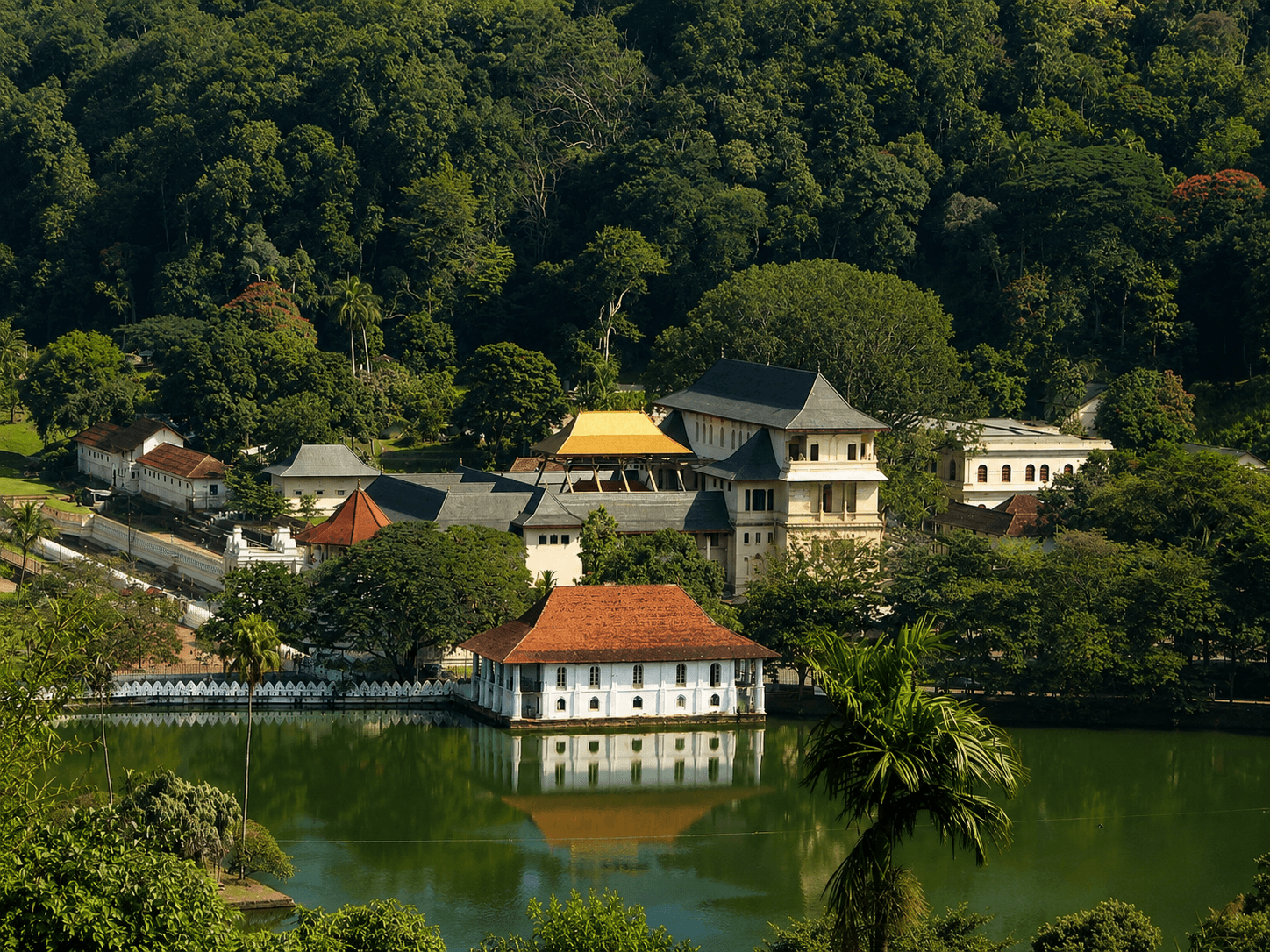
The Temple of the Tooth in Kandy houses Sri Lanka's most sacred relic, a tooth of the Buddha. Daily pujas take place morning and evening, with drummers and crowds of devotees. January is busy, especially on weekends and poya days.
Dambulla's cave temple and Anuradhapura's sacred city, including the Sri Maha Bodhi, are important pilgrimage sites. In January, they are busy with local pilgrims as well as visitors.
Kelaniya Raja Maha Vihara near Colombo is the focus of Duruthu poya, with its perahera held around the full moon. Gangaramaya in Colombo is a lively working temple with an eclectic museum.
- →Temple of the Tooth, Kandy.
- →Dambulla and Anuradhapura.
- →Kelaniya and Gangaramaya near Colombo.
Poya days and crowds
Duruthu poya, the January full moon, brings large crowds to temples across the country. Families arrive dressed in white, carrying flowers and offerings, and many stay all day.
Visiting on poya day offers a glimpse of Buddhist devotion at its most vivid, but expect queues, slower movement and limited space for visitors. Weekends are also busy with local pilgrims.
For quieter visits, choose weekday mornings and avoid the poya. Lankan Stays & Trails checks the poya calendar when planning January routes and suggests temple times accordingly.
Temple etiquette
Cover shoulders and knees, remove shoes and hats before entering the sacred area and keep your voice low. Sarongs are sometimes available at entrances, but arriving prepared is easier.
Walk clockwise around stupas and bodhi trees. Do not touch or climb on statues, and never pose with your back to a Buddha image for a photograph.
Do not point your feet towards Buddha statues when sitting. Visible Buddha tattoos should be covered, as they can cause serious offence and have led to refused entry.
- →Modest clothing, shoes and hats off.
- →Clockwise around stupas.
- →No posing with your back to a Buddha.
Making an offering
Visitors are welcome to make offerings. Flower stalls outside larger temples sell lotus and jasmine flowers, which can be placed on the flower altars in front of the Buddha images.
Lighting an oil lamp or incense is also common. A small donation in the temple's box is appreciated, especially if you take photographs.
Follow local worshippers if you are unsure. Many will happily show you what to do if you ask politely.
- →Lotus and jasmine flowers.
- →Oil lamps and incense.
- →Small donations.
Hindu kovils and other places of worship
Hindu kovils, common in Colombo, the hill country and the north, follow similar etiquette: modest dress, shoes off and respectful behaviour. Some ask men to remove shirts before entering inner shrines.
Thai Pongal in mid-January brings special pujas to kovils, especially in Tamil areas and on tea estates. Visitors may be welcome but should keep a respectful distance.
Mosques ask women to cover their hair and visitors to avoid prayer times. Churches welcome visitors in modest dress, with busy services on Sundays.
- →Kovils: similar etiquette.
- →Thai Pongal pujas in mid-January.
- →Mosques and churches welcome modest visitors.
Frequently asked questions
What time is best to visit temples in January?
Early morning, from about seven, or late afternoon, from about four, are best. Stone terraces get hot by late morning in January sun, and crowds peak around midday. Evening pujas at major temples, such as the Temple of the Tooth, are worth attending.
Are temples busy on Duruthu poya?
Yes. Duruthu poya brings large crowds of pilgrims to temples across Sri Lanka, especially Kelaniya, Dambulla, Anuradhapura and the Temple of the Tooth. It is a vivid experience, but expect queues. For quieter visits, choose weekday mornings.
Do I have to remove my shoes at Sri Lankan temples?
Yes. Shoes and hats must be removed before entering the sacred area of Buddhist temples and Hindu kovils. Thin socks are acceptable and protect your feet on hot stone. Most temples have shoe stands where you can leave shoes for a small fee.
Can I take photos inside Sri Lankan temples?
Usually, yes, but follow any signs. Avoid flash, never pose with your back to a Buddha image and be discreet when photographing worshippers. Some shrine rooms, such as the relic chamber at the Temple of the Tooth, may restrict photography.
What should I wear to the Temple of the Tooth?
Wear clothes that cover your shoulders and knees, ideally in light colours. Remove shoes and hats at the entrance. Visible Buddha tattoos should be covered. Sarongs may be available, but arriving dressed appropriately is quicker, especially on busy January days.
Can I make an offering at a temple?
Yes. Visitors are welcome to offer lotus or jasmine flowers, which are sold outside larger temples, or to light an oil lamp or incense. A small donation in the temple's box is also appreciated. Follow local worshippers if unsure.
Is it disrespectful to visit a temple as a tourist?
No. Sri Lankan temples welcome respectful visitors. Dress modestly, remove shoes and hats, keep your voice low and follow local customs. Showing genuine interest and asking polite questions is usually met with warmth and explanations from monks or worshippers.