
Quick answer
In January, Sri Lanka's dry zone is green with Maha-season rice, planted after the October to December rains and ripening towards a harvest that mostly begins in February. Village life centres on the fields, irrigation tanks and temples. Visitors can see it on village tours near Sigiriya and Habarana, cycling routes, homestays and cooking classes. Ask before photographing people and walk on bunds, not through crops.
Key takeaways
- January is the height of the Maha rice season.
- Paddy fields are green and ripening in the dry zone.
- Harvest mostly begins in February.
- Village tanks support fishing, bathing and farming.
- Village tours, homestays and cooking classes offer access.
The Maha season
Sri Lanka has two rice seasons. Maha, the main season, is planted with the north-east monsoon rains from about October and harvested from about February to March. Yala, the minor season, runs from about April to August.
In January, Maha rice in the dry zone is tall and green, turning golden in some fields by the end of the month. The landscape around Sigiriya, Habarana, Polonnaruwa and Anuradhapura is at its most lush.
The rice cycle shapes village calendars, festivals and work. Harvest festivals and almsgivings follow in the coming months.
Traditional rice varieties, such as red rice, suwandel and kalu heenati, are being revived by some farmers alongside modern high-yield strains. Many village tours and homestays now serve these heritage rices, which have a nutty flavour and are said to be more nutritious.
- →Maha: October to March.
- →Yala: April to August.
- →Green fields in January.
The village tank
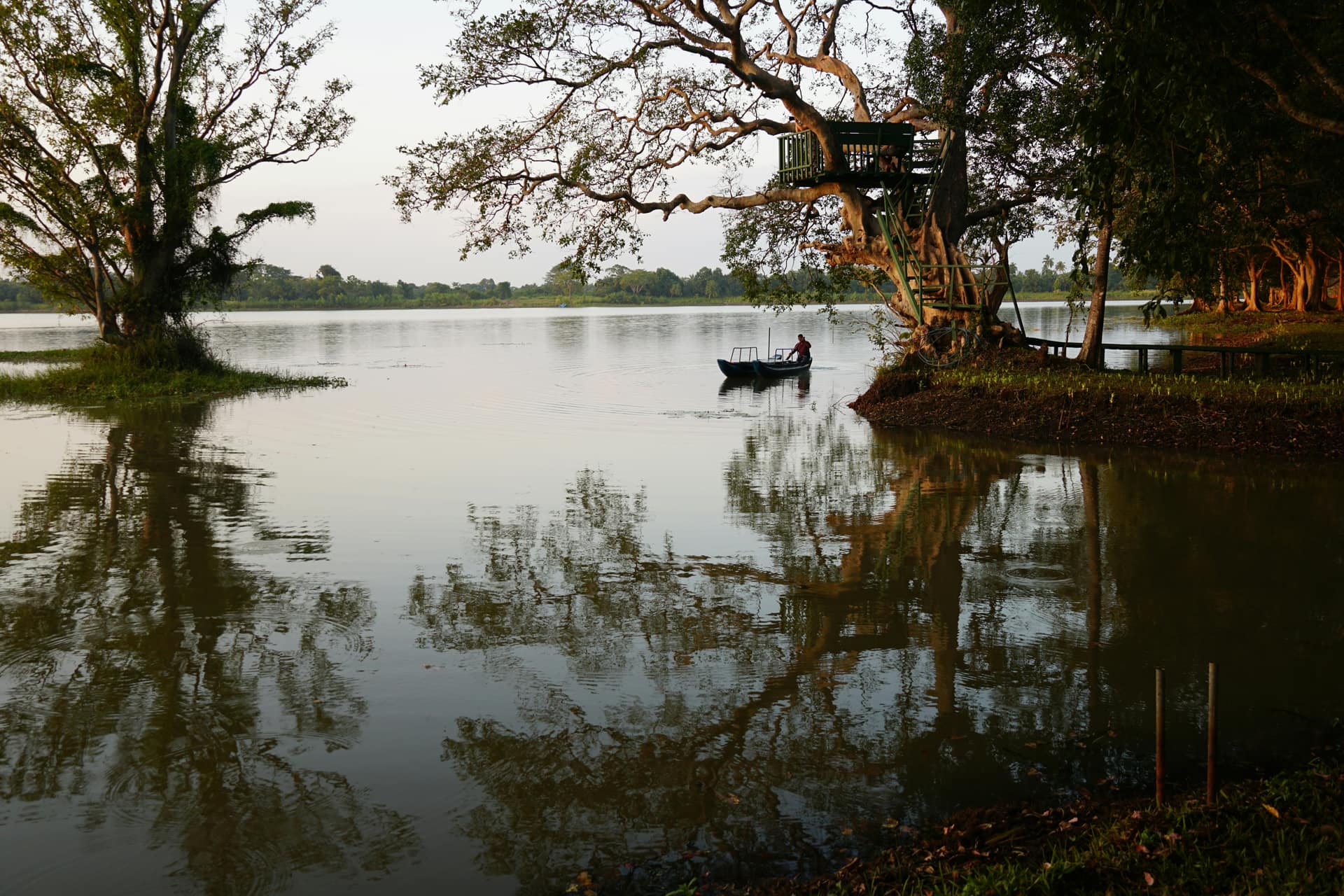
The village tank, an ancient reservoir, is the heart of dry-zone village life. Built by kings and communities over centuries, tanks store monsoon rain to irrigate fields through the dry months.
In January, after the rains, tanks are full. Villagers bathe, wash clothes, fish and water cattle, and birds crowd the shallows. Many tanks have small temples on their banks.
The saying "the tank, the temple and the paddy field" sums up the traditional village, linking water, faith and food.
Fishermen on the larger tanks still use small canoes and simple nets, and in the late afternoon you can often buy freshly caught tilapia at the tank's edge. Village children swim near the shallows while water buffalo wallow nearby.
A day in the village
Village days start early. Farmers walk to the fields at dawn to check water levels and scare birds from ripening grain. Children head to school in white uniforms, and women prepare breakfast of rice, coconut and curry.
Midday brings rest in the heat. In the late afternoon, villagers gather at the tank to bathe, and families visit the temple in the evening.
Lankan Stays & Trails arranges village visits with families who welcome guests, which keeps the experience genuine and supports the community directly.
- →Dawn in the fields.
- →Midday rest.
- →Evening at the tank and temple.
How to experience it
Village tours near Sigiriya and Habarana often include a bullock cart ride, a canoe trip on a tank, a walk through the fields and a home-cooked lunch. Choose tours run by village families rather than staged shows.
Cycling through the countryside around Polonnaruwa and Anuradhapura is another way to see paddy fields and villages at your own pace.
Homestays and cooking classes offer the deepest experience, with time to talk to families, help with cooking and see daily life up close.
- →Village tours.
- →Cycling routes.
- →Homestays and cooking classes.
Visiting respectfully
Walk on the bunds, the raised paths between fields, and never through growing crops. Close gates and avoid disturbing irrigation channels.
Ask before photographing people, especially women bathing at the tank. A smile and a gesture towards your camera is usually enough, and most people will respond kindly.
Dress modestly in villages, covering shoulders and knees, and remove shoes when entering homes.
- →Walk on bunds, not crops.
- →Ask before photographs.
- →Modest dress, shoes off at homes.
Terraces in the hills
In the hill country and wet zone, rice is grown on terraces cut into hillsides, especially around Kandy, Ella and the Knuckles range. In January, some terraces are green, while others are being prepared.
The terraces around Ella and the drive between Kandy and Matale offer beautiful views of this landscape.
Hill villages often combine rice with vegetables, spices and tea, giving a different picture of rural life from the dry zone.
- →Terraces around Kandy and Ella.
- →Knuckles range villages.
- →Rice with vegetables and spices.
Frequently asked questions
When is rice harvest in Sri Lanka?
The main Maha harvest mostly takes place from about February to March in the dry zone. The minor Yala season harvest is around August. In January, Maha rice is tall, green and ripening, with some fields turning golden towards the end of the month.
Where can I see paddy fields in January?
The Cultural Triangle around Sigiriya, Habarana, Polonnaruwa and Anuradhapura has wide, green paddy fields in January. Terraced fields can be seen around Kandy, Ella and the Knuckles range. Cycling and village tours are the best ways to explore them.
What is a village tour in Sri Lanka?
A village tour typically includes a walk through paddy fields, a canoe ride on a tank, a bullock cart ride and a home-cooked lunch. Choose tours run by local families rather than staged shows. They are most common around Sigiriya and Habarana.
Can I stay with a village family in Sri Lanka?
Yes. Homestays are available in many rural areas, including the Cultural Triangle and the hill country. They offer home-cooked meals, conversations with families and a deeper look at daily life. Facilities are simple, so check what is included before booking.
What is a village tank?
A tank is an ancient reservoir that stores monsoon rain for irrigation. Built over centuries, tanks are the heart of dry-zone villages, used for farming, bathing, fishing and watering cattle. Many have small temples on their banks.
How should I behave in a Sri Lankan village?
Dress modestly, ask before photographing people, walk on bunds rather than through crops and remove shoes when entering homes. Accept food or tea with your right hand. A smile and a greeting of ayubowan go a long way.
Is January a good time for a village tour?
Yes. January is one of the best months, with green paddy fields, full tanks and dry, pleasant weather in the Cultural Triangle. Mornings are fresh and good for walking or cycling, and birds are abundant around the fields and tanks during the migrant season.