
Quick answer
The natural places for a genuine rest day or slow morning on the 12-day Alps-to-beach Sri Lanka itinerary are day 8's easy Ella morning before the long transfer to the coast, and the largely unstructured south-coast stretch itself (typically days 9 to 11), rather than the Cultural Triangle or Kandy legs, where the route's fixed activities (the Sigiriya climb, the scenic railway, the Temple of the Tooth ceremony) do not compress or shift well.
Key takeaways
- Day 8's morning in Ella, before the roughly 4 to 5 hour transfer to the coast, is already designed as a lighter morning in the fixed route and is the easiest place to add genuine rest.
- The south coast stretch, typically days 9 to 11, is deliberately the least scheduled part of the whole route, functioning as an ongoing rest period rather than needing a single dedicated rest day.
- The Cultural Triangle's 2 nights are a poor place for a rest day, since day 2's Sigiriya climb is time and heat sensitive and does not shift easily.
- Kandy's 2 nights are already relatively relaxed relative to the rest of the route, so adding a formal rest day there tends to feel redundant rather than restorative.
- Inserting a rest day into the hill country's 3 nights risks displacing either the scenic railway's fixed schedule or the Horton Plains dawn excursion, both of which are harder to reschedule than a beach day.
Where rest already exists in the fixed route
Before adding anything, it is worth recognising that the 12-day Alps-to-beach route already has built-in slower stretches rather than being uniformly demanding throughout. Day 8's morning in Ella is explicitly framed as an easy morning in the original itinerary, perhaps a second short walk or simply resting, precisely because it sits before the route's longest single transfer. The south coast finish, typically days 9 to 11 within the 4 to 5 night stay, is also deliberately the least scheduled part of the whole trip.
This matters because it means a traveller does not necessarily need to invent a new rest day from scratch; recognising and protecting these two already-existing slow points, rather than filling them with extra activities, often solves the need for rest without changing the route's structure at all.
It is worth distinguishing genuine rest from simply an unstructured day, since the two are not quite the same thing. A day with no fixed activity can still feel tiring if it is spent packing, checking out, and travelling between stops, so the clearest rest on this route tends to sit either fully within a single base (the south coast) or immediately before a long transfer, rather than on a changeover day itself.
- →Day 8's Ella morning: already framed as light, sits right before the route's longest drive.
- →The south coast stretch (roughly days 9 to 11): deliberately the least scheduled part of the trip.
- →Genuine rest works best within a single base, not on a day that also involves changing location.
Day 8's Ella morning: the clearest rest opportunity
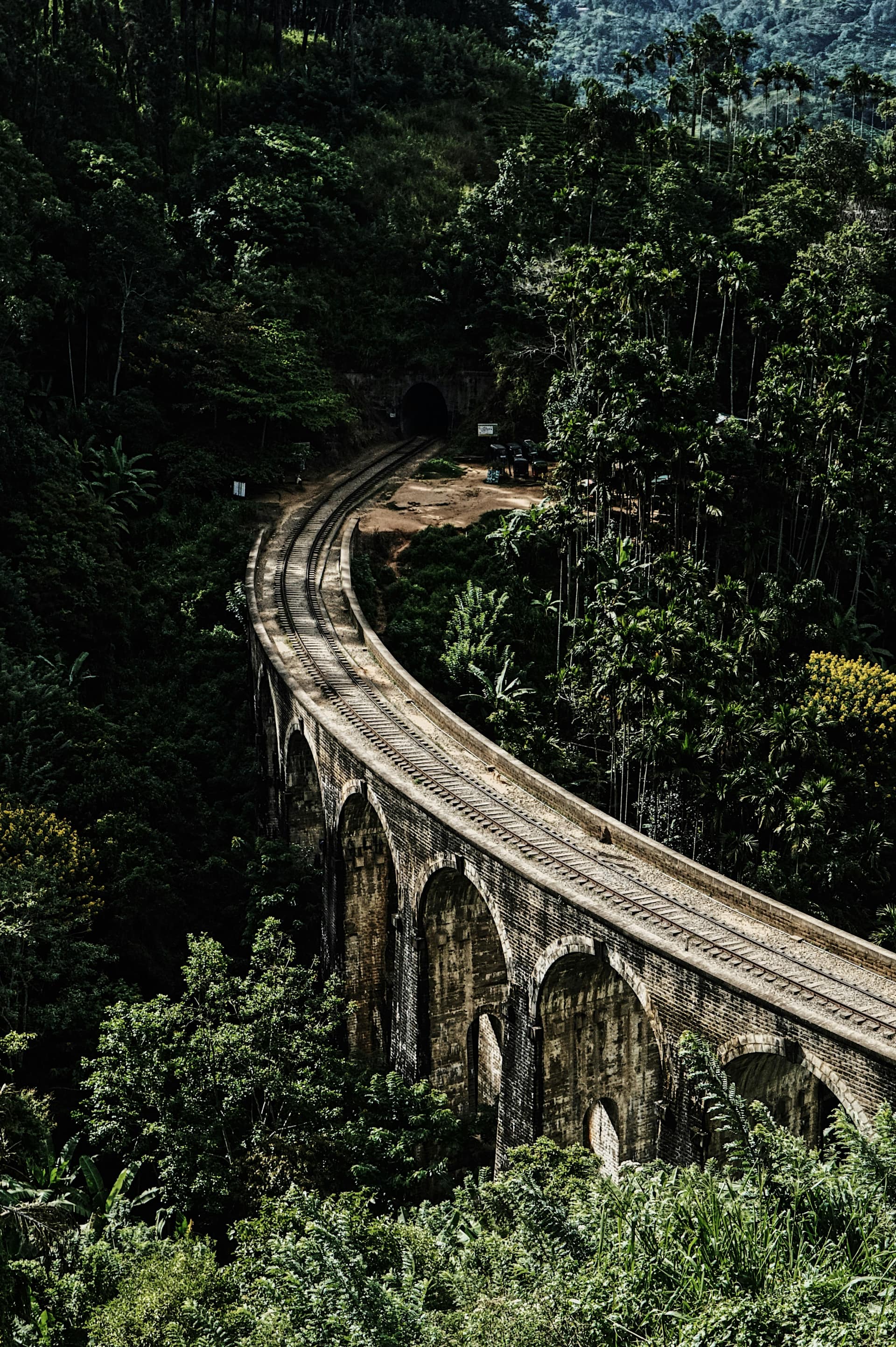
Day 8 sits between day 7's arrival in Ella (with its own afternoon walk to Nine Arch Bridge or Little Adam's Peak) and the roughly 4 to 5 hour drive down to the south coast. Because the fixed route already treats this transfer as a dedicated travel day rather than one to combine with sightseeing, the morning beforehand is the single easiest place to genuinely slow down: a late breakfast, no scheduled walk, simply resting before a long drive.
This slot works well specifically because it does not compete with anything else fixed on the route; nothing else is scheduled for that morning by default, so protecting it as rest rather than adding a second walk (see the companion guide on what to cut) achieves the same result from the other direction.
Practically, this can mean anything from a slow breakfast on a guesthouse terrace with hill views to simply packing unhurriedly rather than rushing to fit in one more sight. Either version achieves the same goal: arriving at the start of the day 8 drive already rested, rather than adding fatigue on top of what is already the route's longest single transfer.
- →A slow breakfast with no fixed start time works well for this morning.
- →Packing the evening before, rather than on the morning itself, protects more of this slot for rest.
- →This morning pairs naturally with an earlier night on day 7 as well.
The south coast stretch as an ongoing rest period
Rather than a single rest day, the south coast leg (typically 4 to 5 nights at Mirissa or Unawatuna) functions as an extended rest period by design, with whale watching (season permitting) and reef snorkelling as the only organised activities and the rest left deliberately open. Travellers looking for more rest within the fixed route generally find it here rather than needing to add a new day.
For travellers who still feel the coast leg is too scheduled, the simplest fix is choosing only one organised activity (either whale watching or snorkelling, not necessarily both) and leaving the remaining days fully unstructured, rather than restructuring the itinerary itself.
Choosing between Mirissa and Unawatuna can also shape how restful this stretch feels; Mirissa tends to suit a quieter beach-and-hammock pace, while Unawatuna has slightly more going on within easy reach. Neither choice is right or wrong, but it is worth matching the base to how much genuine downtime is the goal for this part of the trip.
- →Choose one organised coast activity, not several, if more rest is the priority.
- →The coast leg already has no fixed daily schedule beyond one or two optional outings.
- →This stretch absorbs the need for rest better than any single inserted day would.
Where adding a rest day would break momentum
The Cultural Triangle's 2 nights are a poor place for a rest day, since day 2's Sigiriya climb is genuinely time and heat sensitive, best done early, and does not shift well to a different day without disrupting the transfer to Kandy that follows on day 3. Inserting rest here generally means losing a full day's activity rather than simply slowing down.
Hill country's 3 nights are similarly risky for this purpose, since day 5 is fixed around the scenic railway's timetable and day 6's optional Horton Plains excursion already requires an early start of its own; adding a rest day here tends to displace one of these two fixed points rather than sitting comfortably alongside them.
A useful test before inserting rest anywhere in the first seven days is to ask whether the day in question has a fixed timetable component (a train departure, a temple ceremony, a heat-sensitive climb). If it does, rest is better placed either side of that leg rather than inside it, which is exactly why day 8's morning, sitting after all the fixed points are already behind the traveller, works so much better than anything earlier in the route.
- →Cultural Triangle: Sigiriya's early-morning, heat-sensitive climb does not reschedule easily.
- →Hill country: the scenic railway's timetable and the Horton Plains excursion are both fixed points.
- →Kandy: already relatively relaxed, so a formal rest day here tends to feel redundant.
A simple rule for placing rest
The general rule that emerges from the fixed route's own structure is: place rest immediately before or after the route's two long transfer days (day 1's arrival and day 8's coast transfer), and lean on the south coast's already-open schedule for anything beyond that, rather than trying to carve a rest day out of the Cultural Triangle or hill country legs, where the fixed activities are the whole point of being there.
We at Lankan Stays & Trails generally advise Swiss travellers to trust the route's existing slow points, day 8's morning and the coast stretch itself, rather than adding a formal extra rest day, which usually means displacing an activity elsewhere in the fixed 12 nights.
This rule also travels well beyond this specific 12-day route: on any fixed itinerary, rest tends to sit best immediately around the longest transfers and within the least time-sensitive base, rather than being forced into a leg built around a specific timetable or a heat-sensitive activity.
- →Place rest immediately before or after the route's two long transfer days.
- →Lean on the south coast's already-open schedule for anything beyond that.
- →Avoid carving rest out of legs built around a fixed timetable or a heat-sensitive climb.
Frequently asked questions
Where is the best place to add a rest day on this itinerary?
Day 8's morning in Ella, before the roughly 4 to 5 hour transfer to the coast, and the largely unstructured south-coast stretch itself are the two natural places, since neither displaces a fixed activity elsewhere in the route.
Should I add a rest day in the Cultural Triangle?
Generally not recommended. Day 2's Sigiriya climb is time and heat sensitive and does not reschedule easily, so inserting rest here usually means losing the activity rather than simply slowing the pace.
Is the south coast leg already restful enough without adding a dedicated rest day?
For most travellers, yes. The 4 to 5 night coast stay is deliberately the least scheduled part of the route, so choosing only one organised activity, whale watching or snorkelling, usually provides enough rest without needing a separate day.
Can I add a rest day during the hill country leg?
It is possible but risky, since day 5 is fixed around the scenic railway's timetable and day 6's Horton Plains excursion is already an early, fixed commitment. A rest day here often displaces one of these rather than complementing it.
Does Kandy need a dedicated rest day?
Not usually. Kandy's 2 nights are already relatively relaxed compared with the rest of the route, so adding a formal rest day there tends to feel redundant rather than restorative.
What is the simplest way to build more rest into this route without changing it?
Protect day 8's already-planned easy Ella morning as genuine rest rather than adding a second activity to it, and keep the south-coast stretch to one organised activity rather than several, letting the rest of those days stay open.