
Quick answer
A Sri Lanka wildlife and beach holiday in February is the sweet spot for the 10-day south coast route. Yala's dry season begins, concentrating animals at waterholes and improving leopard sightings; Mirissa's whale boats run daily on calm seas; Bundala still holds migratory birds and flamingos; and the south coast is sunny and settled. February is popular, especially in half-term weeks, so book Yala camps and beach hotels several months ahead.
Key takeaways
- February is the start of Yala's dry season, when animals begin to gather at waterholes.
- Mirissa's whale-watching boats run daily, and February is often among the most reliable months for blue whales.
- Bundala still holds migratory birds and flamingos in February.
- The south coast is dry and calm, with temperatures of roughly 28 to 31 degrees.
- Half-term weeks in February are busy, so book camps and hotels several months ahead.
Why February is the sweet spot
February is the sweet spot for the wildlife and beach route because every element is in season at once. The south coast is dry and calm, Yala is drying out, Mirissa's whales are reliable and Bundala's migrants have not yet left. No other month combines all four quite so well.
The weather is also comfortable, warm but not yet as hot and humid as March and April. Evenings are pleasant for beach dinners and the Rekawa turtle watch.
February also avoids the extremes of the season. The holiday crowds of late December and early January have gone, and the heavy heat of late March and April has not arrived. For couples and families who can travel at any point in the season, it is the safest bet.
- →Yala: dry season begins.
- →Mirissa: whale season in full swing.
- →Bundala: birds still present.
- →Beaches: calm and sunny.
Yala in February
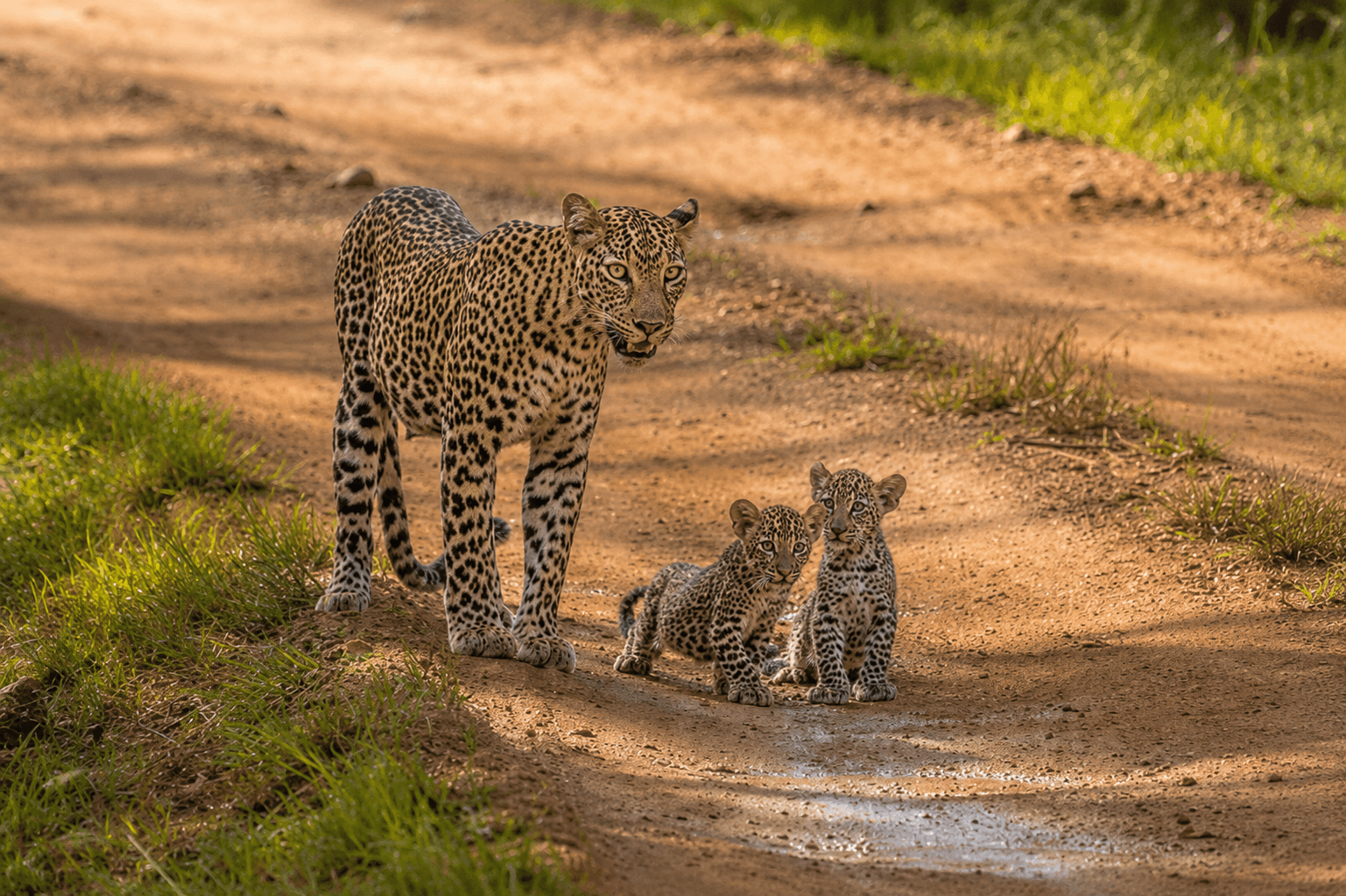
Yala in February starts to dry out, and the waterholes shrink. Animals, including leopards, elephants, sloth bears and deer, gather at the remaining water, which makes sightings more predictable. Leopards are often seen on rocks and along the tracks in the early morning.
The park is busy in February, particularly Block I. Dawn drives, full days or quieter blocks help avoid the worst of the jeep traffic. The Yala month-by-month page on this site has more detail on the season.
Sloth bears are occasionally seen in February, though the best chance is later, around June, when the palu trees fruit. Elephants are common in Yala in February, often near the lagoons in the late afternoon, and crocodiles bask on the banks of the shrinking pools.
- →Dawn drives: best light and active animals.
- →Waterholes: focus of activity as the park dries.
- →Crowds: Block I busy, especially at weekends.
Whales and the sea
Whales and the sea are at their best in February. Mirissa's boats run daily, the sea is often flat in the morning, and blue whales are seen on most trips in good years. Spinner dolphins are common, and sperm whales are occasionally seen.
The calm sea also makes snorkelling at Unawatuna and Jungle Beach clear and comfortable, with reef fish and sometimes turtles in the shallows.
Lankan Stays & Trails often suggests a February trip to first-time visitors who want both leopards and whales, because the odds on both are among the best of the year.
The February route
The February route follows the classic wildlife and beach itinerary without changes. Travellers who want more leopard time can take the safari-heavy version, with three Yala drives. Those with children in half-term might prefer the two-base version, with fewer hotel changes.
Because February is busy, booking order matters: tented camps and Yala jeeps first, then whale boats, then beach hotels.
Travellers who want to see Bundala's flamingos should not leave it too late in the month; flocks thin out from March. A dawn visit on day four of the classic route, before the drive to Tangalle, is ideal.
- →Days 1 to 4: Udawalawe, Yala and Bundala.
- →Days 5 to 7: Tangalle, Mirissa and whales.
- →Days 8 to 10: Unawatuna and the airport.
Booking for February
Booking for February should start early, ideally four to six months ahead for tented camps near Yala and popular beach hotels. Half-term weeks, which vary by country, are the busiest.
Navam Poya, the February full moon, brings a major perahera procession at Gangaramaya temple in Colombo. On the south coast, temples are busier and alcohol is not sold on poya days.
Travellers who leave booking late can still find good options by using a less-known beach, such as a quieter bay between Ahangama and Galle instead of Unawatuna, or a guesthouse in Tissamaharama rather than a tented camp. The wildlife is the same either way.
- →Camps: four to six months ahead.
- →Half-term: busiest weeks.
- →Poya: no alcohol sales.
Frequently asked questions
Is February the best time for a safari in Sri Lanka?
For the south, it is one of the best. Yala's dry season begins, concentrating animals at waterholes, and Mirissa's whales and Bundala's birds are still in season. February to April gives the best mix of wildlife and calm beaches.
Can you see blue whales in February?
Yes. February is in the heart of Mirissa's whale-watching season, and blue whales are frequently seen. Seas are usually calm in the morning, making it a comfortable month for boat trips.
Is Sri Lanka busy in February?
Yes, it is high season. Yala Block I, popular beach hotels and tented camps can be busy, especially during school half-term weeks. Booking four to six months ahead is sensible. Quieter blocks in Yala help on busy days.
What is the weather like in Sri Lanka in February?
Dry and sunny on the south and west coasts, with temperatures of roughly 28 to 31 degrees and calm seas. The east coast is starting to dry out but is still better from April or May. Evenings are warm and pleasant for dinners outside.
Is February good for families on safari?
Yes. The weather is comfortable, wildlife is active, and the beaches are calm for children. Book early for half-term weeks, and consider the two-base version of the route to reduce hotel changes.
Are leopards easier to see in February?
Often, yes. As Yala dries out from February, leopards and other animals gather at fewer waterholes and are seen more predictably. Sightings are never guaranteed, but February to July gives the best odds.