
Quick answer
A wildlife and beach itinerary can add a culture day without extra driving: Kataragama's evening puja and Tissamaharama's ancient stupas fit the Yala nights, Mulkirigala rock temple sits about 16 to 20 kilometres north of Tangalle, and Galle Fort lies about six kilometres from Unawatuna. The simplest version swaps the Yala afternoon drive on day three for Kataragama and the Tissamaharama stupa, keeping every other night and activity of the 10-day route.
Key takeaways
- Kataragama, about 20 minutes from Tissamaharama, holds a famous evening puja shared by Buddhists, Hindus and Muslims.
- Tissamaharama was a capital of the ancient kingdom of Ruhuna, and its great stupa dates back over two thousand years.
- Mulkirigala rock temple, roughly 16 to 20 kilometres north of Tangalle, has cave shrines reached by several hundred steps.
- Galle Fort, a UNESCO World Heritage Site, lies about six kilometres from Unawatuna.
- The culture day replaces the optional Yala afternoon drive, so no night changes.
Why add a culture day
Adding a culture day to a wildlife and beach holiday gives the trip a sense of place beyond animals and sand. The deep south was the heart of the ancient kingdom of Ruhuna, and its temples and stupas are living places of worship, not just ruins.
The cultural stops on this route are all close to where you are already staying, so they need no extra nights. They are also quieter than the Cultural Triangle, which makes them easy to enjoy at your own pace.
- →Kataragama: evening puja at a temple complex shared by several faiths.
- →Tissamaharama: ancient stupas and the reservoir of the Ruhuna kingdom.
- →Mulkirigala: cave temples on a rock above the paddy fields.
- →Galle Fort: Dutch-era ramparts, streets and lighthouse.
Kataragama and Tissamaharama on the Yala nights
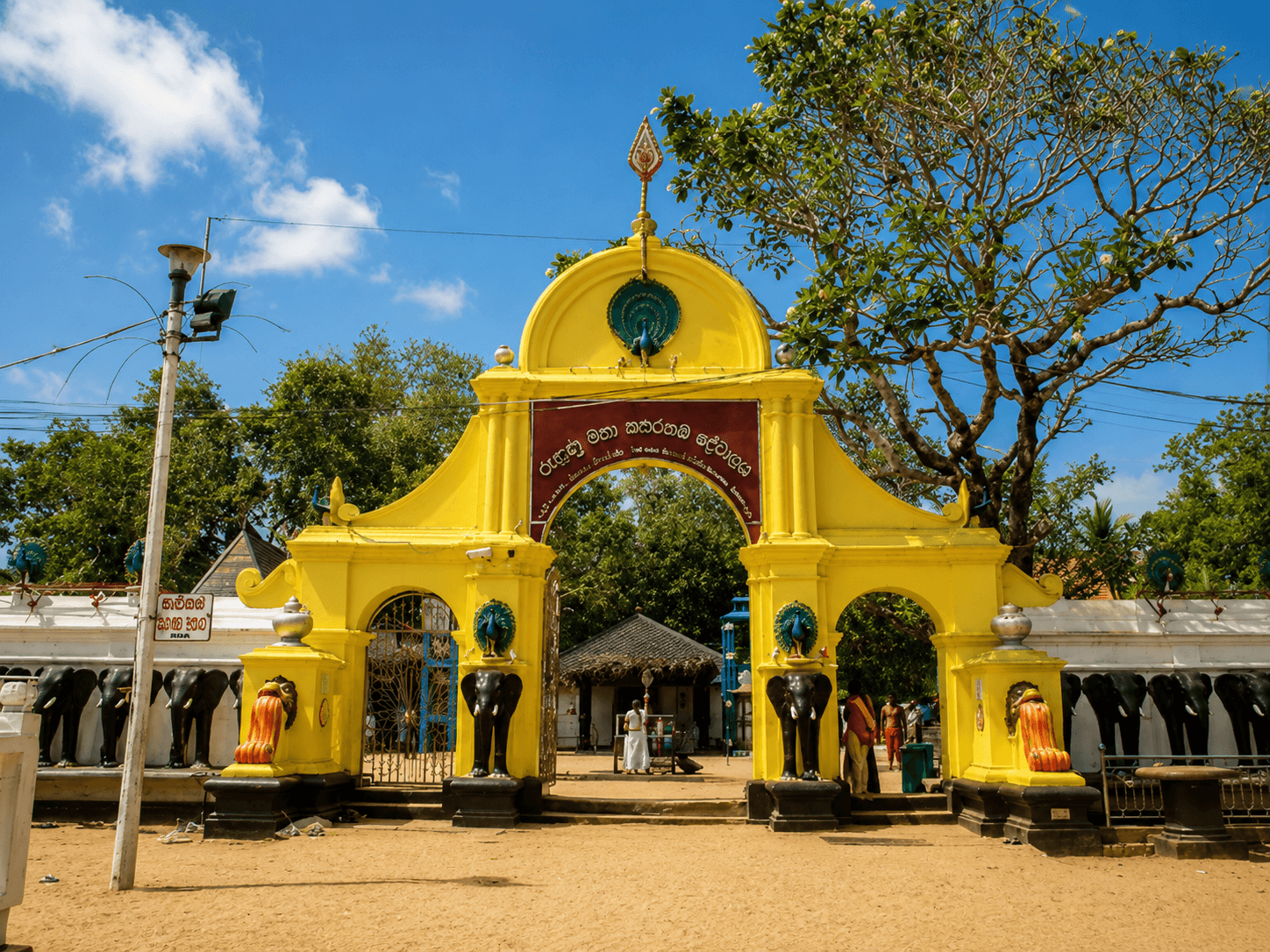
Kataragama is the best cultural addition to a wildlife and beach holiday, about 20 minutes north of Tissamaharama. Its temple complex is sacred to Buddhists, Hindus and Muslims, and the evening puja, usually from around 6.30pm, brings drums, offerings of fruit and a procession of devotees. Dress modestly, with shoulders and knees covered, and remove shoes at the temple.
Tissamaharama's great stupa, the Tissamaharama Dagoba, stands near the reservoir of Tissa Wewa and is said to date from the second or third century BC. A walk around it at dusk, followed by sunset on the reservoir, makes a calm end to a day of safari.
The simplest way to fit both is to take the Yala dawn drive on day three, rest at midday, and spend the late afternoon and evening at the stupa and Kataragama instead of an afternoon drive.
- →Tissamaharama Dagoba: late afternoon, near Tissa Wewa.
- →Kataragama puja: evening, usually from around 6.30pm.
- →Dress: shoulders and knees covered, shoes off at the shrines.
Mulkirigala near Tangalle
Mulkirigala rock temple rises about 200 metres from the paddy fields roughly 16 to 20 kilometres north of Tangalle. Its cave shrines hold reclining Buddhas and wall paintings, and the climb is several hundred steps, best done in the early morning or late afternoon. A visit takes about two hours.
It fits easily into the Tangalle beach day on the classic route, leaving the evening free for the Rekawa turtle watch. Monkeys live on the rock, so keep food out of sight.
Galle Fort at the end of the route
Galle Fort is already part of the classic wildlife and beach route, visited in the late afternoon of day nine from Unawatuna. Its ramparts, lighthouse, churches and streets of old houses are a UNESCO World Heritage Site, and the walk around the walls at sunset is one of the best on the south coast.
Travellers who want more time can spend a whole morning in the fort, with the Maritime Museum and a guided heritage walk, and save the beach for the afternoon.
Lankan Stays & Trails often arranges a local guide for a short Galle Fort walk on this route, which brings its stories to life in about an hour and a half.
- →Late afternoon: rampart walk and sunset at the lighthouse.
- →Morning: museums and a guided heritage walk.
- →Allow: two to three hours for a relaxed visit.
Temple etiquette on the route
Temple etiquette in Sri Lanka is simple but important. Cover shoulders and knees, remove shoes and hats before entering shrine areas, and never pose with your back to a Buddha statue for a photograph. Many temples ask visitors to remove socks too, so the ground can be hot at midday.
Poya days, the monthly full-moon holidays, bring more worshippers and a quieter mood. Alcohol is not sold on poya days, which can affect hotel bars on the route.
- →Cover shoulders and knees.
- →Remove shoes and hats in shrine areas.
- →No photos with your back to a Buddha.
Frequently asked questions
Is Kataragama worth visiting from Yala?
Yes. It is only about 20 minutes from Tissamaharama, and the evening puja is one of Sri Lanka's most atmospheric religious events, shared by Buddhists, Hindus and Muslims. It fits easily into the Yala nights without losing a dawn safari.
What time is the puja at Kataragama?
The main evening puja usually takes place from around 6.30pm, with smaller ceremonies through the day. Times can change, especially on festival days, so check locally. Arrive a little early to see the procession of devotees.
How many steps are there at Mulkirigala?
Several hundred, climbing in stages past cave shrines to the top of the rock. The climb takes about 30 to 45 minutes at a steady pace. Go in the early morning or late afternoon to avoid the midday heat.
Can you visit Galle Fort from Unawatuna?
Yes. Galle Fort is about six kilometres from Unawatuna, roughly 15 to 20 minutes by tuk-tuk. A late-afternoon visit with a sunset walk on the ramparts is the classic way to see it.
Should I add Sigiriya to a wildlife and beach holiday?
Only if it matters a lot to you. Sigiriya is roughly five and a half to six and a half hours from Udawalawe, so adding it means a long drive and usually a change of route. The Minneriya and Sigiriya version of this itinerary shows how.
What should I wear to temples in Sri Lanka?
Clothes that cover the shoulders and knees, ideally light and loose for the heat. A sarong or scarf in your bag is useful. Shoes and hats come off before entering shrine areas, and white is often worn by worshippers on poya days.