
Quick answer
February is a strong month for wildlife photography in Sri Lanka. Clear, dry weather gives good light in the early morning and late afternoon. Yala is best for leopards, Wilpattu for quieter leopard and sloth bear encounters, Udawalawe for elephants, Bundala and Sinharaja for birds, and Mirissa for whales. Bring a telephoto lens of 100 to 400 mm or longer, a bean bag for the jeep, spare batteries and dust protection. Book private jeeps and plan morning and afternoon drives.
Key takeaways
- February's clear light suits early morning and late afternoon shoots.
- Yala and Wilpattu are best for leopards; Udawalawe for elephants.
- Bundala and Sinharaja are top birding sites.
- A telephoto lens and bean bag are essential in the jeep.
- Private jeeps give more control over positioning and time.
Light and weather in February
February is dry across most of the parks, with clear skies and low humidity by local standards. The best light is in the first two hours after sunrise, around 6.30, and the last two hours before sunset, around 6.20.
Midday light is harsh and the heat haze strong, especially in the dry zone. Most photographers use the middle of the day for rest, editing and travel.
Dust can be an issue in the dry parks, especially later in the dry season. Protect your gear when changing lenses in an open jeep.
Overcast mornings in the hills can actually help bird photography, softening shadows under the canopy.
- →Best light: early morning and late afternoon.
- →Harsh midday light and haze.
- →Dust in the dry parks.
The best parks and subjects
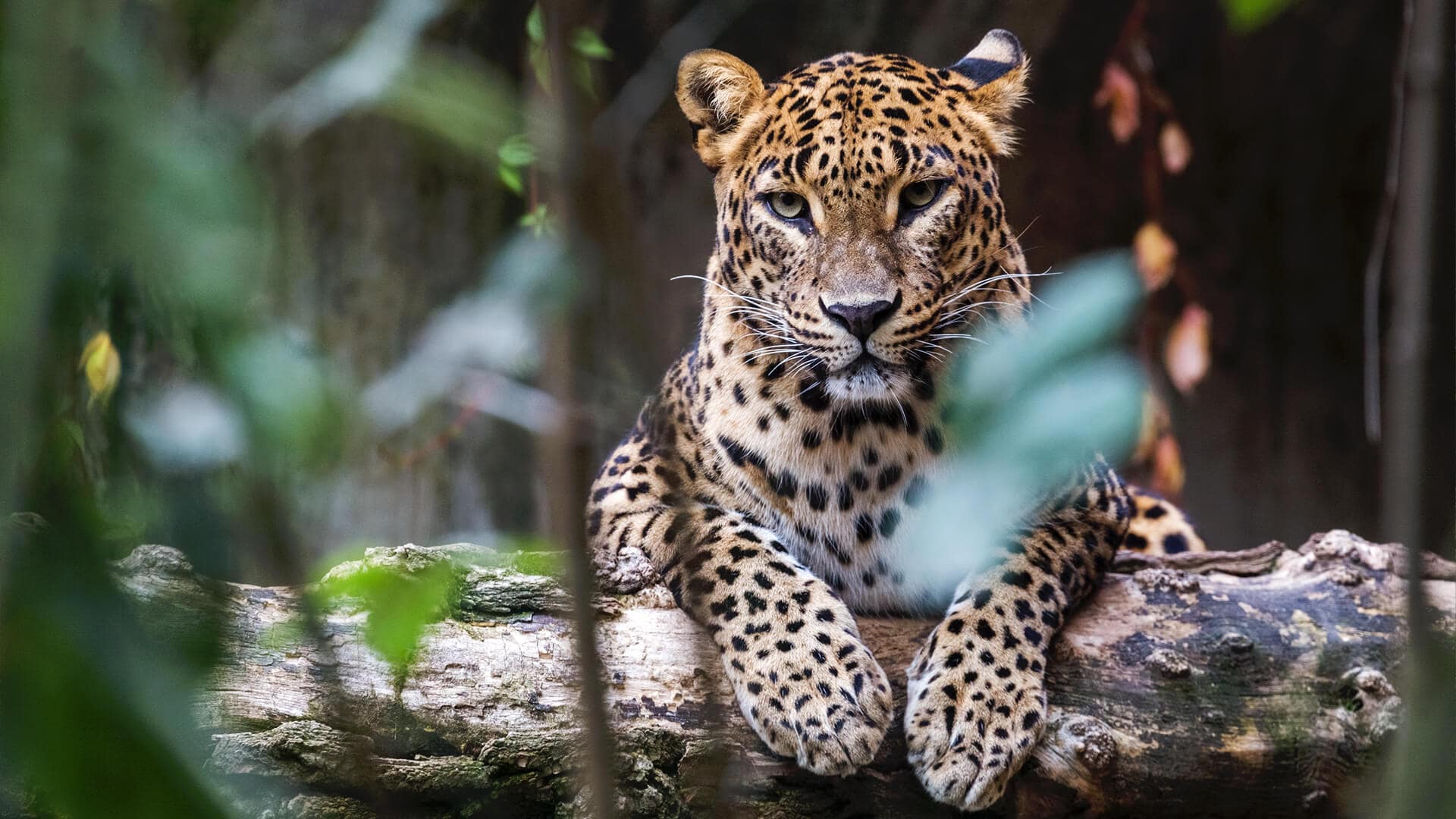
Yala has one of the highest densities of leopards in the world, offering the best chance of photographing them. Block 1 is busy, so positioning at sightings can be difficult. Other blocks are quieter.
Wilpattu offers quieter leopard and sloth bear encounters at its villus, with fewer jeeps and more natural behaviour. Udawalawe is the most reliable park for elephants, often with calves, in open grassland that suits clean compositions.
Bundala is excellent for waterbirds and waders, Sinharaja for endemic forest birds, and Mirissa for blue whales at sea.
Landscape and environmental shots are worth planning too. Elephants at Udawalawe's reservoir at sunset, painted storks against Bundala's lagoons or a leopard on a Yala rock all benefit from a wider lens that shows the setting rather than only the animal.
- →Yala: leopards.
- →Wilpattu: quieter leopards and bears.
- →Udawalawe: elephants.
- →Bundala, Sinharaja: birds.
Gear to bring
A telephoto lens of 100 to 400 mm, or longer for birds, is essential. A second body with a wider lens helps capture animals in their landscape. Bring plenty of batteries and memory cards, as charging can be limited.
A bean bag is the best support in a jeep, resting on the door or roof frame. Tripods are rarely practical on safari.
Dust covers, lens cloths and a blower help keep gear clean. A rain cover is useful on boats for spray.
- →Telephoto lens, 100 to 400 mm or longer.
- →Bean bag for the jeep.
- →Spare batteries and cards.
- →Dust and spray protection.
Jeeps, drivers and positioning
Private jeeps give more control over where you go and how long you stay at a sighting. Shared jeeps are cheaper but limit flexibility.
An experienced driver and tracker who understand photographers' needs, such as positioning for light and background, make a huge difference. Ask for one when booking.
Full-day drives in Yala and Wilpattu allow more time at sightings and access to distant areas, with a packed lunch.
Photographing whales and birds
Whale photography from Mirissa requires a fast shutter speed and patience. Blue whales surface several times before diving, raising their tails. Watch for the blow and be ready.
Bird photography in Sinharaja is challenging in low forest light. A fast lens and high ISO help. In Bundala, early morning light on the lagoons is beautiful for waders and storks.
The planners at Lankan Stays & Trails can arrange private jeeps, photographer-friendly drivers and specialist bird guides on February itineraries.
Ethics in the field
Never ask drivers to chase, crowd or block animals for a photograph. Keep a respectful distance and turn off engines when possible.
Do not use flash at night or on nesting turtles. Avoid playback for birds in sensitive areas.
The best wildlife photographs show natural behaviour, which requires patience rather than pressure.
- →Do not crowd or chase animals.
- →No flash at night.
- →Patience over pressure.
Frequently asked questions
Is February good for wildlife photography in Sri Lanka?
Yes. February is dry and clear, with good light in the early morning and late afternoon. Leopards, elephants, birds and whales are all active and accessible. Midday light is harsh, so plan shoots for the edges of the day.
Which park is best for photographing leopards?
Yala has the highest chance of leopard sightings, though Block 1 is busy and positioning can be difficult. Wilpattu offers quieter encounters with fewer jeeps. Full-day drives and a photographer-friendly driver improve results in both parks.
What lens do I need for safari in Sri Lanka?
A telephoto lens of 100 to 400 mm is the minimum, and longer for birds. A second body with a wider lens helps capture animals in their landscape. A bean bag provides support on the jeep door or roof frame.
Should I book a private jeep for photography?
Yes, if possible. Private jeeps give control over where you go and how long you stay at sightings. Ask for an experienced driver who understands photographers' needs, such as positioning for light and background.
Can I photograph whales from Mirissa?
Yes. February is in the whale season. Use a fast shutter speed and be ready when the blow appears, as blue whales surface several times before diving. A rain cover protects gear from spray, and a stable stance helps on the boat.
When is the best light for photography in February?
The first two hours after sunrise, around 6.30, and the last two hours before sunset, around 6.20. Midday light is harsh, with strong heat haze in the dry zone, so most photographers rest or edit then.
Can I charge camera batteries on safari?
Most lodges and hotels near the parks have power for charging, though some tented camps have limited hours. Bring enough batteries and cards for a full day, as there is no charging in the jeep. A small power bank helps for phones and smaller devices.