
Quick answer
Wildlife safety in Sri Lanka mainly comes down to respecting distance and following guide instructions rather than avoiding wildlife altogether, since encounters with wild elephants, leopards and monkeys are a highlight of most trips. Stay inside the vehicle and follow the driver's lead on safari, particularly around elephants, which cause more serious incidents in Sri Lanka than any other wild animal, keep food out of sight around monkeys in towns and temples, and never approach a wild elephant on foot outside a safari vehicle, including elephants seen near roads.
Key takeaways
- Wild elephants are responsible for more serious human safety incidents in Sri Lanka than any other animal, mostly involving people approaching too closely on foot outside protected safari settings.
- Yala, Wilpattu, Udawalawe and Minneriya national parks are the main places to see wild elephants and, in Yala's case, leopards, always from within a safari vehicle.
- Toque macaques and other monkeys in towns and temple complexes will snatch food, and sometimes bags, from visitors who carry visible snacks.
- Sri Lanka has several venomous snake species, including the Russell's viper and the common krait, making sturdy footwear and a torch essential on any evening jungle walk.
- Safari guides and trackers are trained to read elephant and leopard behaviour, which is exactly why staying inside the vehicle and following their instructions matters more than any general caution on your own.
Why Sri Lanka's wildlife feels unfamiliar to Americans
Sri Lanka concentrates a remarkable range of wildlife, Asian elephants, leopards, sloth bears, and dozens of monkey and bird species, into a country roughly the size of West Virginia. For American travellers whose wildlife experience is largely North American, deer, black bears, the animals here, their behaviour, and the appropriate distance to keep are all genuinely unfamiliar.
This unfamiliarity is exactly why guided experiences matter more here than they might feel necessary to at home. A local guide or tracker reads elephant body language and leopard movement in ways a first-time visitor simply cannot, which is the practical reason safari and jungle-walk guidance should be followed closely rather than treated as overcautious.
Elephant safety on safari and on the road
Elephants are the animal most associated with serious safety incidents in Sri Lanka, almost always involving people on foot approaching too closely rather than incidents inside a safari vehicle. A wild elephant, particularly a male in musth or a mother with a calf, can charge with very little warning, and vehicles give both distance and a fast retreat that a person on foot does not have.
Roadside elephant sightings, common around Habarana and the Cultural Triangle, are where this rule is most often tested, since an elephant beside a road looks approachable in a way a jeep on safari does not. Staying inside the vehicle, keeping windows up if a guide instructs it, and never getting out for a photo near a wild elephant applies in exactly the same way on a road as it does inside a national park.
- →Never approach a wild elephant on foot, on a road or in a park, regardless of how calm it appears.
- →Follow your safari driver's instructions immediately if they reverse or reposition the vehicle near an elephant.
- →Keep noise down and avoid sudden movements or flash photography around elephants at close range.
- →Treat a lone bull elephant with particular caution, since these are involved in a disproportionate number of incidents.
Leopards and other predators
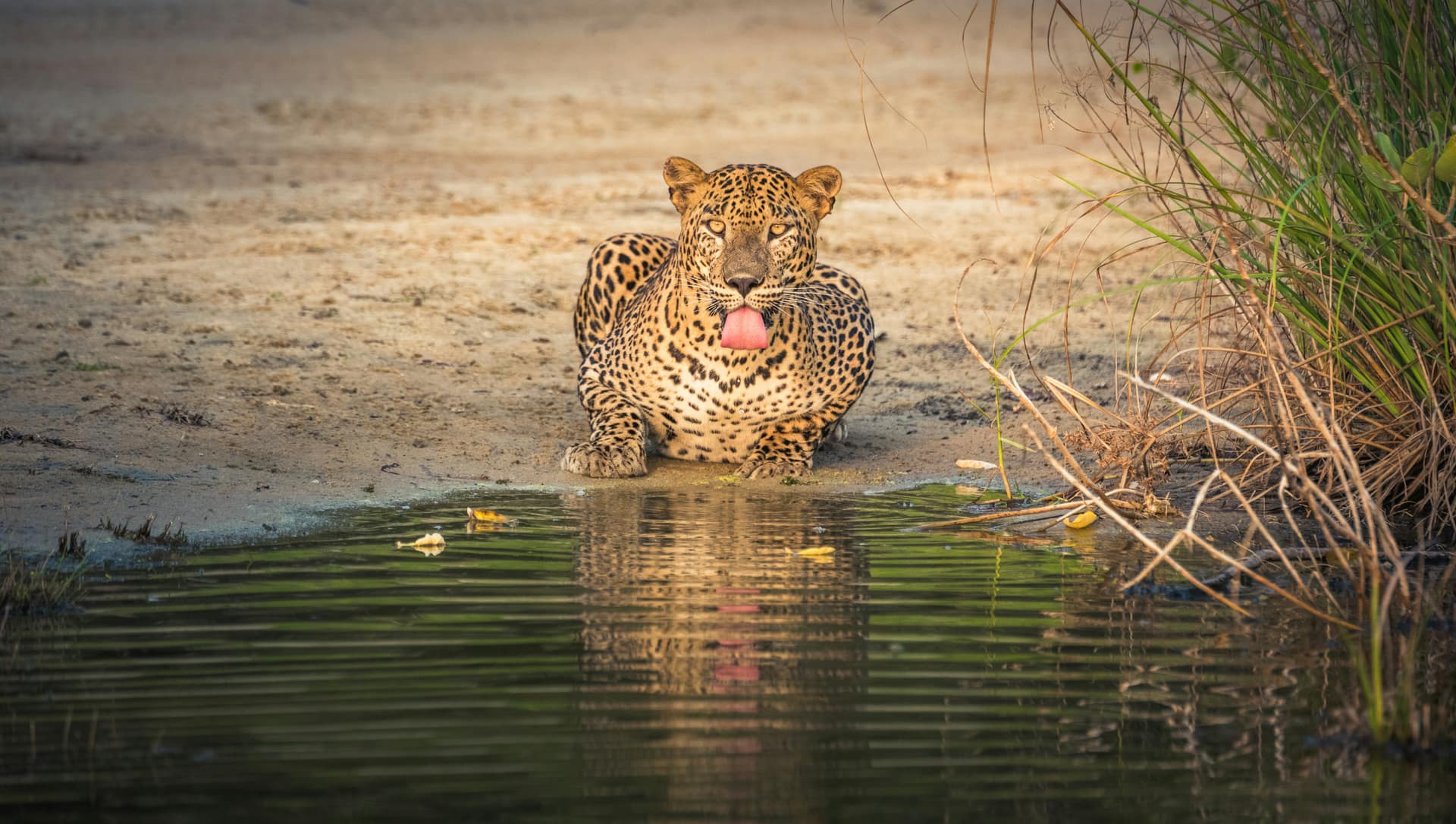
Leopards, most famously in Yala National Park which has one of the world's highest densities of the species, are shy and typically avoid humans, with sightings entirely dependent on staying inside a vehicle with an experienced tracker. Sloth bears, found in several parks including Wilpattu, are more unpredictable at close range than leopards and are generally considered the more genuinely risky animal to encounter on foot.
Neither animal poses a realistic risk to visitors who stay inside a safari vehicle and follow guide instructions, which is the entire basis of how Sri Lankan national parks operate. The risk profile changes only if a visitor leaves the vehicle, which most parks prohibit outright except at designated points.
Snakes and jungle walk caution
Sri Lanka is home to several venomous snake species, including the Russell's viper, the common krait, and various cobras, alongside many harmless species that are far more commonly encountered. Snake bites on visitors are uncommon but not impossible, and most reported incidents involve someone stepping on a snake rather than being deliberately approached by one.
Sturdy, closed footwear rather than sandals, a torch for any walk after dusk, and staying on cleared paths rather than pushing through undergrowth are the practical precautions that address most of the realistic risk. Hotels and guesthouses in rural and hill-country areas are generally well informed about local snake activity and worth asking if you're planning an evening walk.
- →Wear closed, sturdy footwear rather than sandals on any jungle or plantation walk.
- →Carry a torch and watch the path closely on any walk after dusk.
- →Stay on cleared trails rather than walking through long grass or dense undergrowth.
- →Ask local staff about recent snake activity before a walk in a rural or hill-country area.
Monkeys and food-snatching in towns and temples
Monkeys, most often toque macaques, are a common sight around temples, guesthouses and towns across Sri Lanka, and they are generally more of a nuisance than a genuine safety risk. Food snatching is the main issue, an unsecured snack, a bag left open, or food held visibly in hand is a reliable way to attract unwanted attention.
Bites and scratches do occur occasionally, usually when a visitor tries to retrieve snatched food or approaches too closely to photograph or feed a monkey directly. Keeping food out of sight, not feeding monkeys deliberately, and giving them space if one approaches resolves nearly all of these encounters without incident.
Enjoying wildlife responsibly
Wildlife safety in Sri Lanka pairs closely with the ethics of how wildlife tourism is run, which our dedicated guide to elephant riding and animal ethics covers in more depth, particularly around choosing genuinely responsible safari and elephant-viewing operators. Sensible caution around animals, rather than avoidance, is what lets most visitors enjoy genuinely memorable wildlife encounters without incident.
Our private driver-guide itineraries pair guests with experienced local trackers on safari specifically because reading elephant and leopard behaviour is a skill built over years, not something a first-time visitor should be expected to judge alone.
Frequently asked questions
Are wild elephants dangerous in Sri Lanka?
Yes, particularly to people on foot who approach too closely, and elephants cause more serious safety incidents in Sri Lanka than any other wild animal. Inside a safari vehicle, or keeping well back from a roadside elephant, the realistic risk to visitors is low.
Is it safe to go on safari in Sri Lanka?
Yes, safari in parks such as Yala, Wilpattu and Udawalawe is generally safe when visitors stay inside the vehicle and follow the driver and tracker's instructions. Nearly all serious wildlife incidents involve people leaving a vehicle or approaching an animal on foot, which parks prohibit.
What snakes should I watch out for in Sri Lanka?
The Russell's viper, common krait and several cobra species are the venomous snakes of most concern, though bites on visitors are uncommon. Sturdy footwear, a torch after dark, and staying on cleared paths address most of the practical risk during jungle or plantation walks.
Are monkeys dangerous in Sri Lanka?
Generally not, but they will snatch visible food and sometimes bags around temples and towns, and bites can occur if someone tries to retrieve snatched food. Keeping food out of sight and not attempting to feed or handle monkeys directly avoids nearly all incidents.
Can you see leopards in the wild in Sri Lanka?
Yes, Yala National Park has one of the world's highest densities of leopards, and sightings are a highlight for many visitors. Leopards are shy around humans and sightings happen entirely from within a safari vehicle with an experienced tracker.
What should I do if I see a wild elephant on the road in Sri Lanka?
Stay inside the vehicle, keep a respectful distance, and let your driver decide when it's safe to pass or reverse. Never get out for a closer photo, since roadside elephants are involved in a disproportionate share of serious safety incidents in Sri Lanka.
Is it safe to walk in the jungle in Sri Lanka at night?
It's best done with a guide rather than alone, given limited lighting, uneven terrain, and the presence of venomous snake species. Sturdy footwear, a torch, and staying on cleared paths reduce the realistic risk considerably for anyone planning an evening walk.