
Quick answer
Two weeks in northern and eastern Sri Lanka works best from roughly May to September, with two nights in Anuradhapura, three in Jaffna, three at Trincomalee, two at Pasikudah, two at Sigiriya and a last night at Negombo. The route covers the ancient capital, the Tamil north and its islands, and two east-coast beaches in their dry season. The longest drive, from Jaffna to Trincomalee, takes roughly five hours.
Key takeaways
- The north and east of Sri Lanka are driest from roughly May to September, when the south-west is in its monsoon.
- Jaffna is roughly three to three and a half hours north of Anuradhapura by road, or roughly six to seven and a half hours from Colombo by train.
- Jaffna's culture is predominantly Tamil and Hindu, with its own cuisine, architecture and festivals.
- The drive from Jaffna to Trincomalee takes roughly five hours and is the longest of the route.
- Men are required to remove their shirts before entering Jaffna's Nallur Kandaswamy Kovil and many other Hindu temples in the north.
The two-week route through the north and east
Two weeks in northern and eastern Sri Lanka runs clockwise: up the centre to Jaffna, across to the east coast, down it, and back through the Cultural Triangle. The first drive, from the airport to Anuradhapura, takes roughly four to five hours.
- →Anuradhapura, two nights: the sacred city and Mihintale.
- →Jaffna, three nights: the town, the peninsula and a day on the islands.
- →Trincomalee or Nilaveli, three nights: beach, Pigeon Island and Koneswaram.
- →Pasikudah, two nights: the shallow bay, with Batticaloa nearby.
- →Sigiriya, two nights: Polonnaruwa on the way in, the rock and elephants.
- →Negombo, one night: roughly four hours from Sigiriya, before the flight.
Three nights in Jaffna
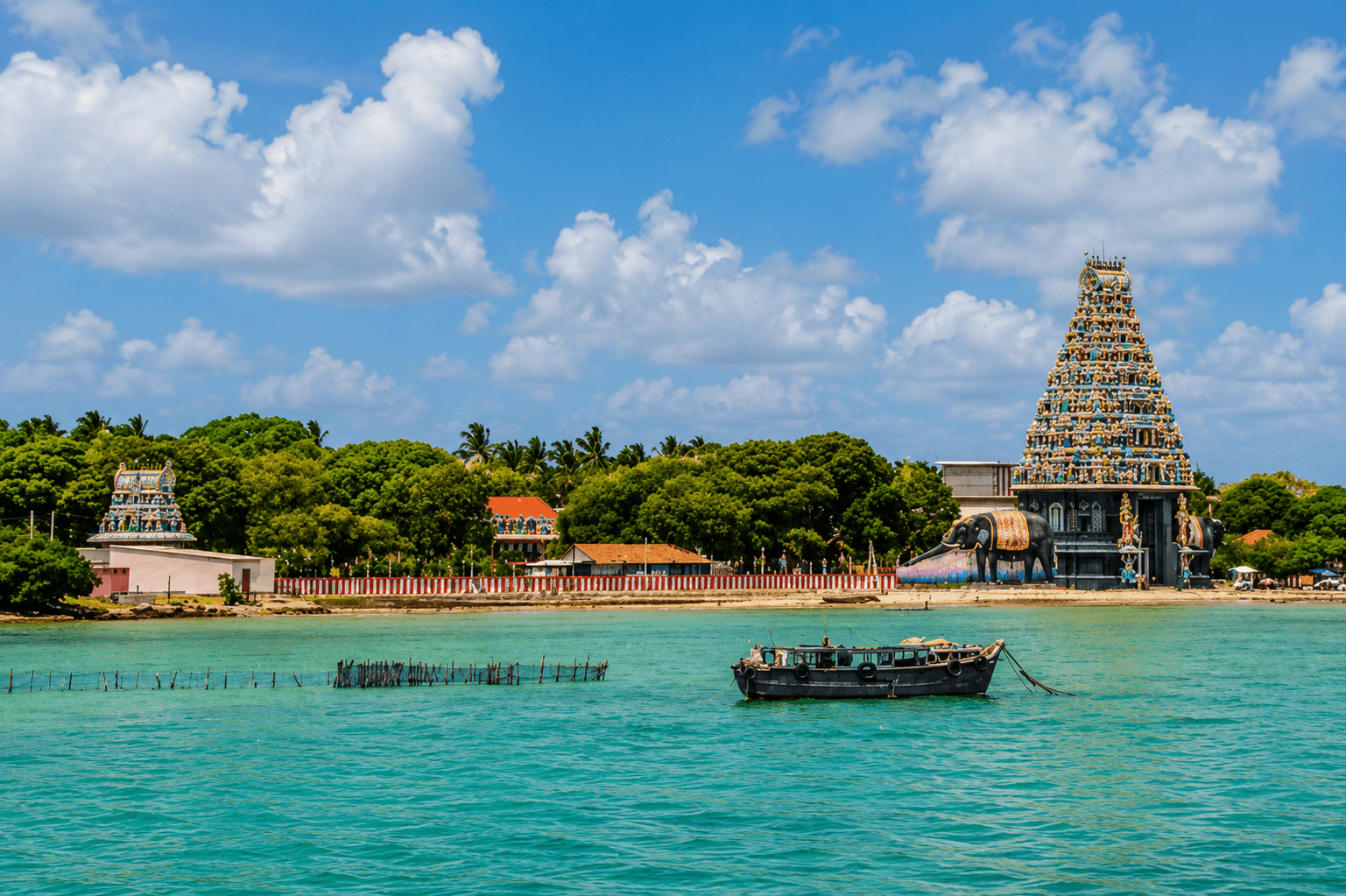
Jaffna is the heart of this route. The road north from Anuradhapura crosses the Vanni plains and the causeway at Elephant Pass onto the peninsula, roughly three to three and a half hours. The town is low-rise and unhurried, with a Dutch-era star fort, the rebuilt public library and the golden gopuram of Nallur Kandaswamy Kovil, where the evening puja is the thing to see.
One day belongs to the islands. Causeways and a short ferry lead to Nainativu, sacred to both Hindus and Buddhists, and a longer ferry reaches Delft, with its coral walls and wild ponies. A second day can loop the peninsula to Point Pedro, the northern tip of Sri Lanka, and the spring-fed pools at Keerimalai.
- →Eat: Jaffna crab curry, the seafood broth odiyal kool, and mangoes in season, roughly May to July.
- →Dress: modestly; men remove shirts at Hindu temples, and everyone removes shoes.
- →Ferries: schedules are limited and weather-dependent; go early.
Five nights on the east coast
The east coast gets five nights in two places. From Jaffna, the drive south-east to Trincomalee takes roughly five hours through thinly populated country. Nilaveli and Uppuveli have long, calm beaches, and the boat to Pigeon Island for snorkelling takes 10 to 15 minutes.
Pasikudah, roughly two and a half to three hours further south, offers a different kind of sea: a reef-sheltered bay so shallow it feels like a lagoon. Batticaloa, with its Dutch fort and lagoon, is 45 minutes to an hour beyond. Choose three nights at Trincomalee and two at Pasikudah for variety, or five at one for rest.
Anuradhapura and Sigiriya: the route's bookends
The ancient cities frame the trip. Anuradhapura, at the start, was the island's capital for more than a thousand years and is still a place of pilgrimage. Two nights allow a day among its stupas and a late afternoon at Mihintale.
At the end, Polonnaruwa is visited on the drive from Pasikudah, roughly one and a half hours away, and Sigiriya Rock is climbed the next morning. The Minneriya elephant Gathering, which usually peaks between July and September, falls conveniently on the same days.
What to expect in the north and east
Travel in the north and east is straightforward but less polished than on the main circuit. Hotels in Jaffna are comfortable and few; guides who know the region well are fewer. English is less widely spoken, and Tamil, not Sinhala, is the first language.
The legacy of the civil war, which ended in 2009, is visible in memorials, rebuilt towns and some damaged buildings. Visitors are welcome, and the region is safe. Sensitivity is appropriate: avoid photographing military sites, and let people raise the past themselves.
- →Heat: the north is hot and dry in these months, often above 33 degrees Celsius.
- →Alcohol: less widely available than in the south; none on poya days.
- →Festivals: the Nallur festival usually runs for roughly 25 days in August; dates shift each year.
Who this route suits, and planning it
The north and east route suits return visitors, summer travellers and anyone drawn to places before they are busy. Choose it between May and September. From December to February the north-east monsoon makes the east coast wet, and the standard route is the better plan; Jaffna itself is pleasant from roughly February to September.
Lankan Stays & Trails can arrange the northern circuit with drivers and guides who know Jaffna, and can add Wilpattu on the way to Anuradhapura. The 14-day itinerary with Jaffna shows how to attach the north to the classic route instead.
Frequently asked questions
Is northern Sri Lanka worth visiting?
Yes. Northern Sri Lanka, centred on Jaffna, has a distinct Tamil and Hindu culture, its own cuisine, colourful temples, quiet islands and very few visitors. It rewards travellers who have seen the classic route, or who want something different from it.
Is it safe to travel to Jaffna and the east coast?
Yes. The civil war ended in 2009, and Jaffna, Trincomalee and the east coast have been open to visitors for many years. Normal precautions apply. Check your government's current travel advice, avoid photographing military sites and respect local customs at temples.
When is the best time to visit the north and east of Sri Lanka?
Roughly May to September is best for a route combining both, when the east coast is dry and calm and the north is hot and dry. Jaffna alone is pleasant from roughly February to September. November to January brings the north-east monsoon.
How do I get to Jaffna?
By road, Jaffna is roughly three to three and a half hours from Anuradhapura and roughly seven to eight hours from the airport. Trains run from Colombo in roughly six to seven and a half hours. Small domestic flights have operated at times; confirm current services.
How many days do I need in Jaffna?
Three nights is ideal. That gives one day for the town, fort and Nallur temple, one for the islands of Nainativu or Delft, and one for the peninsula's northern coast. Two nights is the minimum, given the distance travelled to get there.
Can I combine Jaffna with the east coast in two weeks?
Yes. Jaffna to Trincomalee takes roughly five hours by road, so two weeks comfortably covers Anuradhapura, Jaffna, Trincomalee, Pasikudah and Sigiriya. Adding Arugam Bay as well would be too much; it is a further three to four hours south of Pasikudah.