
Quick answer
Anuradhapura and Kalpitiya in 5 days spends two nights in Anuradhapura and two on the Kalpitiya peninsula, roughly 2.5 to 3 hours apart. Anuradhapura gives the great stupas, the Sacred Bo Tree and the Abhayagiri monastery, best by bicycle; Kalpitiya gives dolphin trips roughly November to April, kitesurfing roughly May to October and December to March, and a lagoon coast. Kalpitiya is roughly 2.5 to 3 hours from the airport.
Key takeaways
- The route is Anuradhapura 2 nights and Kalpitiya 2 nights, with only two check-ins.
- Anuradhapura is best explored by bicycle over a full day, starting early.
- Dolphin trips from Kalpitiya run roughly November to April; confirm on arrival.
- Kalpitiya has two kitesurfing seasons, roughly May to October and December to March.
- The airport is roughly 4 to 5 hours from Anuradhapura and 2.5 to 3 from Kalpitiya.
Why the north-west
Most culture and beach routes run between the Cultural Triangle and the south or west coast, and share the same roads and the same crowds. This one stays in the north-west, where Anuradhapura's sacred city and the Kalpitiya peninsula lie only roughly 2.5 to 3 hours apart.
Anuradhapura was the capital of the island for more than a thousand years. Its stupas, monasteries, pools and the Sacred Bo Tree, grown from a cutting of the tree under which the Buddha is said to have gained enlightenment, make it one of the great ancient sites of Asia.
Kalpitiya is a long, narrow peninsula between a lagoon and the sea, known for dolphins, kitesurfing and a simple, sandy way of life. It is not a classic swimming beach, but it is a striking contrast to the ruins.
- →Nights: Anuradhapura 2, Kalpitiya 2.
- →Check-ins: two.
- →Longest drive: arrival, roughly 4 to 5 hours.
Day by day
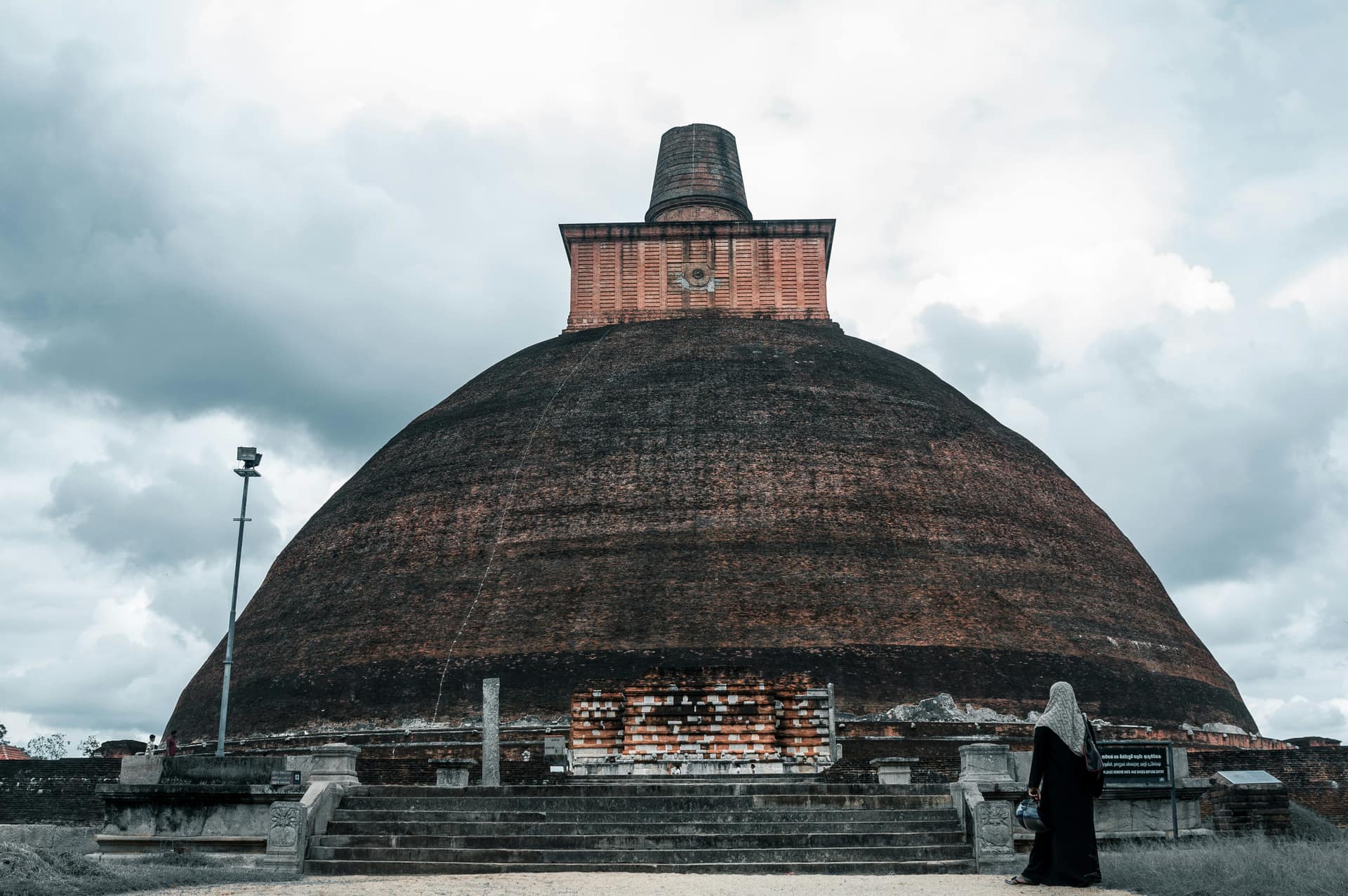
Day one is the drive from the airport to Anuradhapura, roughly 4 to 5 hours, with a sunset at a tank or a stupa. Day two is a full day in the sacred city by bicycle: the Sacred Bo Tree and Ruwanwelisaya in the early morning, Abhayagiri, Jetavanaramaya and the twin ponds through the day, with a rest in the midday heat.
Day three is Mihintale in the early morning, roughly 20 minutes east, where Buddhism is said to have arrived on the island, then the drive to Kalpitiya, roughly 2.5 to 3 hours. Day four is a dolphin trip at dawn in season, a lagoon kayak, a kitesurf lesson in the windy months, or simply the beach.
Day five is a quiet morning, then roughly 2.5 to 3 hours to the airport.
- →Day 1: airport to Anuradhapura.
- →Day 2: the sacred city by bicycle.
- →Day 3: Mihintale, then Kalpitiya.
- →Day 4: dolphins, lagoon or kites.
- →Day 5: Kalpitiya to the airport.
Seeing Anuradhapura well
Anuradhapura is spread over a large area, and a bicycle is the best way to see it. Start before 8 am, when the white stupas glow in the low light and pilgrims bring flowers to the Bo Tree. Rest in the middle of the day, then return for the late afternoon.
Dress modestly, covering shoulders and knees, and be ready to remove shoes and hats at sacred sites. The stone can be very hot underfoot by midday, so carry socks.
A local guide adds a great deal here, because many of the sites look similar to a first-time visitor and the stories behind them are what make them memorable.
- →Start early, rest at midday.
- →Dress modestly, carry socks.
- →A guide brings the ruins to life.
What to do in Kalpitiya
Dolphin trips leave from Kalpitiya early in the morning, roughly November to April, and large pods of spinner dolphins are often seen. Seas can be rough; confirm conditions and choose an operator that keeps a respectful distance.
Kalpitiya's wind makes it one of Asia's best known kitesurfing spots, with lessons available in the windy seasons. Outside these months, the lagoon is calm for kayaking and the beaches are quiet.
The peninsula is also a place to slow down: fishing villages, a Dutch fort at the tip, and long sunsets over the sea.
- →Dolphins: roughly November to April.
- →Kitesurfing: windy seasons.
- →Lagoon kayaking: calm months.
When this route works
The best overall window is roughly December to April, when Anuradhapura is dry and dolphins are around Kalpitiya. From May to September the north-west is often dry too, and the wind brings the main kitesurfing season, though dolphin trips usually stop.
October and November bring the inter-monsoon rains, which can make cycling in Anuradhapura wet and the seas rough. Keep plans flexible in these months.
Who this route suits
The route suits travellers who want culture without crowds, kitesurfers, those on a second trip, and anyone who likes the idea of an unusual combination. Lankan Stays & Trails can arrange a guide in Anuradhapura and a dolphin or kite day in Kalpitiya.
Travellers who want a classic swimming beach should choose the south or east coast, and those who want Sigiriya should choose a Cultural Triangle route.
Frequently asked questions
How far is Kalpitiya from Anuradhapura?
Kalpitiya is roughly 2.5 to 3 hours from Anuradhapura by road, via Puttalam. The drive is flat and straightforward. Combined with a morning at Mihintale, it makes a comfortable day three that ends on the peninsula in time for sunset.
When can you see dolphins in Kalpitiya?
Dolphin trips from Kalpitiya usually run roughly November to April, when the sea is calmer and large pods of spinner dolphins are often seen. Trips leave early in the morning. Confirm conditions locally, because weather and sea state can change plans.
Is Kalpitiya good for swimming?
Kalpitiya is better for lagoon activities, kitesurfing and dolphins than for classic beach swimming. The sea can be rough and windy in the kite seasons. Calm days do allow a swim, but choose the south or east coast if swimming is the priority.
Can I add Wilpattu to this route?
Yes. Wilpattu National Park lies between Anuradhapura and Kalpitiya, and its gates are reachable from both. An afternoon or half-day safari on day three, before reaching Kalpitiya, adds leopards and lakes, though it makes the day long.
Is Anuradhapura better than Polonnaruwa for this route?
For this route, Anuradhapura is the natural choice because it is on the way to Kalpitiya. Polonnaruwa is more compact and easier to see in a morning, but it is on the other side of the Cultural Triangle and would add hours of driving.
Is this route good for a first trip?
It can be, especially for travellers who dislike crowds, but it leaves out Sigiriya, Kandy and the south coast. Most first-time visitors prefer a route with Sigiriya, while this one suits a second visit or those with a particular interest in ancient Buddhism or kitesurfing.