
Quick answer
The best places to see wildlife in the Cultural Triangle are Minneriya, Kaudulla and Hurulu Eco Park for elephants, especially during the gathering from roughly July to October, and Wasgamuwa for a quieter park with elephants and sloth bears. The ancient tanks, such as Parakrama Samudra at Polonnaruwa, hold storks, pelicans and crocodiles, and the ruins at Polonnaruwa and Sigiriya have toque macaques and grey langurs. All are within roughly 30 minutes to two hours of Sigiriya, Habarana or Polonnaruwa.
Key takeaways
- Minneriya, Kaudulla and Hurulu Eco Park are all within an hour of Sigiriya and Habarana.
- The elephant gathering peaks roughly from July to October, when herds graze the drying tank beds.
- Wasgamuwa National Park, roughly one and a half to two hours from Polonnaruwa, is quieter and holds sloth bears.
- Ancient tanks such as Parakrama Samudra attract storks, pelicans, cormorants and crocodiles.
- Toque macaques and grey langurs live among the ruins of Polonnaruwa and around Sigiriya.
Why the Cultural Triangle is good for wildlife
The Cultural Triangle lies in Sri Lanka's dry zone, a landscape of scrub, forest and ancient irrigation tanks. The tanks, built by kings over two thousand years, still hold water through the dry season and attract elephants, deer and waterbirds. Large areas of forest remain, and several are protected as national parks.
For visitors, this means that wildlife can be combined easily with the ancient sites. A morning at Sigiriya or Polonnaruwa and an afternoon safari are a standard pattern.
The best places to see wildlife in the Cultural Triangle
The best places to see wildlife in the Cultural Triangle are its national parks and its ancient tanks, with the ruins themselves adding monkeys and birds.
Each park suits a different season and style, and drivers often choose between Minneriya, Kaudulla and Hurulu on the day.
- →Minneriya National Park: the classic gathering site, best roughly July to September.
- →Kaudulla National Park: often the largest herds later, roughly August to October.
- →Hurulu Eco Park: a reliable alternative, especially outside the gathering season.
- →Wasgamuwa National Park: quiet, with elephants, sloth bears and birds.
- →Parakrama Samudra: a huge ancient tank at Polonnaruwa with waterbirds and crocodiles.
- →Ritigala Strict Nature Reserve: forest around a ruined monastery, with birds and monkeys.
The elephant gathering
The elephant gathering in the Cultural Triangle is one of the great wildlife events of Asia. As the dry season advances, roughly from July, water shrinks to the tanks of Minneriya and Kaudulla, and fresh grass grows on the exposed beds. Elephants come from the surrounding forest in large numbers, sometimes hundreds at once.
The gathering usually peaks roughly from August to September, and herds disperse when the north-east monsoon rains arrive, roughly in October or November. The exact timing varies with rainfall each year.
Wildlife at the ancient sites
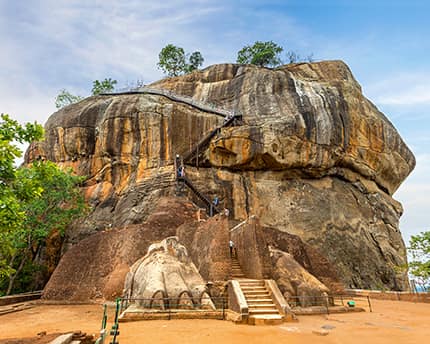
The ancient sites of the Cultural Triangle are also good for wildlife. Toque macaques and grey langurs live among the ruins of Polonnaruwa and around Sigiriya, and both can be bold around food. Water monitors and land monitors are common near the tanks and moats.
Birds are everywhere: bee-eaters, rollers, kingfishers, hornbills and raptors around the ruins, and storks, pelicans and cormorants on the tanks. Sigiriya's moats hold crocodiles, and the gardens around the rock have many birds in the early morning.
- →Polonnaruwa: macaques, langurs and many birds among the ruins.
- →Sigiriya: crocodiles in the moats and birds in the gardens.
- →Parakrama Samudra: waterbirds and crocodiles on the tank.
- →Dambulla: macaques around the cave temple.
When to go
The best time for wildlife in the Cultural Triangle is roughly July to October, during the dry season and the elephant gathering. The weather is hot and dry, and the ancient sites are best visited early in the morning.
From roughly November to January, the north-east monsoon brings rain, and elephants disperse. Hurulu Eco Park is often the most reliable park at this time. From February to June, the parks are good for birds and smaller herds.
- →July to October: the elephant gathering.
- →November to January: rain, with Hurulu often best.
- →February to June: smaller herds and good birds.
Planning wildlife around the sites
A typical plan is a morning at an ancient site, a rest at midday and an afternoon safari, as elephants come out onto the tank beds in the late afternoon. Bases at Sigiriya, Habarana or Polonnaruwa put all the parks within an hour or two.
Lankan Stays & Trails arranges safaris in the Cultural Triangle with drivers who choose the park on the day, based on where the herds are feeding. For a quieter experience, Wasgamuwa makes a full-day trip from Polonnaruwa.
Frequently asked questions
What wildlife can you see in the Cultural Triangle?
The Cultural Triangle is known for elephants, especially at Minneriya, Kaudulla and Hurulu, along with deer, buffalo, crocodiles, toque macaques, grey langurs and many birds. Wasgamuwa adds sloth bears, and the ancient tanks attract storks, pelicans and cormorants.
Which is the best safari near Sigiriya?
Minneriya, Kaudulla and Hurulu Eco Park are all within an hour of Sigiriya. Minneriya is best early in the gathering, roughly July to September; Kaudulla often later; and Hurulu is a reliable alternative. Drivers usually choose on the day based on recent sightings.
When is the elephant gathering?
The elephant gathering at Minneriya and Kaudulla usually runs roughly from July to October, peaking around August and September, when water shrinks to the tanks and grass grows on the exposed beds. Timing varies with rainfall each year.
Are there monkeys at Polonnaruwa?
Yes. Toque macaques and grey langurs live among the ruins of Polonnaruwa and are often seen around the main monuments. Macaques can be bold around food, so keep bags closed and do not feed them. Langurs are usually calmer and more cautious.
Can you see leopards in the Cultural Triangle?
Leopards live in the forests of the Cultural Triangle, including Wasgamuwa and the area around Minneriya, but they are rarely seen. For leopard sightings, plan time at Wilpattu, roughly two hours north-west of Anuradhapura, or at Yala in the south.
How far is Wasgamuwa from Sigiriya?
Wasgamuwa National Park is roughly two to two and a half hours by road from Sigiriya, and roughly one and a half to two hours from Polonnaruwa. It is best done as a full-day trip or with an overnight stay near the park.
Is there wildlife at Sigiriya Rock?
Yes. Sigiriya's moats hold crocodiles and water monitors, and the gardens around the rock have many birds in the early morning. Toque macaques and grey langurs live nearby, and hornets nest on the rock face, so follow guides' advice and avoid loud noise.