
Quick answer
The best places to visit in Sri Lanka's dry zone are Anuradhapura, Polonnaruwa, Sigiriya and Dambulla; the parks of Yala, Wilpattu, Minneriya, Udawalawe, Kumana and Gal Oya; Jaffna and the northern islands; Trincomalee and the east coast; and the Tissamaharama lakes. The dry zone gets most of its rain from the north-east monsoon, roughly October to January, and is dry and hot for much of the rest of the year.
Key takeaways
- The dry zone covers roughly two-thirds of Sri Lanka, across the north, east and south-east.
- Its main rains come from the north-east monsoon, roughly October to January.
- The ancient kingdoms survived here thanks to thousands of irrigation tanks.
- Most national parks are in the dry zone, because open scrub makes animals easier to see.
- Midday heat is strong, so plan sites for early morning and late afternoon.
What the dry zone is
Sri Lanka's dry zone is the lowland area that receives relatively little rain from the south-west monsoon, because the central mountains block it. It covers the North Central, Northern and Eastern provinces, most of the North Western Province, and the south-eastern corner around Hambantota and Yala.
Dry does not mean desert. The zone gets a real wet season, mostly from the north-east monsoon roughly October to January, and is green for months afterwards. But from roughly May to September, while the south-west is soaked, the dry zone is often sunny, hot and windy.
Between the wet and dry zones lies an intermediate band, including Kandy, Kurunegala and parts of Uva, which shares some features of both.
- →North Central: Anuradhapura, Polonnaruwa, Minneriya.
- →North and east: Jaffna, Mannar, Trincomalee, Batticaloa, Arugam Bay.
- →South-east: Yala, Tissamaharama, Bundala, Kumana.
Ancient cities and tanks
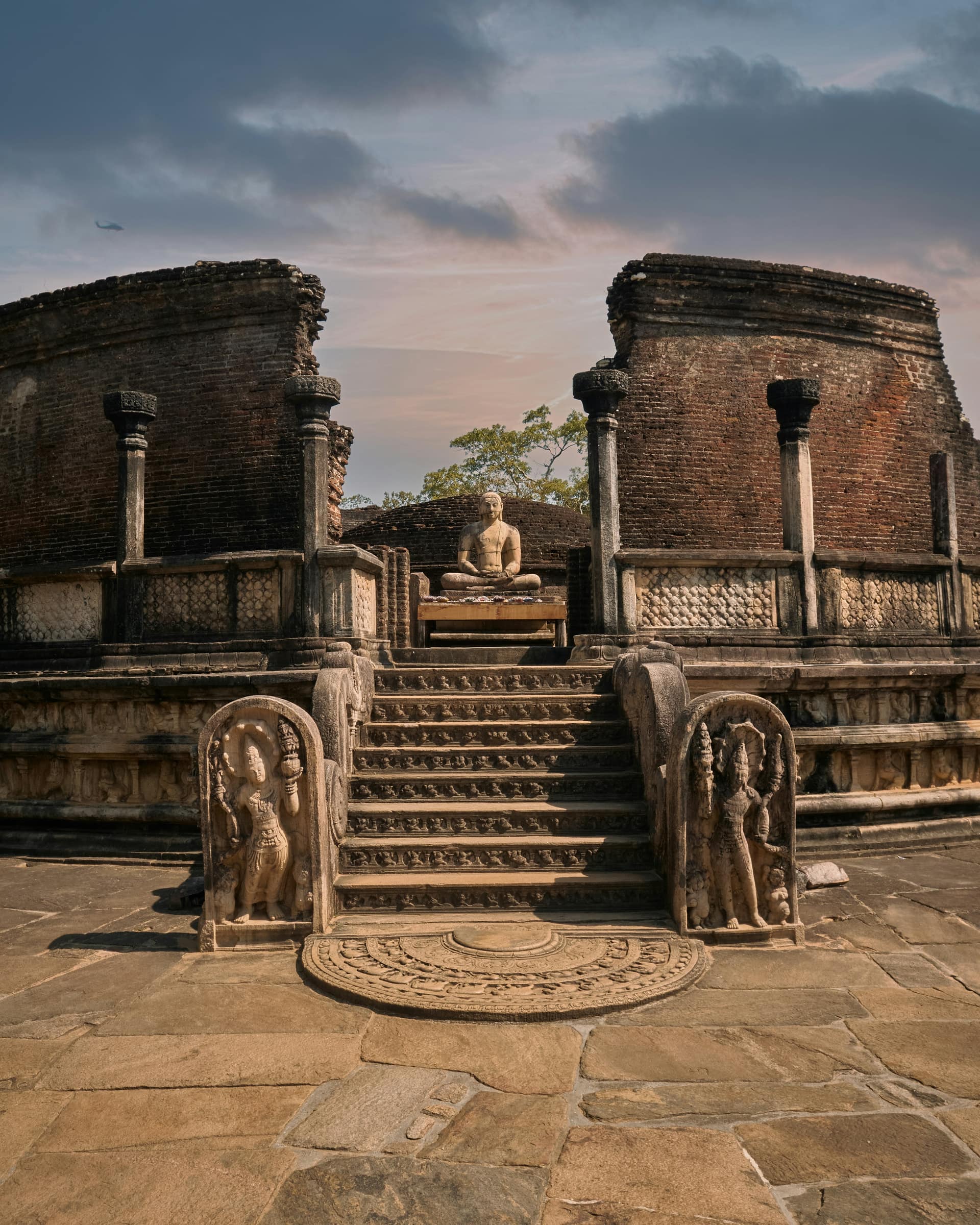
The great ancient kingdoms of Sri Lanka grew in the dry zone because their engineers learned to store the monsoon rains. Thousands of tanks, from village ponds to vast reservoirs such as Parakrama Samudra and Kala Wewa, still water rice fields today. They are as much a sight as the ruins themselves.
Anuradhapura and Polonnaruwa, the two great capitals, sit among these tanks. Sigiriya, Dambulla, Mihintale, Ritigala and Avukana are all within a short drive. In the south-east, Tissamaharama's stupas and lakes recall the Ruhuna kingdom.
Visiting the ruins at sunrise, then watching birds on a tank at sunset, is the classic dry-zone day.
- →Anuradhapura and Mihintale.
- →Polonnaruwa and Parakrama Samudra.
- →Sigiriya and Dambulla.
- →Avukana and Kala Wewa.
Safari parks
Most of Sri Lanka's national parks are in the dry zone, because the open scrub and seasonal waterholes concentrate animals where visitors can see them. Yala and Wilpattu are known for leopards, Udawalawe and Minneriya for elephants, and Bundala and Kumana for birds.
The dry season is when sightings are easiest, as animals gather at shrinking water. In the south-east, that means roughly February to September. In the north-central parks, the elephant gathering at Minneriya peaks roughly July to October.
Many parks close for part of the dry season, often roughly September to October in Yala's case, so check dates when booking.
- →Yala and Wilpattu: leopards.
- →Udawalawe and Minneriya: elephants.
- →Bundala and Kumana: birds.
The north and east coasts
The dry zone coast includes Jaffna, Mannar, Trincomalee, Pasikudah, Batticaloa and Arugam Bay. These shores are at their best roughly May to September, when the south-west monsoon keeps them dry and the sea on the eastern side calm.
Jaffna and the islands have their own distinctive Tamil culture and cuisine. Trincomalee offers beaches, temples and snorkelling at Pigeon Island. Arugam Bay is the surf capital, and Kalpitiya, on the dry north-west coast, has dolphins and kitesurfing.
Lankan Stays & Trails often builds summer trips almost entirely in the dry zone, from the Cultural Triangle to the east coast, because those months suit it so well.
When to visit the dry zone
For the Cultural Triangle, the most comfortable months are roughly January to April, after the rains, when the land is green and the heat is moderate. May to September is hotter but usually dry. October to December brings heavy showers, though often in the afternoon.
For the east and north coasts, aim for roughly May to September. For the south-eastern parks, roughly February to July is a good balance of dry weather and open parks.
Heat is the main challenge. Start at opening, rest at midday, carry water and choose hotels with a pool. Temples require bare feet, and stone surfaces can burn by late morning.
- →Cultural Triangle: roughly January to April is most comfortable.
- →East coast: roughly May to September.
- →North-east monsoon rains: roughly October to January.
Frequently asked questions
Where is the dry zone in Sri Lanka?
The dry zone covers roughly two-thirds of Sri Lanka: the north, the north-central plains, the east coast, most of the north-west and the south-east around Hambantota and Yala. The wet zone is the south-west quarter, including Colombo, Galle and the western hills.
When does it rain in Sri Lanka's dry zone?
Most rain in Sri Lanka's dry zone falls during the north-east monsoon, roughly October to January. There is also some rain in the inter-monsoon months of March to April and October. From roughly May to September the dry zone is usually dry and hot.
Is the Cultural Triangle in the dry zone?
The Cultural Triangle is in the dry zone. Anuradhapura, Polonnaruwa, Sigiriya and Dambulla all lie in the dry lowlands north of the hills. Kandy, at the southern point of the triangle, lies in the intermediate zone and gets more rain.
Why are the safari parks in the dry zone?
The safari parks are in the dry zone because its open scrub, grasslands and seasonal waterholes make animals easier to see, and because large areas of forest were set aside there. In the wet zone, dense forest hides wildlife, so the experience is better suited to walking than jeep safaris.
Is the dry zone too hot to visit?
The dry zone is hot, often above 30 degrees Celsius by midday, but it is manageable with sensible timing. Visit sites at opening and in late afternoon, rest at midday, drink plenty of water and wear light clothing that still covers shoulders and knees for temples.
Which is better, the dry zone or the wet zone?
Neither is better; they suit different interests. The dry zone has the ancient cities, safari parks and the east coast. The wet zone has rainforest, the south and west beaches and the green south-west. Most trips include both, timed to their best seasons.