
Quick answer
The Cultural Triangle is hot for most of the year, with daytime temperatures commonly around 30 to 35°C and the hottest weeks in March, April and May. Beat the heat by sightseeing from about 7am to 11am and again after 3.30 or 4pm, resting through the middle of the day. Drink water steadily, wear loose sleeved clothing and a hat, and save shaded places such as museums and Dambulla's caves for the warmer hours. Watch for headache, dizziness and nausea as signs of heat exhaustion.
Key takeaways
- Daytime temperatures in the Cultural Triangle commonly reach 30 to 35°C, and the open ruins offer little shade.
- March, April and May are the hottest months in the Cultural Triangle, before the south-west monsoon winds arrive.
- A split day, out from about 7am to 11am and again after about 3.30pm, is the most effective heat strategy.
- Museums, Dambulla's cave temple and shaded image houses are the coolest places to visit in the middle of the day.
- King coconut water, sold at roadside stalls throughout the Cultural Triangle, is a cheap and effective way to rehydrate.
How hot the Cultural Triangle gets
The Cultural Triangle sits in Sri Lanka's dry zone, where it is warm all year and hot for much of it. Daytime highs commonly reach 30 to 35°C, and humidity is lower than on the coast, so the heat feels strong and dry. The sun is intense from about 10am, and the stone ruins radiate stored warmth well into the afternoon.
March, April and May are usually the hottest months. From June to September steady winds cool things slightly, though it stays dry and dusty. December and January are the most comfortable, with occasional rain and cooler mornings.
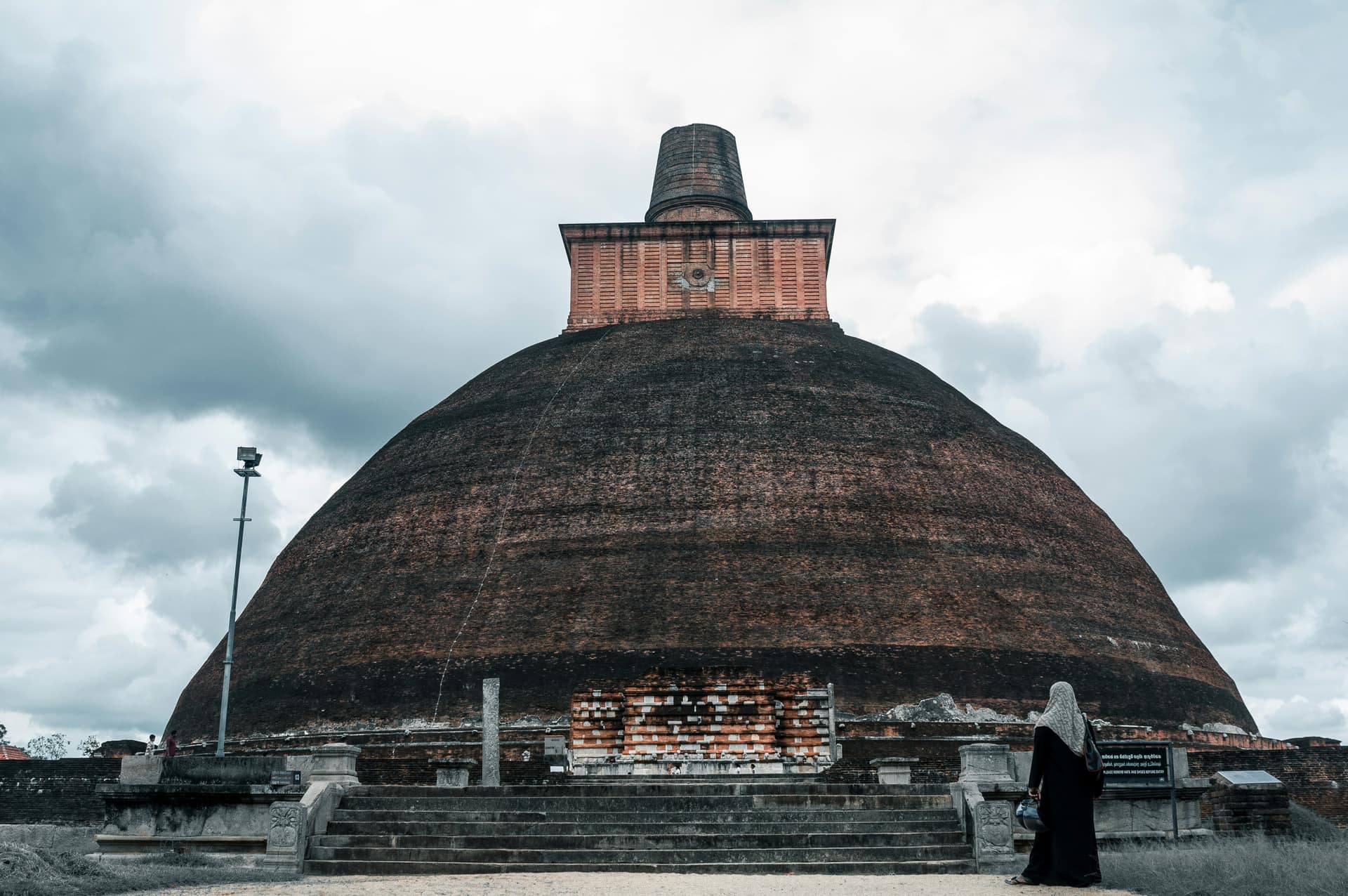
The ancient cities have very little shade between monuments. Anuradhapura's big stupas and Polonnaruwa's open avenues are exposed, which is why timing matters more here than anywhere else in Sri Lanka.
- →December and January: warm days, cooler mornings, some rain.
- →February: dry and pleasant, heat building.
- →March to May: hottest, plan a long midday rest.
- →June to September: dry and windy, slightly cooler.
A daily rhythm that works
The most effective heat strategy in the Cultural Triangle is a split day. Start at opening time, around 7am, and aim to finish open-air sites by about 11am. Rest through the middle of the day at the hotel, with a swim and lunch, and go out again after about 3.30pm when the light softens and the stone cools.
The pattern fits every major site. Climb Sigiriya at 7am, see Dambulla's caves late in the afternoon, and arrive at Polonnaruwa or Anuradhapura at opening time. Evening puja at the Sri Maha Bodhi or a sunset at Mihintale caps a day well.
- →6.30 to 7am: leave the hotel.
- →7 to 11am: main site of the day.
- →11am to 3.30pm: lunch, rest, swim.
- →3.30pm to sunset: second site or a gentle activity.
Water, shade and sun protection
Drinking water steadily is essential in the Cultural Triangle. Carry at least a litre per person for a morning at the ruins, more in March and April. Bottled water is widely sold, and many hotels refill bottles. King coconut water from roadside stalls replaces salts as well as fluids.
Sun protection matters as much as water. A wide-brimmed hat, sunglasses, high-factor sun cream and loose sleeved clothing make a real difference. Remember that hats come off at shrines, so put sun cream on your face and neck before you go.
Lankan Stays & Trails drivers keep cool water in the car and plan routes to pass coconut stalls, which is a small thing that helps a lot.
- →At least a litre of water per person per morning.
- →Oral rehydration salts for very hot days.
- →Hat, sunglasses and sun cream applied before leaving.
- →A light scarf for neck and shoulders.
What to do in the middle of the day
The middle of the day in the Cultural Triangle is for rest, not ruins. Most hotels near Sigiriya, Habarana and Dambulla have pools, and the hours from 11am to 3.30pm are the natural time to use them. Long lunches are normal.
If you want to keep sightseeing, choose shaded or indoor places. The archaeological museums at Anuradhapura and Polonnaruwa, the Dambulla cave temple and Popham's Arboretum near Dambulla are all cooler options. A cookery class at a village house is another good midday activity.
- →Archaeological museums: cool and informative.
- →Dambulla cave temple: shaded caves, though the climb is exposed.
- →A village cookery class: indoor and relaxed.
- →A long lunch and a swim at the hotel.
Recognising heat exhaustion
Heat exhaustion is a real risk in the Cultural Triangle, especially for children, older travellers and anyone arriving from a cold climate. Warning signs include headache, dizziness, nausea, heavy sweating, cramps and unusual tiredness.
If you or someone in your group feels unwell, stop, find shade, drink water with rehydration salts and cool down with wet cloths. Heat stroke, with confusion or no sweating, needs urgent medical help. Pharmacies in Dambulla, Habarana and Anuradhapura stock rehydration salts.
- →Stop at the first sign of headache or dizziness.
- →Move into shade and drink with rehydration salts.
- →Cool the skin with water and fan.
- →Seek medical help for confusion or collapse.
Frequently asked questions
How hot is the Cultural Triangle?
Hot for most of the year, with daytime highs commonly around 30 to 35°C. March, April and May are the hottest months. Mornings are cooler, especially in December and January, which is why sightseeing starts at around 7am.
What is the best time of day to visit Anuradhapura?
Early morning, from about 7am, and late afternoon, after about 3.30pm. Midday is very hot on the open stupa terraces. Many visitors split the day, resting at lunchtime and returning for the evening puja at the Sri Maha Bodhi.
Is Polonnaruwa too hot to cycle?
Not if you start early. Cycling from around 7am and finishing by 11am is comfortable on most days. By midday the open avenues are hot and the stone terraces burn bare feet, so avoid cycling through the middle of the day.
What is the hottest month in the Cultural Triangle?
April is usually the hottest, with March and May close behind. Temperatures can pass 35°C. If you travel then, plan a long midday rest and see open sites only in the first and last hours of the day.
How much water should I carry in the Cultural Triangle?
At least a litre per person for a morning of sightseeing, more in the hottest months. Bottled water is easy to buy, and king coconut water from roadside stalls is a good, cheap way to replace salts as well as fluids.
Can older travellers manage the heat in the Cultural Triangle?
Yes, with planning. Keep sightseeing to early mornings and late afternoons, use tuk-tuks or a car between sites, and rest in the middle of the day. Choose December to February for the most comfortable temperatures.