
Quick answer
The best places to visit in Sri Lanka's Northern Province are Jaffna town, with Nallur Kandaswamy Kovil, the Dutch fort and the public library; the islands of Nainativu and Delft; Point Pedro and the coast; Keerimalai's sea-fed spring; Casuarina beach; and Mannar, with its baobabs and bird lagoons. Allow at least two or three nights, ideally from roughly January to September, avoiding the wetter late-year months.
Key takeaways
- The Northern Province has five districts: Jaffna, Kilinochchi, Mannar, Vavuniya and Mullaitivu.
- Jaffna is roughly seven to eight hours from Colombo by road or rail.
- Nallur Kandaswamy Kovil is the north's great temple; dress codes apply.
- Nainativu and Delft are reached by short ferries from the end of the island causeway.
- The north's main rains fall roughly October to December.
A province unlike the rest of the island
Sri Lanka's Northern Province stretches from the Jaffna peninsula south through Kilinochchi and Mullaitivu to Vavuniya and Mannar. It is flat, dry and edged with lagoons, and its culture is overwhelmingly Tamil and Hindu, with Catholic communities along the coast.
The province was at the centre of the civil war that ended in 2009, and some scars remain. Today it is calm and welcoming, with new roads and a revived railway. Visitors are still relatively few, which is part of the appeal: temples, beaches and markets are used by local people rather than arranged for tourists.
Jaffna town is the natural base, with day trips across the peninsula and to the islands. Mannar works as a separate stop on the way north or south.
- →Base: Jaffna for the peninsula and islands.
- →Second stop: Mannar for baobabs, birds and the causeway.
- →Gateway: Vavuniya, where the A9 enters the province.
Jaffna town and the peninsula
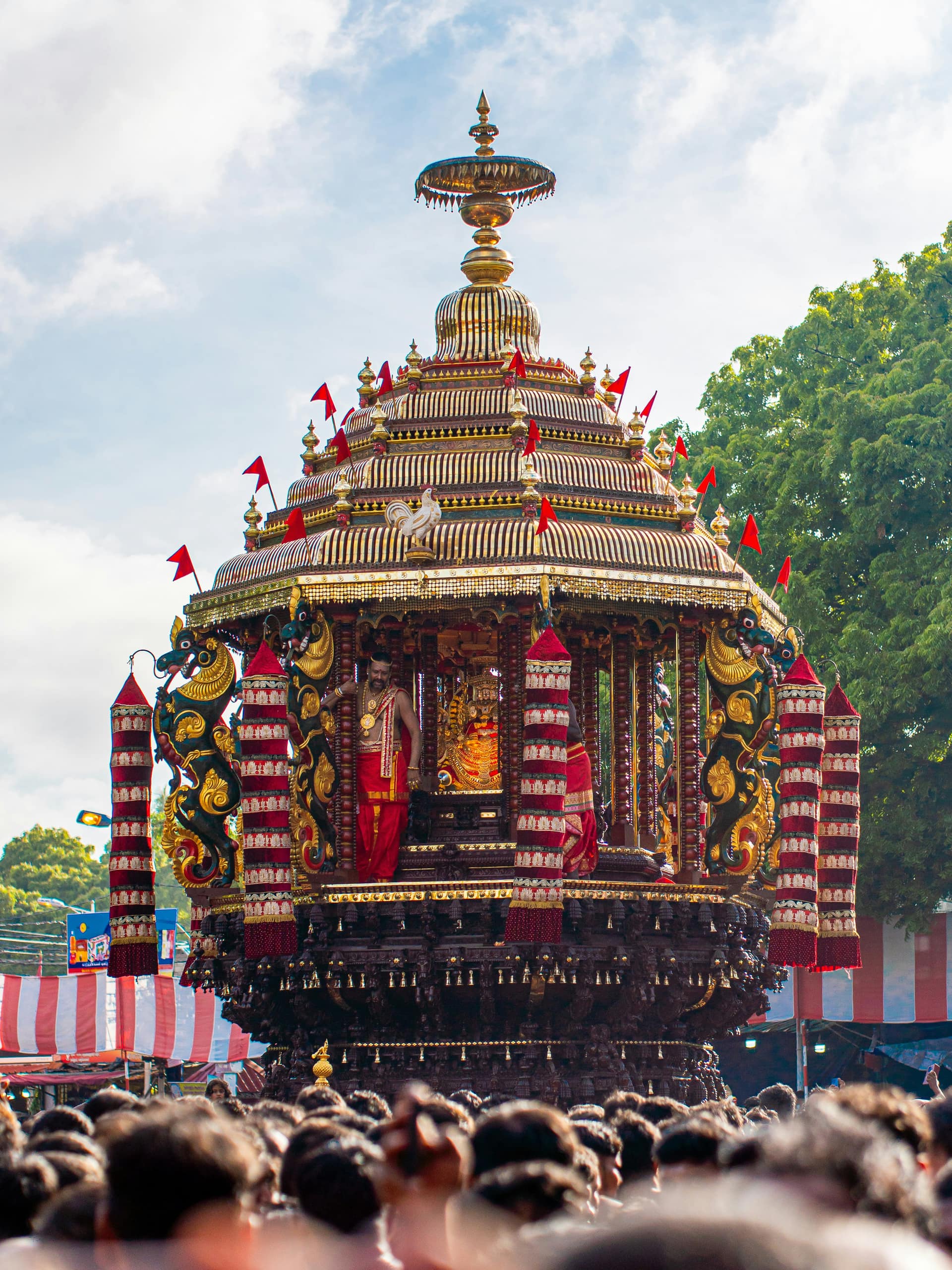
Nallur Kandaswamy Kovil is the essential first stop: a golden-towered temple to Murugan where men remove their shirts to enter and the evening pujas fill the halls with drums and fire. Its annual festival, usually in July or August, draws huge crowds, with dates shifting each year.
The Dutch-built Jaffna Fort, star-shaped and partly restored, gives views over the lagoon. The rebuilt public library, once burned and now a symbol of renewal, is a short walk away. Jaffna market and the town's small restaurants are the place to try crab curry, odiyal kool and Jaffna-style string hoppers.
Beyond town, the peninsula holds Point Pedro, near Sri Lanka's northernmost tip, the sacred Keerimalai spring where seawater and freshwater meet, the ancient stupas of Kantarodai and the long, shallow Casuarina beach at Karainagar.
- →Nallur Kandaswamy Kovil: the north's spiritual heart.
- →Jaffna Fort and the library: history in one walk.
- →Keerimalai and Kantarodai: springs and stupas.
- →Casuarina beach: calm, shallow water.
Nainativu, Delft and the islands
A causeway runs west from Jaffna through a chain of islands to Kurikadduwan jetty, where small ferries cross to the outer islands. Nainativu, a short hop, is sacred to both faiths: Nagadeepa Vihara for Buddhists and the Naga Pooshani Amman Kovil for Hindus.
Delft is further out, roughly an hour by boat, and feels like the end of the world. Wild ponies left by the Dutch, coral-stone walls, a giant baobab and a ruined fort make for a memorable day. Ferries are basic and timetables change, so start early and confirm the return boat.
- →Nainativu: two temples on one small island.
- →Delft: ponies, coral walls and big skies.
- →Start early and confirm the last ferry back.
Mannar and the Vanni
Mannar island, joined to the mainland by a causeway, is flat, sandy and full of birds. African baobab trees, said to have arrived with Arab traders, stand in its villages, and Talaimannar at its tip looks towards Adam's Bridge, the chain of shoals that nearly links Sri Lanka to India.
On the mainland nearby, Thiruketheeswaram is one of the island's most ancient Shiva temples, and the Vankalai sanctuary fills with flamingos and waders in the northern winter. Inland, the Catholic shrine at Madhu draws great pilgrimages in the summer months.
The Vanni, between Vavuniya and Kilinochchi, is mostly farmland and scrub, but Iranamadu reservoir and the lagoons of Mullaitivu are quietly beautiful.
When to visit and how to get there
The Northern Province is driest roughly from January to September. The north-east monsoon brings most of its rain from roughly October to December. The hottest months are roughly April to August, when midday is best spent indoors.
The A9 highway connects Kandy and Dambulla with Jaffna, roughly six to seven hours from the Cultural Triangle. Trains run from Colombo to Jaffna and on to Kankesanthurai, taking roughly seven hours. Domestic flights are limited and change often.
Lankan Stays & Trails often combines the north with Trincomalee or Anuradhapura, which shortens the long drive into two easier halves and links the province with the classic circuit.
- →Driest: roughly January to September.
- →Wettest: roughly October to December.
- →Road or rail from Colombo: roughly seven to eight hours.
Frequently asked questions
How many days do I need in northern Sri Lanka?
Most travellers need at least two full days in northern Sri Lanka: one for Jaffna town and the peninsula, one for the islands. Three days allows a slower pace or a stop in Mannar. Add travel days at each end, because the north is far from the main circuit.
Is Jaffna safe for tourists?
Jaffna is generally safe for tourists and is calm and welcoming. Normal precautions apply, as anywhere. Dress modestly at temples, respect photography rules at religious sites and military areas, and check current advice before travelling, as you would for any destination.
What is Jaffna famous for?
Jaffna is famous for its Hindu temples, especially Nallur Kandaswamy Kovil, its distinctive Tamil cuisine with crab curry and palmyra products, its Dutch fort and its islands. It is also known for its resilience after the civil war and its rebuilt public library.
Can I visit Delft island in a day?
Delft island can be visited in a day from Jaffna, but only with an early start. Drive to Kurikadduwan jetty along the island causeway, take the morning ferry of roughly an hour, hire a local vehicle to tour the island and confirm the return boat before leaving the jetty.
What is the best time to visit the north of Sri Lanka?
The best time to visit the north of Sri Lanka is roughly January to September, outside the main north-east monsoon rains of October to December. January to March is the most comfortable, with cooler mornings. April to August is very hot but dry.
How do I get from Colombo to Jaffna?
From Colombo to Jaffna you can take the train, roughly seven hours, or drive the A9 via Kurunegala, Dambulla and Vavuniya in roughly seven to eight hours. Many travellers break the journey in Anuradhapura, or arrive from Trincomalee on the east coast.
Is Mannar worth visiting?
Mannar is worth visiting for travellers who enjoy birds, quiet landscapes and unusual sights such as baobab trees and Adam's Bridge. It suits a night on the way between Anuradhapura and Jaffna. Migratory birds are best roughly November to March.