
Quick answer
Colombo in January is dry and warm, with days of about 30 to 31°C and lower humidity than later in the year. The Duruthu Perahera at Kelaniya, just outside the city, is held around the January full moon. Things to do include Galle Face Green at sunset, the Pettah markets, Gangaramaya Temple, the National Museum and the restaurants of Colombo 7. One or two days is enough for most visitors.
Key takeaways
- Colombo is dry and warm in January.
- The Duruthu Perahera at Kelaniya is a January highlight.
- Galle Face Green is best at sunset.
- Pettah's markets are lively and best in the morning.
- One or two days suits most itineraries.
Colombo's weather in January
Colombo sits on the west coast, which is dry in January under the north-east monsoon. Days are about 30 to 31°C with plenty of sun, and humidity is lower than in March and April, which makes walking in the city more comfortable.
The sea along Galle Face is calm, though Colombo's city beaches are not ideal for swimming. Mount Lavinia, just south of the city, has a swimmable beach in January.
Mornings and late afternoons are the best times for walking. Use the midday heat for museums, cafes or air-conditioned shopping.
- →Dry, about 30 to 31°C.
- →Lower humidity than spring.
- →Walk early or late.
The Duruthu Perahera at Kelaniya
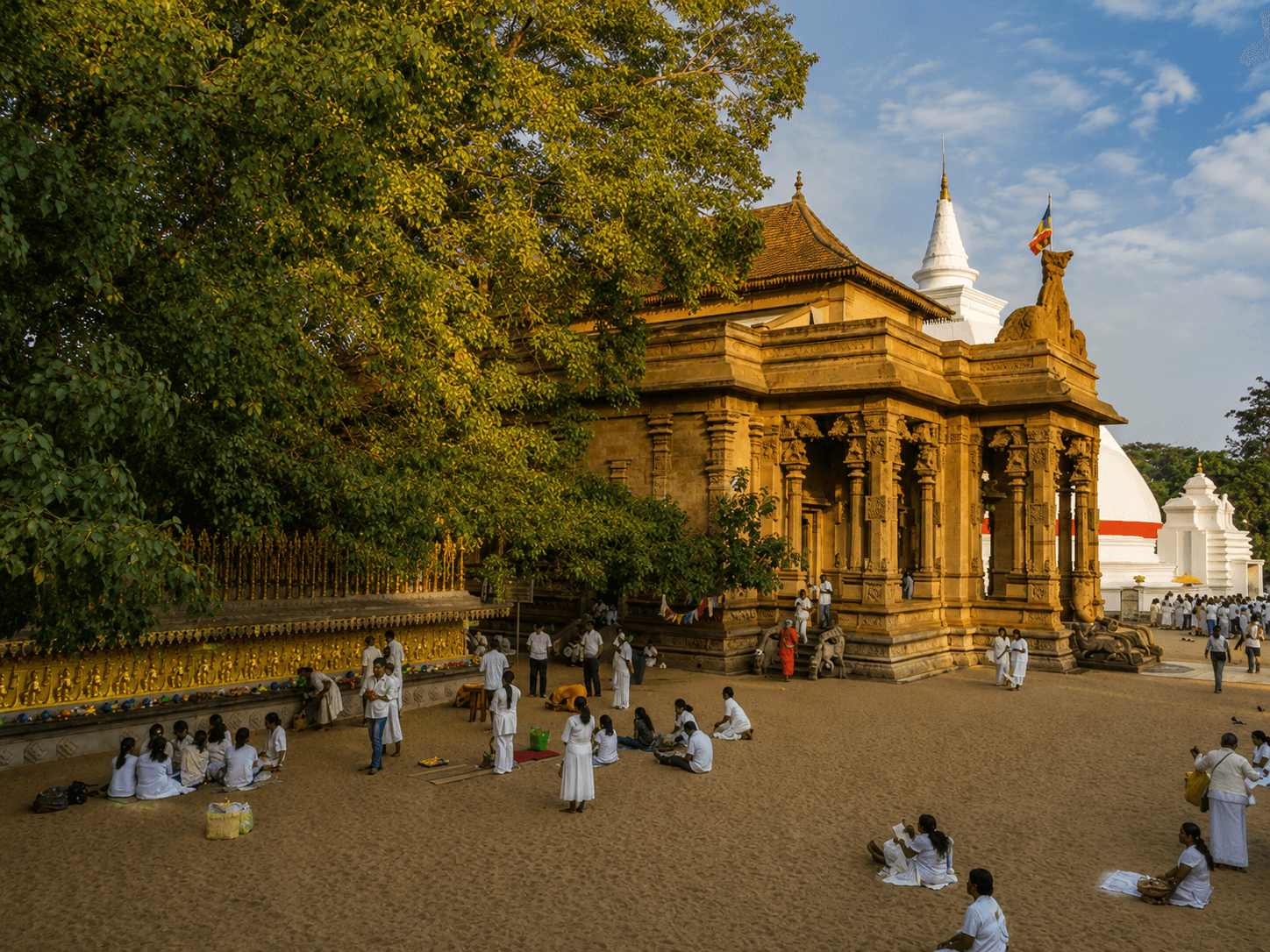
The Kelaniya Raja Maha Vihara, about 11 kilometres from central Colombo, is one of Sri Lanka's most important temples. Its Duruthu Perahera is held around the January full moon, when elephants, dancers, drummers and fire performers parade through the temple area.
The perahera draws large crowds over several nights. Arrive early to find a viewing spot, dress modestly and keep valuables secure.
Lankan Stays & Trails can arrange a driver for the evening, which is easier than navigating crowded roads and parking around the temple.
- →Held around the January full moon.
- →Elephants, dancers and drummers.
- →Arrive early and dress modestly.
Things to see in Colombo
Galle Face Green, a seafront promenade, comes alive at sunset with families, kite flyers and food stalls. It is a good introduction to Colombo life on a warm January evening.
Pettah, the old market district, is busy and colourful in the mornings, with streets dedicated to spices, fabrics, electronics and household goods. The red-and-white Jami Ul-Alfar Mosque stands at its heart.
Gangaramaya Temple, near Beira Lake, combines a working Buddhist temple with an eclectic museum. The nearby Seema Malaka, on the lake, is a calm space designed by Geoffrey Bawa.
Viharamahadevi Park, opposite the Town Hall, is a shady place to escape the midday sun, with flowering trees and families picnicking on weekends. Beira Lake's walkways are pleasant in the late afternoon as the heat eases.
- →Galle Face Green at sunset.
- →Pettah markets in the morning.
- →Gangaramaya and Seema Malaka.
Museums and culture
The National Museum in Cinnamon Gardens holds royal regalia, Buddhist art and colonial artefacts. It is a good introduction to Sri Lankan history before travelling to the ancient cities.
The Colombo Fort area has colonial buildings, including the restored Old Dutch Hospital, now home to restaurants and shops. Independence Square has a memorial hall built in the style of a Kandyan audience hall.
Art galleries and design shops in Colombo 7 showcase contemporary Sri Lankan work. Many are housed in restored colonial bungalows.
Eating in Colombo
Colombo has the island's widest range of food, from street kottu and hoppers to fine dining. In January, Galle Face stalls sell isso vadai, prawn fritters, and grilled corn at sunset.
Colombo's restaurants serve excellent seafood, Sri Lankan crab curry and Jaffna-style dishes. Booking is wise at popular restaurants in the high season.
Fruit vendors sell pineapple, papaya and king coconut throughout the city. Supermarkets stock a good range of tropical fruit in January.
Colombo is also the best place to try a full Sri Lankan breakfast of hoppers, string hoppers, pol sambol and dhal, served in many cafes and hotels. On cooler January mornings, it is a hearty start to a day of sightseeing.
- →Street food at Galle Face.
- →Crab and seafood restaurants.
- →Fresh fruit everywhere.
How long to stay
One full day covers the main sights, and two days allow a slower pace with museums, shopping and a visit to Kelaniya. Colombo works well at the start or end of a trip, especially near the airport.
If your trip falls on Duruthu poya, consider spending that evening in Colombo or Negombo to see the perahera.
Remember that alcohol is not sold on poya days, and some shops and restaurants close. Plan dinners and shopping around it.
- →One day for highlights.
- →Two days for a slower pace.
- →Plan around the poya.
Frequently asked questions
Is Colombo worth visiting in January?
Yes. Colombo is dry and warm in January, with lower humidity than later in the year. Galle Face Green, the Pettah markets, Gangaramaya Temple and the National Museum are worth a day, and the Duruthu Perahera at nearby Kelaniya makes January especially interesting.
When is the Duruthu Perahera at Kelaniya?
It is held around Duruthu poya, the January full moon, over several nights. The date moves each year with the lunar calendar, so check the poya calendar and the temple's schedule before you travel. Arrive early for a good viewing spot.
What is the weather like in Colombo in January?
Colombo is dry and warm in January, with days of about 30 to 31°C, plenty of sunshine and lower humidity than in March or April. Rain is rare. Mornings and late afternoons are most comfortable for walking around the city.
Can you swim in Colombo in January?
Colombo's city beaches are not ideal for swimming, but Mount Lavinia, just south of the city, has a swimmable beach in January's calm conditions. Most hotels have pools. For the best swimming, head south to Bentota or beyond.
How many days do I need in Colombo?
One full day covers the highlights, such as Galle Face Green, Pettah and Gangaramaya Temple. Two days allow time for museums, shopping and an evening at Kelaniya. Colombo fits well at the start or end of a trip because of the nearby airport.
Is Colombo busy on Duruthu poya?
Temples, especially Kelaniya and Gangaramaya, are busy on Duruthu poya. Shops and some restaurants close, and alcohol is not sold. The city's roads can be quieter in the morning, but the area around Kelaniya is crowded in the evening during the perahera.
Is Colombo safe for visitors in January?
Yes. Colombo is generally safe for visitors, and January's dry weather makes it easy to explore on foot. Use registered tuk-tuks with meters or ride-hailing apps, keep valuables secure in busy markets and crowds at Kelaniya, and be wary of overly friendly offers of help near tourist sights.