
Quick answer
Day 8 of the 14-day culture, wildlife and beach route begins with a dawn jeep safari in Udawalawe National Park, roughly 6am to 9.30am, when elephants are most active. After breakfast, drive roughly one and a half to two hours to Tissamaharama and rest through the midday heat. In the evening, Kataragama, roughly 20 minutes away, holds a nightly puja shared by Buddhists, Hindus and Muslims. Two nights at Tissamaharama give Yala a full day on day 9.
Key takeaways
- Udawalawe is one of the best parks in Asia for seeing wild elephants at close range.
- Dawn safaris, leaving around 6am, catch the animals at their most active and the light at its best.
- Udawalawe to Tissamaharama is roughly one and a half to two hours by road.
- Kataragama's evening puja is shared by Buddhist, Hindu and Muslim pilgrims, roughly 20 minutes from Tissamaharama.
- Two nights at Tissamaharama allow a full Yala day without rushing.
The dawn safari in Udawalawe
Udawalawe National Park surrounds a large reservoir, and its open grassland and scrub make elephants easy to see. Herds of females and young, and solitary bulls, graze close to the tracks, and sightings are close to certain in most months. Water buffalo, spotted deer, crocodiles, jackals and a remarkable range of birds, including raptors, add to the morning.
Leave the hotel around 5.30am to 6am to be at the gate as it opens. The first hours are cool, the light is golden and the animals are active. Most dawn safaris last three to four hours and return in time for a late breakfast.
Udawalawe has few leopards and they are rarely seen, so treat it as the elephant park and leave the big cats to Yala.
- →Elephants: herds and solitary bulls at close range.
- →Birds: eagles, bee-eaters, peacocks and waders.
- →Also: water buffalo, deer, crocodiles and jackals.
- →Three to four hours, back for a late breakfast.
Watching elephants well
A good safari is a quiet one. Ask your jeep driver to keep a respectful distance, avoid blocking an elephant's path and switch off the engine when stopped. Bulls in musth, recognisable by a dark secretion from the temples, can be aggressive and should be given extra room.
Never feed wild elephants. Some animals near the park boundary have learned to approach vehicles for food, which is dangerous for both people and elephants. A good driver will move on rather than encourage them.
- →Keep a respectful distance.
- →Engine off when stopped.
- →Never feed elephants.
The drive to Tissamaharama
After breakfast and check-out, the drive south to Tissamaharama takes roughly one and a half to two hours through dry farmland and small towns. The landscape flattens and the tanks become larger as you approach the coast. It is an easy road and a good chance to rest after the early start.
Tissamaharama is the usual base for Yala, roughly 30 to 45 minutes from the main entrance. Hotels range from guesthouses in town to lodges beside the tank and camps closer to the park. Arrive by lunchtime, eat, and rest through the hottest part of the day.
Tissamaharama and its tank
Tissamaharama was the capital of the ancient kingdom of Ruhuna, and its large white stupa dates back more than two thousand years. The town's tank, Tissa Wewa, is one of the best places on the south coast for birds, especially at dawn and dusk, with herons, egrets, cormorants and kingfishers around the water.
A late-afternoon walk or cycle along the tank bund is a gentle activity for those who want to stay close to the hotel. The stupa and tank also make a good short visit on the morning of day 10, before the drive to Tangalle.
- →Tissa Wewa: birds at dusk.
- →The ancient stupa of Ruhuna's capital.
- →An easy, flat cycle along the tank.
An evening at Kataragama
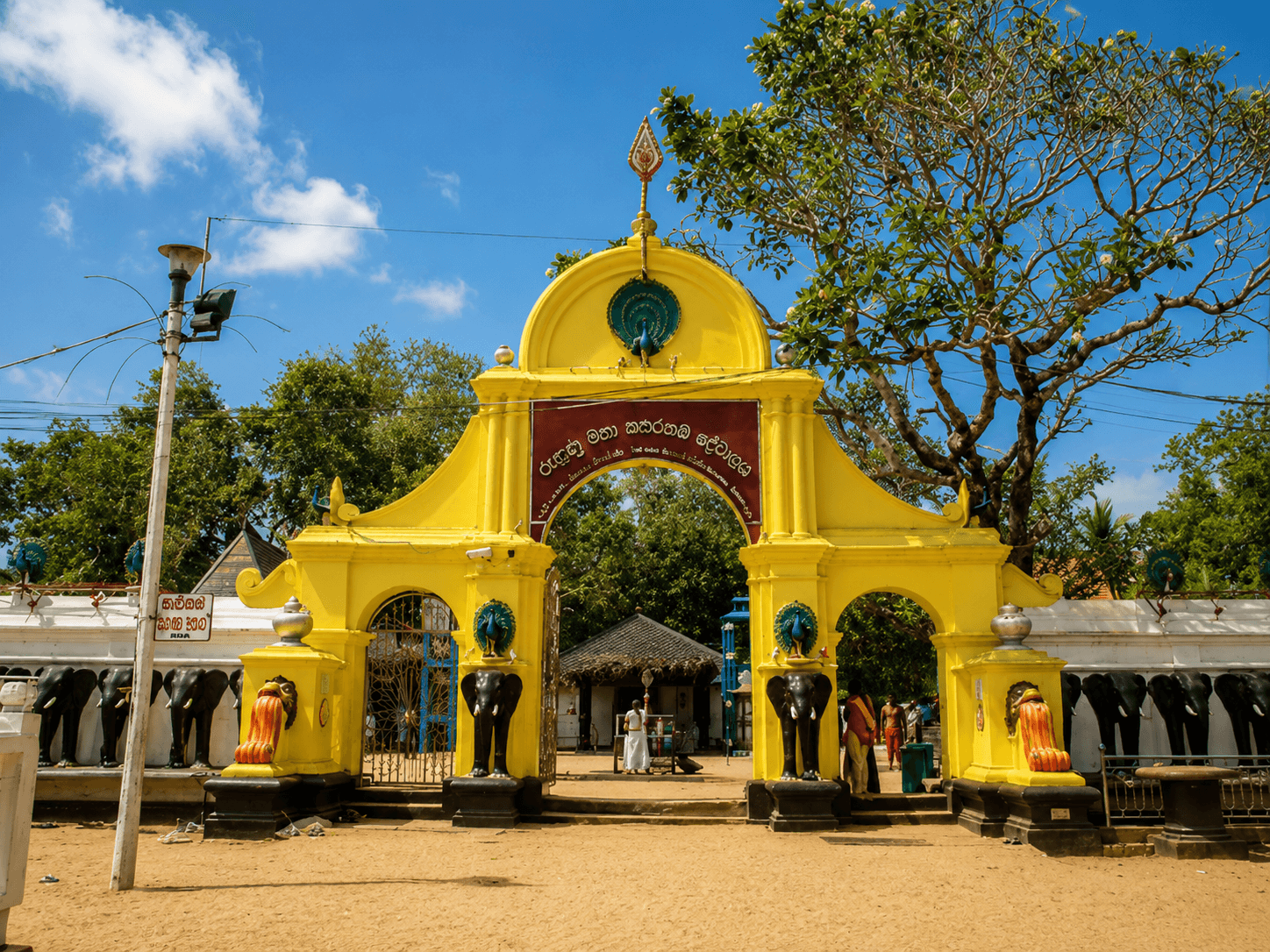
Kataragama, roughly 20 minutes from Tissamaharama, is one of Sri Lanka's most important pilgrimage towns, sacred to Buddhists, Hindus, Muslims and the Vedda people. Its main shrine is dedicated to the god Kataragama, and the evening puja draws crowds bearing fruit platters, flowers and lamps, with drumming and fire.
The atmosphere is quite different from the Buddhist temples of the culture week: colourful, noisy and joyful. Dress modestly, remove shoes and follow the crowd. The annual Kataragama festival, usually in July or August, is far larger. Lankan Stays & Trails can time the visit so you are back at the hotel for an early night before Yala.
For travellers who prefer rest, the evening is just as well spent by the tank or the pool. The wildlife programme continues before dawn tomorrow.
Frequently asked questions
Is Udawalawe or Yala better for elephants?
Udawalawe is better for elephants. Its open grassland makes herds easy to see at close range, and sightings are close to certain. Yala has elephants too, but its main draws are leopards, sloth bears and variety. This route includes both, so you do not need to choose.
How long is a safari in Udawalawe?
A half-day safari lasts around three to four hours. The dawn session, leaving around 6am, is usually the best for activity and light. Full-day safaris are possible but rarely necessary, because the park's elephants are easy to find in the first few hours.
How far is Udawalawe from Tissamaharama?
Roughly one and a half to two hours by road, on a straightforward route through dry farmland. Doing the dawn safari first and driving after breakfast means you arrive at Tissamaharama by lunchtime, with the afternoon free to rest or explore.
Can I do Udawalawe and Yala on the same day?
It is possible but not advisable. Two safaris and a two-hour drive in one day make a tiring day and give neither park a fair chance. This route spreads them over two days, with Udawalawe on the morning of day 8 and Yala on day 9.
Is Kataragama worth visiting?
Yes, for travellers interested in living religion. The evening puja is lively and unlike anything else on the route, shared by several faiths. It is roughly 20 minutes from Tissamaharama and takes two to three hours including the drive. Dress modestly and expect crowds.
What should I wear on a safari?
Neutral colours such as khaki, olive and beige, a hat, sunglasses and sunscreen. Early mornings in an open jeep can be cool, so bring a light layer. Avoid bright white and strong colours, and bring binoculars. Long sleeves help against sun and insects.