
Quick answer
Haputale, at about 1,400 m on the southern edge of the hills, is mild all year, with highs of about 20 to 25 °C and nights of about 12 to 16 °C. It is drier than Nuwara Eliya in the southwest monsoon, but mist often rises from the lowlands from mid-morning. The clearest months for Lipton's Seat are roughly January to March and, often, June to August. October to December are the wettest months, as the northeast monsoon reaches the eastern hills.
Key takeaways
- Haputale is mild all year, with highs of about 20 to 25 °C and cool nights.
- Mist rising from the lowlands is common from mid-morning in every season.
- Lipton's Seat is clearest at sunrise, roughly from January to March and often from June to August.
- October to December are the wettest months, from inter-monsoon storms and the northeast monsoon.
- Haputale is often drier than Nuwara Eliya from May to September.
Haputale's climate in brief
Haputale lies at about 1,400 m in the Uva province, on the southern escarpment of the central highlands. To the south, the land drops more than 1,000 m to the plains around Udawalawe and Wellawaya, and on a clear day the view reaches the coast near Hambantota.
That escarpment shapes the weather. As the morning warms, moist air from the lowlands rises up the cliff and condenses into mist, which can engulf the town within minutes and clear just as fast. Mornings are usually the clearest time of day.
Temperatures are mild: about 20 to 25 °C by day and 12 to 16 °C at night, cooler than Ella and warmer than Nuwara Eliya.
- →Altitude: about 1,400 m.
- →Days: about 20 to 25 °C.
- →Nights: about 12 to 16 °C.
January to March and June to August
January to March are the driest and clearest months, with crisp mornings and long views from Lipton's Seat and the Dambatenne tea estate. Sunrise at Lipton's Seat, about 6 to 6.30 am, is the best chance of a full view.
From June to August, Haputale is partly sheltered from the southwest monsoon, which drops most of its rain on the western hills. Many mornings are clear and windy, while Nuwara Eliya is wrapped in cloud. The views south over the lowlands are often good.
In both periods, mist usually rises from about 9 or 10 am.
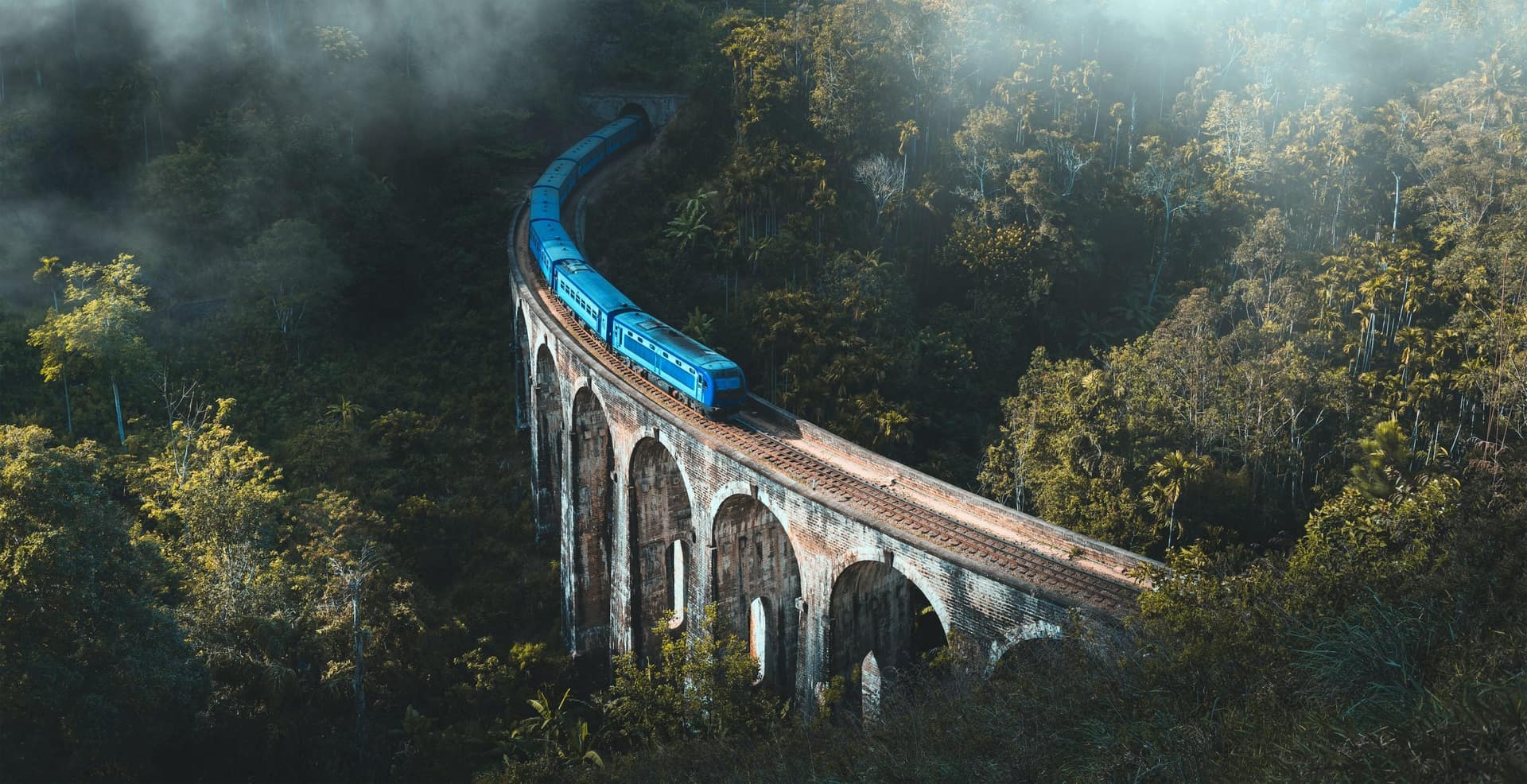
The Kandy to Ella train passes Haputale in the late morning, and in the clear months the views from the carriage south over the lowlands, between Haputale and Ella, are among the best on the line.
- →Clearest: January to March.
- →Often clear: June to August.
- →Best time: sunrise.
October to December
October and November bring heavy inter-monsoon storms, and from November the northeast monsoon reaches the eastern hills, including Haputale. These are the wettest months, with mist that can last most of the day and heavy afternoon rain.
Clear mornings still occur, but less often. Walks on the tea estate roads are fine in light rain, and the tea factories are a good afternoon option.
- →Wettest: October to December.
- →Mist: can last all day.
- →Tea factories: good rainy afternoons.
April, May and September
April and May are warm, with afternoon storms and clear early mornings. September is changeable, with the southwest monsoon fading and the first inter-monsoon storms arriving. Mornings remain the best time for views in these months.
The train from Haputale to Ella and Badulla runs through some of the most dramatic scenery on the line, and it is clearest in the mornings in every season.
- →April and May: storms later in the day.
- →September: changeable.
- →Train: clearest in the mornings.
Planning a Haputale stay
In every season, plan Lipton's Seat for sunrise and the rest of the day for the tea estates, Adisham Bungalow and the train. From October to December, keep a second morning in case the first is clouded in.
Lankan Stays & Trails includes Haputale on hill country routes, often as a quieter alternative to Ella, with a sunrise drive to Lipton's Seat.
Frequently asked questions
When is the best time to visit Haputale?
January to March are the clearest and driest months, and June to August are often clear because Haputale is partly sheltered from the southwest monsoon. October to December are the wettest. In every season, mornings, especially sunrise, have the best views.
Why is Haputale so misty?
Haputale sits on the southern escarpment of the hills. As the morning warms, moist air from the lowlands rises up the cliff and condenses into mist, usually from about 9 or 10 am. The mist can arrive and clear within minutes.
When is Lipton's Seat clearest?
Lipton's Seat is clearest at sunrise, roughly 6 to 6.30 am, especially from January to March and often from June to August. By mid-morning, mist from the lowlands often hides the view. Leave early and allow for a second try in the wet months.
Is Haputale drier than Nuwara Eliya?
From about May to September, usually yes, because Haputale is on the eastern side of the hills and partly sheltered from the southwest monsoon. From October to December, Haputale is often wetter, as the northeast monsoon reaches the eastern hills.
How cold is Haputale?
Haputale is mild, with highs of about 20 to 25 °C and nights of about 12 to 16 °C. Early mornings at Lipton's Seat can feel cold in the wind, so a warm layer is useful. It is warmer than Nuwara Eliya and cooler than Ella.
What is the weather like in Haputale in July?
July is often dry and windy in Haputale, with clear mornings and highs of about 20 to 22 °C, while Nuwara Eliya is usually misty. Mist still rises from the lowlands from mid-morning, so plan Lipton's Seat for sunrise.
How does Lankan Stays & Trails plan Haputale stays?
Haputale is included on hill country routes as a quieter alternative to Ella, with a sunrise drive to Lipton's Seat, tea estate walks and the train. In the wettest months, a second morning is kept free in case the first is clouded in.
Is Adisham Bungalow worth visiting in the rain?
Yes. Adisham, a stone country house built in the 1930s and now a Benedictine monastery, has gardens, a small museum and a shop selling homemade jams, and it suits a misty or showery day. Check opening days, as it usually opens only on weekends, public holidays and school holidays.