
Quick answer
In February, coastal days in Sri Lanka are usually around 30 to 31°C, the Cultural Triangle reaches 30 to 33°C by early afternoon, Kandy is around 28°C, and the hill country is about 20°C by day and cold at night. The UV index around midday is often 11 or more. Plan sightseeing for early morning and late afternoon, rest in the middle of the day, drink plenty of water, wear a hat and high-factor sunscreen, and cover up at temples with light, loose clothing.
Key takeaways
- Coastal days are about 30 to 31°C; the Cultural Triangle reaches 30 to 33°C.
- The midday UV index is often 11 or more, which counts as extreme.
- Stone ruins and temple courtyards get very hot underfoot by late morning.
- Early starts and a midday break are the simplest way to avoid the worst heat.
- The hill country is mild by day and cold at night, a welcome break from the heat.
How hot it gets, region by region
On the west and south coasts, February days are usually around 30 to 31°C, with warm nights of about 23°C. Lower humidity than in other months and a sea breeze make it feel pleasant, though the sun is strong.
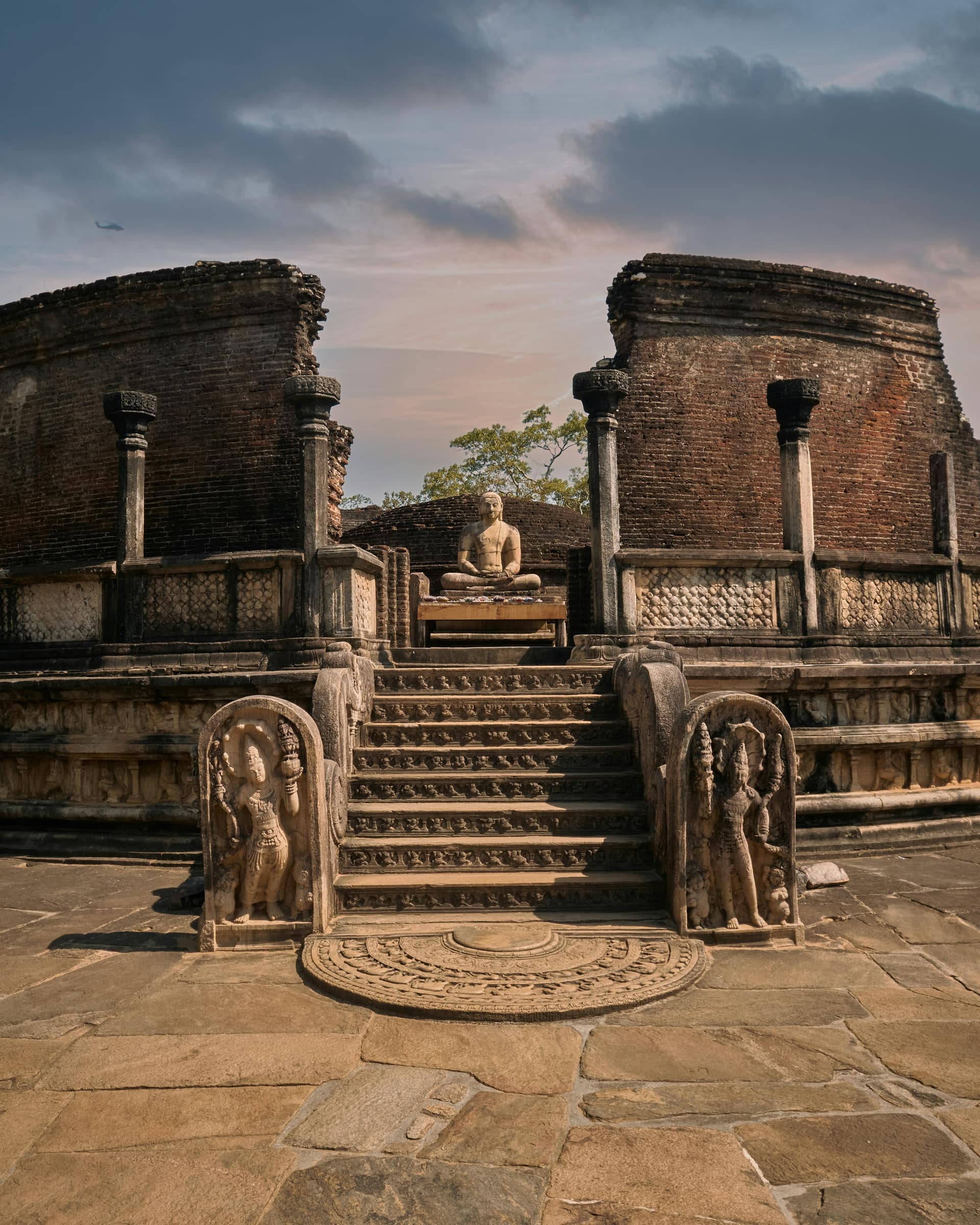
The Cultural Triangle is the hottest part of most trips. Sigiriya, Dambulla, Polonnaruwa and Anuradhapura often reach 32 or 33°C by early afternoon, and the air is dry. Ruins and rocks reflect the heat, making it feel hotter than the thermometer suggests.
Kandy, at about 500 metres, is warm by day at around 28°C and pleasant in the evening. Nuwara Eliya and Haputale are about 20°C by day and can drop below 10°C at night. Jaffna and the north are hot and dry, similar to the Cultural Triangle.
- →Coast: 30 to 31°C days, about 23°C nights.
- →Cultural Triangle: 30 to 33°C, hottest by early afternoon.
- →Kandy: around 28°C by day.
- →Hill country: about 20°C by day, cold nights.
Sun strength and UV
Sri Lanka is close to the equator, and the sun is strong all year. In February clear skies mean the UV index around midday is often 11 or more, classed as extreme. Fair skin can burn in less than 15 minutes in the middle of the day.
Sunburn is the most common health problem for February visitors, usually picked up on the first beach day or on a long climb at Sigiriya. Reapply sunscreen after swimming and every couple of hours, including on cloudy days in the hills.
Sunglasses, a wide-brimmed hat and light long sleeves protect better than sunscreen alone. Rash vests are useful for snorkelling, when your back is exposed for long periods.
- →Use SPF 30 to 50 and reapply often.
- →Wear a hat and sunglasses.
- →Choose light long sleeves for long walks.
- →Use a rash vest for snorkelling.
How to plan a February day
Start early. Sunrise is around 6.30, and the hours until about 10am are the coolest and quietest. Climb Sigiriya, explore Polonnaruwa or visit Dambulla in that window and you avoid both the heat and the crowds.
Rest in the middle of the day. Lunch in the shade, a swim or a nap from noon to about 3pm is how many Sri Lankans handle the heat. Afternoons can be used for driving between places in an air-conditioned car.
Return to sightseeing in the late afternoon. Galle Fort, Kandy's lake and temples and the beaches all come alive after 4pm, when the light is softer and the heat eases.
Hot stone and temples
Temples and sacred sites require shoes off, and stone floors heat up quickly. By late morning, the terraces at Polonnaruwa, Anuradhapura and the Dambulla cave temple can be uncomfortably hot under bare feet.
Thin socks are allowed at many sites and protect your feet. Visiting early also helps, as does walking on the shaded edges and woven mats where provided.
Covered shoulders and knees are required at temples, so choose light, loose clothes rather than heavy fabrics. White and pale colours stay cooler and are traditional for temple visits.
Staying healthy in the heat
Drink more than you think you need, around three litres a day in the dry zone. Add rehydration salts on long sightseeing days, and keep a bottle with you on climbs.
Watch for signs of heat exhaustion: headache, dizziness, nausea and heavy sweating. Stop, find shade, drink and cool down. Older travellers and children are more sensitive to heat, so build in more rest.
The guides who work with Lankan Stays & Trails plan February routes with early starts, long lunch breaks and hill country nights in the middle of the trip, which gives the body a rest from the heat before the beaches.
- →Drink about three litres a day in the dry zone.
- →Use rehydration salts on long days.
- →Rest at the first sign of heat exhaustion.
Frequently asked questions
How hot is Sri Lanka in February?
Coastal days are usually around 30 to 31°C, the Cultural Triangle reaches about 30 to 33°C by early afternoon, and Kandy is around 28°C. The hill country is about 20°C by day and can drop below 10°C at night. Humidity is lower than at many other times of year.
Is February too hot for Sri Lanka?
For most travellers, no. The heat is manageable if you start early, rest in the middle of the day and drink plenty of water. The Cultural Triangle is the hottest part of a typical trip. The hill country offers a cool break, and beaches have sea breezes.
Is the sun strong in Sri Lanka in February?
Yes. Clear skies and Sri Lanka's position near the equator mean the UV index around midday is often 11 or more, which is extreme. Fair skin can burn quickly. Use high-factor sunscreen, a hat and sunglasses, and reapply after swimming and every couple of hours.
When is the best time of day for sightseeing in February?
Early morning, from sunrise around 6.30 to about 10am, and late afternoon, from about 4pm until sunset. These are the coolest and quietest times. The middle of the day is best spent resting, swimming or driving between places in an air-conditioned car.
How much water should I drink in Sri Lanka in February?
About three litres a day in the Cultural Triangle and on long sightseeing days, a little less on the coast. Add rehydration salts on hot climbs and long excursions. Carry a refillable bottle and use filtered or bottled water rather than tap water.
Is the hill country cold in February?
Yes, at night and at dawn. Nuwara Eliya, Haputale and Horton Plains are about 20°C by day but can fall below 10°C at night, with occasional ground frost on the plains. Bring a fleece or light down jacket for evenings and early starts.