
Quick answer
April is the hottest month in most of lowland Sri Lanka, with highs of about 32 to 35 °C and humidity above 80 per cent, which makes it feel hotter than any other month. In the dry zone, including Anuradhapura, Polonnaruwa, Trincomalee and Jaffna, highs of about 33 to 35 °C continue from April to August. December and January are the coolest months. The hills are much cooler: Nuwara Eliya rarely goes above about 21 °C.
Key takeaways
- April is the hottest and most humid month in most of the lowlands.
- The dry zone stays hot from April to August, with highs of about 33 to 35 °C.
- December and January are the coolest months, with coastal highs around 29 to 30 °C.
- The hills are much cooler: about 28 °C in Kandy and 20 °C in Nuwara Eliya by day.
- Humidity, not just temperature, makes April feel the hottest month of the year.
Why April is the hottest
In April, the sun passes almost directly overhead in Sri Lanka, delivering the most heat of the year. At the same time, the island is in the first inter-monsoon period, with light and variable winds and no monsoon cloud cover in the mornings. The heat builds through the day until it breaks in afternoon storms.
Humidity is also at its highest in April, often above 80 per cent on the coasts. Sweat evaporates slowly in humid air, so the body cools less, and 32 °C in April feels hotter than 34 °C in the drier air of July in Jaffna.
In May, the sun is still high, but the southwest monsoon brings cloud and wind to the southwest, cooling it slightly. In the dry zone, the heat continues.
The hottest places
The hottest places are in the dry zone lowlands. Anuradhapura, Polonnaruwa, Trincomalee, Batticaloa, Jaffna, Mannar and Hambantota all reach about 33 to 35 °C by day from April to August, and occasionally more. Nights there stay warm, around 25 to 27 °C.
On the southwest coast, highs are a little lower, about 31 to 32 °C in April, but the humidity is higher. Colombo, Galle and Bentota rarely go above 33 °C, but rarely feel cool either.
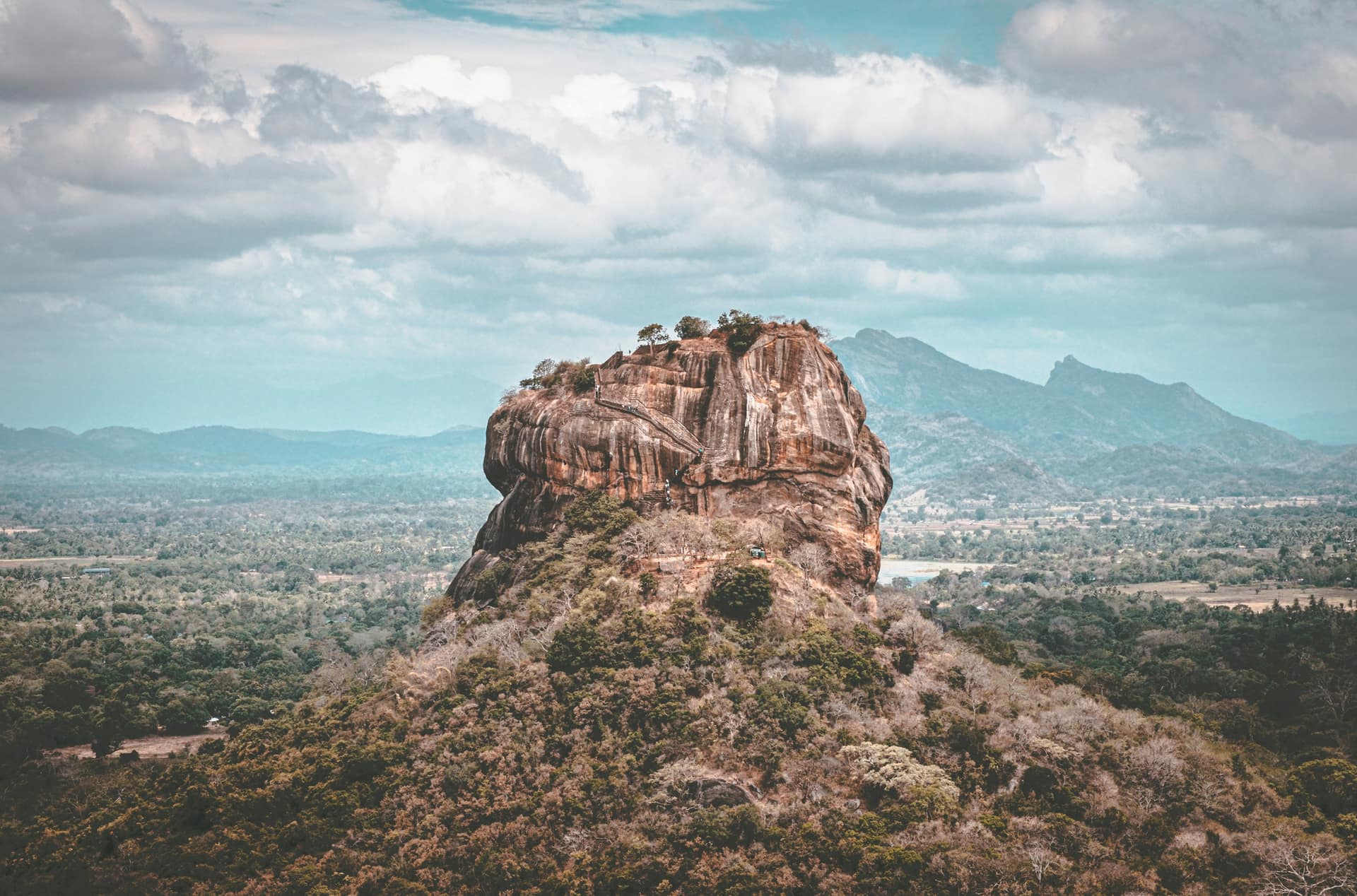
Rock climbs and open ruins amplify the heat. Bare stone at Sigiriya, Dambulla and Anuradhapura absorbs the sun and radiates it back, so midday on the summit of Sigiriya feels much hotter than the shade below.
- →Hottest: Anuradhapura, Polonnaruwa, Trincomalee, Jaffna.
- →Most humid: Colombo, Galle, the southwest coast.
- →Hot stone: Sigiriya, Dambulla, Anuradhapura.
The coolest months and places
December and January are the coolest months in the lowlands, with coastal highs of about 29 to 30 °C, lower humidity in the southwest and pleasant evenings. February is similar, though it starts to warm towards the end.
The hills are cool all year. Kandy, at about 500 m, has highs of about 27 to 31 °C. Ella, at about 1,000 m, has about 23 to 27 °C. Nuwara Eliya, at about 1,870 m, has about 18 to 21 °C by day and nights that can fall to about 8 to 10 °C in January.
- →Coolest lowland months: December and January.
- →Kandy: about 27 to 31 °C.
- →Nuwara Eliya: about 18 to 21 °C.
Coping with the heat
In the hottest months, the day needs a different shape. Start sightseeing at dawn, rest in the middle of the day in a hotel with air conditioning or a pool, and return to the sights after about 3.30 pm, when the light is also better.
Drink more water than usual, add oral rehydration salts on long days, wear a hat and loose, light clothing that covers shoulders for temples, and use high-factor sunscreen. Heat exhaustion shows as headache, dizziness and nausea, and needs shade, water and rest.
The hills are the natural escape. A few nights in Nuwara Eliya or Ella in April are a large part of why Sri Lankans head there for the New Year holidays.
- →Dawn starts and late afternoons.
- →Water and rehydration salts.
- →Hats, light clothing, sunscreen.
Planning around the heat
For travellers who struggle with heat, December to February is the most comfortable time for a Cultural Triangle and south coast trip, and the hills are pleasant all year. April is fine for those who plan the day well and add a hill stay.
Lankan Stays & Trails plans hot-season trips with dawn starts, midday rest in air-conditioned hotels and a hill country break, and drivers carry cold water on every route.
Frequently asked questions
What is the hottest month in Sri Lanka?
April is the hottest month in most of the lowlands, with highs of about 32 to 35 °C and humidity above 80 per cent. In the dry zone, including Anuradhapura, Trincomalee and Jaffna, similar heat continues from April to August, though with drier air and more wind.
What is the hottest place in Sri Lanka?
The dry zone lowlands are the hottest, including Anuradhapura, Polonnaruwa, Trincomalee, Batticaloa, Jaffna, Mannar and Hambantota. They reach about 33 to 35 °C by day from April to August, with warm nights around 25 to 27 °C.
What is the coolest month in Sri Lanka?
December and January are the coolest months in the lowlands, with coastal highs of about 29 to 30 °C and lower humidity in the southwest. In the hills, Nuwara Eliya's nights can fall to about 8 to 10 °C in January, with ground frost on the clearest nights.
Is April too hot to visit Sri Lanka?
Not for most travellers, with planning. April is hot and humid, so start early, rest at midday and add a few nights in the hills, which are cooler and lively around the New Year. The sea is calm on both coasts, which is a bonus.
Why does Sri Lanka feel hotter than the temperature?
Humidity is high, often 70 to 90 per cent on the coasts, so sweat evaporates slowly and the body cools less. Strong sun and hot stone at sites such as Sigiriya add to the effect. Drier, windier months in the dry zone can feel more comfortable at the same temperature.
How hot does Sigiriya get?
Sigiriya has highs of about 30 to 31 °C in January and February and about 33 to 35 °C from April to August. The rock face and stairs absorb heat, so the summit feels hotter by midday. Climb at dawn in the hot months.
How does Lankan Stays & Trails plan for the heat?
Hot-season trips are planned with dawn starts, midday rest in air-conditioned hotels with pools and a hill country break. Drivers carry cold water, and climbs and ruins are scheduled for early morning and late afternoon.