
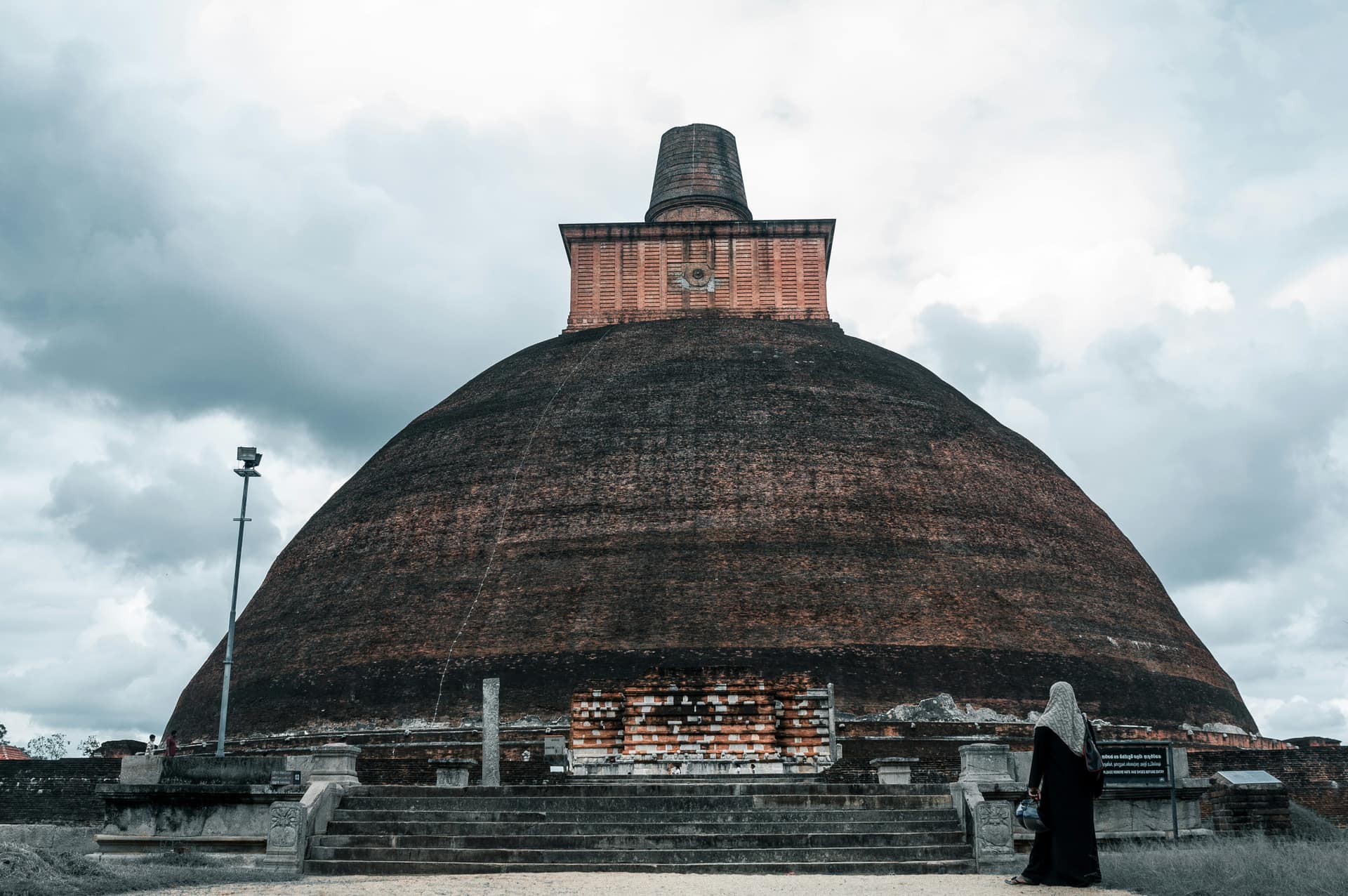
Quick answer
Anuradhapura is one of the drier and hotter places in the Cultural Triangle, with roughly 1,300 to 1,400 mm of rain a year. Most of it falls from about October to December. January to March are green and comfortable, with highs of about 30 to 32 °C. April to September are dry and hot, with highs of about 33 to 35 °C, and windy from June. The sacred sites are open all year; the season changes how early to start.
Key takeaways
- Anuradhapura receives roughly 1,300 to 1,400 mm of rain a year, less than Sigiriya or Polonnaruwa.
- The rainy season runs roughly from October to December.
- January to March are the most comfortable months, green and mostly dry.
- April to September are hot, with highs of about 33 to 35 °C, and windy from June.
- Bare stone at the temples gets very hot by midday, which matters because shoes are removed at sacred sites.
Anuradhapura's climate in brief
Anuradhapura lies in the north central plains, in the dry zone, at about 80 to 90 m above sea level. It is drier than Sigiriya or Polonnaruwa, receiving roughly 1,300 to 1,400 mm a year, and gets most of its rain from the second inter-monsoon and the northeast monsoon.
The city is hot all year. Highs range from about 30 °C in December and January to 34 to 35 °C from April to August. Mornings are about 22 to 25 °C. Humidity is moderate in summer, when a dry southwest wind blows, and higher in the rainy months.
The ruins are spread over about 40 square kilometres, with long distances between the main stupas and few trees on some routes. That is why the weather shapes the way the city is explored, usually by bicycle, tuk-tuk or car.
- →Annual rain: roughly 1,300 to 1,400 mm.
- →Highs: about 30 to 35 °C.
- →Mornings: about 22 to 25 °C.
January to March
January is drying after the rainy season, with occasional showers and green landscapes. The tanks around the city, such as Nuwara Wewa, Tissa Wewa and Basawakkulama, are full. February and March are dry, with highs of about 30 to 32 °C, the most comfortable of the year.
These are the best months for cycling between the stupas, walking around Abhayagiri and Jetavanaramaya, and climbing Mihintale in the morning. The new rice festival is usually held at Anuradhapura in the early part of the year.
Even in these months, the middle of the day is hot on open ground, so the classic pattern still applies: early morning out, midday rest, late afternoon back.
- →Most comfortable: February and March.
- →Tanks full: January and February.
- →Best for cycling the sacred city.
April to September
From April, the heat builds. April is hot and still, with occasional storms. From June to September, the southwest monsoon arrives as a strong, dry wind, and rain becomes very rare, often less than 30 mm a month. Highs stay around 33 to 35 °C.
The heat is the main challenge. At sacred sites, such as the Sri Maha Bodhi and the stupas, visitors remove shoes and walk on stone and sand, which become very hot by late morning. Wearing socks or visiting early or late avoids burnt feet.
Poson, the June full moon, brings large crowds of pilgrims to Mihintale and Anuradhapura to mark the arrival of Buddhism. The weather is hot and dry, and the night processions are the coolest time to visit.
- →Hottest: April to August.
- →Windiest: June to September.
- →Poson pilgrims: June full moon.
October to December
October brings the first heavy storms of the season, usually in the afternoon. November and December are the wettest months, with heavy rain on many days and occasional long spells when a depression passes. The landscape turns green quickly, and the tanks fill.
Mornings are often dry, so sightseeing works best early. Some unpaved paths between ruins become muddy, and cycling is less pleasant after heavy rain.
- →Storms begin: October.
- →Wettest: November and December.
- →Mornings: usually dry.
Planning a visit by season
Anuradhapura works in every month. In any season, start at dawn, rest in the middle of the day and return for the late afternoon and the evening light at Ruwanwelisaya. From April to September, add socks for the temple grounds and plenty of water.
Lankan Stays & Trails plans Anuradhapura days around dawn starts and late-afternoon visits, with a guide and a car or bicycles depending on the heat.
Frequently asked questions
When is the best time to visit Anuradhapura?
February and March are the most comfortable months, dry and green with highs of about 30 to 32 °C. Anuradhapura works all year, though: April to September is hot and dry, and October to December has afternoon storms with clear mornings.
How hot is Anuradhapura?
Daytime highs range from about 30 °C in December and January to 34 to 35 °C from April to August. Mornings are about 22 to 25 °C. Open ground and bare stone make the middle of the day feel hotter, so start sightseeing early.
When is the rainy season in Anuradhapura?
The rainy season runs roughly from October to December, from the second inter-monsoon and the northeast monsoon. November and December are the wettest months. The rest of the year is mostly dry, especially June to August.
Is Anuradhapura drier than Sigiriya?
Yes, on average. Anuradhapura receives roughly 1,300 to 1,400 mm of rain a year, while Sigiriya receives roughly 1,600 to 1,700 mm. Both are hot and dry from June to September and wettest from October to December.
Do you have to walk barefoot at Anuradhapura?
Yes, at sacred sites such as the Sri Maha Bodhi and the stupas, shoes are removed. From April to September the stone and sand get very hot by late morning. Visit early or late, or wear plain white socks, which are generally accepted.
What is the weather like at Poson in Anuradhapura?
Poson, the June full moon, falls in the dry, hot and windy season, with highs of about 33 to 34 °C. Large crowds of pilgrims gather at Mihintale and Anuradhapura. Evening and night visits are the most comfortable time to experience the lanterns and processions.
How does Lankan Stays & Trails plan Anuradhapura visits?
Anuradhapura days are planned around dawn starts and late-afternoon visits, with a guide and a car or bicycles depending on the heat. Guests are reminded to bring socks and water for the temple grounds in the hot months.