
Quick answer
Kalpitiya is dry and windy for most of the year, with roughly 1,000 to 1,200 mm of rain, most of it from about October to December. The main kitesurfing season runs roughly from May to October, when the southwest monsoon blows strongly and steadily. A second, lighter wind season runs roughly from December to March, which is also the calm-sea season for dolphin and whale trips offshore. Highs are about 30 to 33 °C all year.
Key takeaways
- Kalpitiya is one of the driest places on the west coast, with roughly 1,000 to 1,200 mm of rain a year.
- The main kite season runs roughly from May to October, with strong, steady southwest wind.
- A second, lighter wind season runs roughly from December to March.
- Dolphin trips run roughly from November to April, when the open sea is calmer.
- The wettest months are roughly October to December, with storms and some flooding on low roads.
Kalpitiya's climate in brief
Kalpitiya lies in the Puttalam district, about three to four hours' drive north of Colombo. It sits in the dry zone, with sandy soil, coconut plantations and salt pans, and receives roughly 1,000 to 1,200 mm of rain a year, far less than Negombo, only about 100 km to the south.
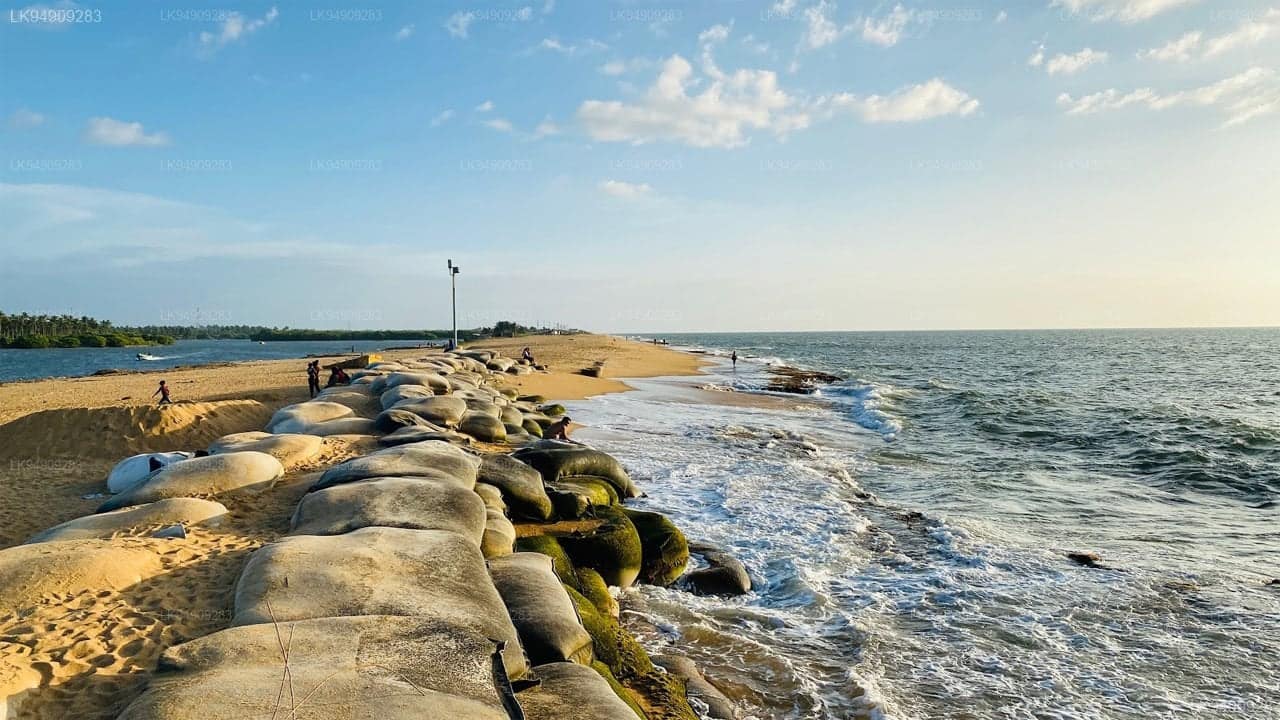
The peninsula is flat and narrow, with the shallow Puttalam lagoon on the east and the Indian Ocean on the west. That shape funnels the wind and gives the lagoon flat water even when the wind is strong, which is ideal for learning to kitesurf.
Temperatures are steady: about 30 to 33 °C by day and 24 to 27 °C at night. The sea is about 27 to 29 °C.
- →Annual rain: roughly 1,000 to 1,200 mm.
- →Days: about 30 to 33 °C.
- →Lagoon: flat, shallow water.
May to October: the main wind season
From about May, the southwest monsoon sets in and blows strongly along the coast, often at 18 to 25 knots for weeks on end. June to August are usually the most consistent months. That is the main kitesurfing season, when schools and camps on the lagoon are busiest.
Rain is light in these months, because the monsoon drops most of its moisture further south. The open sea is rough, and dolphin trips do not usually run. The wind keeps temperatures bearable, though the sun is strong.
The season tails off in September and October, when the wind becomes less reliable and the first storms arrive.
- →Strongest wind: roughly June to August.
- →Kite season: roughly May to October.
- →Open sea: rough, no dolphin trips.
December to March: lighter wind and dolphins
From about December, the northeast monsoon brings a second, lighter wind season, roughly 12 to 20 knots on good days, until about March. It suits lighter riders and learners, and the lagoon is less crowded than in summer.
The same months are the calm-sea season offshore. Boats leave early in the morning to look for spinner dolphin pods, sometimes in the hundreds, and occasionally whales. The sea is usually flattest from about December to March.
Rain is light from January to March, and the weather is sunny and warm.
- →Lighter wind: roughly December to March.
- →Dolphin trips: roughly November to April.
- →Calmest sea: roughly December to March.
October to December: the wet spell
Kalpitiya gets most of its rain from the second inter-monsoon and the early northeast monsoon. October and November are the wettest months, with heavy afternoon storms and occasional long spells of rain when a depression passes. Low roads on the peninsula can flood.
The wind is unreliable in October and November, so most kite schools reduce their services. The landscape turns green briefly, and migrant birds arrive on the lagoon and salt pans.
- →Wettest: October and November.
- →Wind: unreliable.
- →Migrant birds arrive.
Planning a Kalpitiya stay by season
For strong wind, plan Kalpitiya from June to August. For lighter wind and dolphins, plan December to March. Avoid October and November unless the trip is about birds. Kalpitiya combines well with Wilpattu National Park, about an hour away by road and boat.
Lankan Stays & Trails plans Kalpitiya stays for kite lessons in the wind seasons and dolphin trips in the calm months, often combined with Wilpattu and Anuradhapura.
Frequently asked questions
When is the best time to visit Kalpitiya?
It depends on the activity. For strong wind and kitesurfing, roughly May to October, with June to August the most consistent. For lighter wind, dolphin trips and calm sea, roughly December to March. October and November are the wettest months.
When is the kitesurfing season in Kalpitiya?
The main season runs roughly from May to October, when the southwest monsoon blows strongly, often 18 to 25 knots. A second, lighter season runs roughly from December to March. The shallow lagoon gives flat water for learning in both seasons.
When can you see dolphins in Kalpitiya?
Dolphin trips run roughly from November to April, when the open sea is calmer. December to March are usually the best months, with large pods of spinner dolphins seen early in the morning. From May to October the sea is too rough for regular trips.
Is Kalpitiya dry?
Yes, for most of the year. Kalpitiya receives roughly 1,000 to 1,200 mm of rain a year, much less than Negombo, and most of it falls from about October to December. The summer wind season is mostly dry and sunny.
Is Kalpitiya windy all year?
Not quite. The strongest wind comes from about May to October, and a lighter wind season runs from about December to March. October and November, between the two monsoons, have unreliable wind and the most rain.
How hot is Kalpitiya?
Daytime highs are about 30 to 33 °C all year, with nights around 24 to 27 °C. The steady wind makes the heat easier to bear, especially in the summer kite season, but the sun is strong, so sun protection matters on the water.
Can you combine Kalpitiya with Wilpattu?
Yes. Wilpattu National Park is about an hour from Kalpitiya by road, or by boat across the lagoon to some entrances. Wilpattu is best in the drier months, roughly February to October, which overlaps with both the summer kite season and the dolphin season.
How does Lankan Stays & Trails plan Kalpitiya stays?
Kalpitiya stays are planned for kite lessons in the wind seasons and dolphin trips in the calm months, often combined with Wilpattu and Anuradhapura. October and November are avoided unless a trip is focused on birdwatching.