
Quick answer
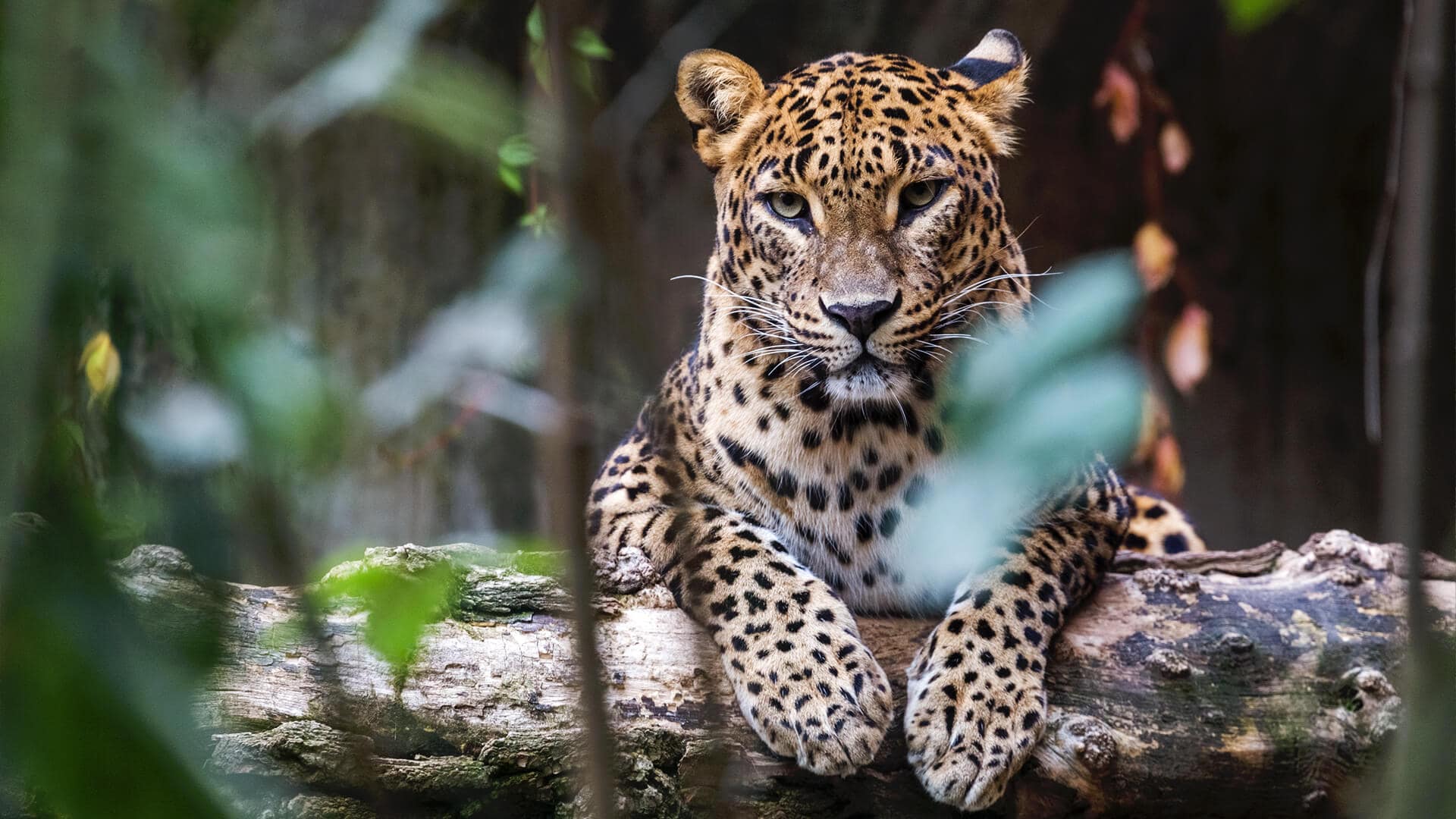
Leopards in Yala are Sri Lankan leopards, Panthera pardus kotiya, an endemic subspecies and the island's apex predator. With no tigers or lions to avoid, they are active by day more than leopards elsewhere, and Block I has been described as holding one of the highest leopard densities recorded anywhere. Each adult holds a territory, males' overlapping several females', and they hunt spotted deer, wild boar, langurs and smaller prey, resting on rock outcrops in the cool of the morning.
Key takeaways
- The Sri Lankan leopard, Panthera pardus kotiya, is found only in Sri Lanka and is the largest predator on the island.
- Yala's leopards are seen by day more often than most leopards because there are no tigers or lions to compete with or avoid.
- Adult leopards in Yala hold territories, with a male's range overlapping those of several females, which is why the same cats are seen in the same areas.
- Spotted deer are the leopard's main prey in Yala, alongside wild boar, langurs, hares, birds and the occasional young buffalo.
- Yala's leopards are most active in the first hours after dawn and the last hours before dusk, and rest through the heat of the day.
The leopard in Yala is a Sri Lankan endemic
The leopard in Yala is the Sri Lankan leopard, Panthera pardus kotiya, a subspecies found only on the island. It is slightly larger on average than many mainland leopards, with a rich tawny coat and dense rosettes, and it is the largest predator in Sri Lanka.
Because Sri Lanka has no tigers or lions, the leopard sits alone at the top of the food chain. That single fact explains most of what makes Yala different: the leopard has no larger cat to hide from, and it behaves accordingly.
- →Scientific name: Panthera pardus kotiya.
- →Range: found only in Sri Lanka, in forests from the dry zone to the hills.
- →Status: the island's apex predator, with no larger cat present.
Why Yala's leopards are seen by day
Leopards in Africa and India often hunt at night and stay hidden by day, partly to avoid lions and tigers. In Yala there is nothing to avoid, so leopards move, hunt and rest in daylight more freely. They also grow used to jeeps, which follow fixed tracks and do not harm them.
Yala's Block I is often described as holding one of the highest leopard densities recorded anywhere, and many of its cats live close to the tracks. That combination, density and daytime habits, is why visitors see leopards here more often than in most parks in Asia.
Territories, and why you see the same cats
Adult leopards in Yala live alone and hold territories, which they mark with scent, scrapes and calls. A male's territory typically overlaps those of several females, and neighbouring males avoid each other. Territories can last for years, which is why trackers know individual cats and where they are likely to be.
Drivers and trackers often know Yala's leopards by name or by the area they hold. When a resident cat dies or is pushed out, a new animal moves in, and the stories trackers tell of particular leopards are often the best part of a drive.
- →Adults live alone outside mating and raising cubs.
- →Males' ranges overlap several females'.
- →Territories are marked by scent, scrapes and a rasping call.
- →Resident cats are known to trackers by area or name.
What Yala's leopards eat
Spotted deer are the leopard's main prey in Yala, and the herds on the plains are never far from a cat. Leopards also take wild boar, tufted grey langurs, black-naped hares, peafowl and other birds, and sometimes a young buffalo or sambar.
Yala's leopards usually hunt by stalking and a short rush, and kills are often dragged into cover or, more rarely, up a tree. Alarm calls from deer and langurs often give away a hunting cat before anyone sees it.
A leopard's day in Yala
Yala's leopards are most active in the first hours after dawn and the last hours before dusk. In the cool of the morning they may walk the tracks, patrol their territory or rest on a rock top in the sun. As the heat builds they move into shade, under trees or into rock crevices, and are much harder to see.
Females raise cubs alone, and a mother with young cubs keeps to a smaller area, often around rocky ground with hiding places. Cubs stay with her for over a year. Sightings of a mother and cubs are among the most memorable in the park, and the ones where distance matters most.
- →Dawn to mid-morning: the most active period.
- →Midday: resting in shade, rarely seen.
- →Late afternoon to dusk: active again.
- →Night: active, but the park is closed.
Watching Yala's leopards well
Knowing how leopards live tells you how to watch them. Be in the park at opening, scan rocks early and shade later, listen for alarm calls and give mothers with cubs extra room. A leopard that stays relaxed will often stay in view far longer than one that is crowded.
Lankan Stays & Trails books drivers who wait quietly with the engine off and leave when a cat is boxed in. For where leopards can be seen across Sri Lanka, and the dawn drive itself, see our leopard safari pages.
Frequently asked questions
What kind of leopard lives in Yala?
Yala's leopards are Sri Lankan leopards, Panthera pardus kotiya, a subspecies found only in Sri Lanka. They are the island's largest predator, with a rich tawny coat and dense rosettes, and are slightly larger on average than many mainland leopards.
Why are leopards so easy to see in Yala?
Yala's leopards live at high density in Block I, and with no tigers or lions to avoid they are active by day more than leopards elsewhere. They are also used to jeeps on fixed tracks. Sightings are still never guaranteed.
How many leopards are there in Yala?
Nobody has a fixed count, and estimates vary with the area surveyed and the year. Block I has been described as holding one of the highest leopard densities recorded anywhere, but treat any precise number with caution, since leopards move and populations change.
What do leopards eat in Yala?
Spotted deer are the main prey of Yala's leopards. They also hunt wild boar, tufted grey langurs, black-naped hares, peafowl and other birds, and sometimes young buffalo or sambar. Kills are usually dragged into cover and occasionally taken up a tree.
What time of day are leopards most active in Yala?
Leopards in Yala are most active from dawn to mid-morning and from late afternoon to dusk. Through the heat of the day they rest in shade or rock crevices. A drive that starts at gate opening, around 6am, gives the best chance of seeing one moving.
Can you see leopard cubs in Yala?
Yes, sometimes. Females raise cubs alone, often around rocky ground in Block I, and cubs stay with their mother for over a year. Mothers with young cubs are sensitive to disturbance, so a good driver keeps further back and leaves early.