
Quick answer
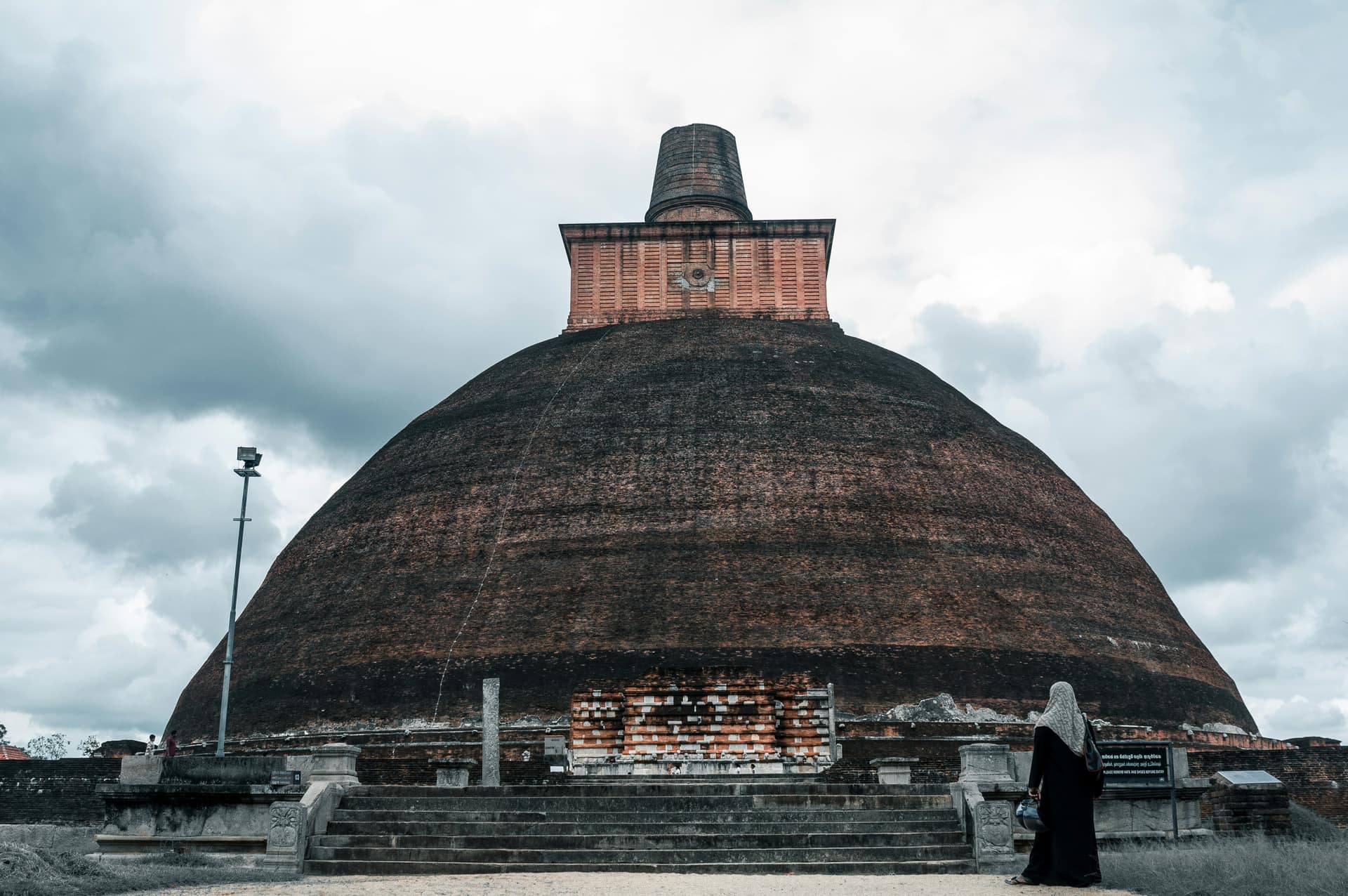
Jetavanaramaya is a vast brick stupa in Anuradhapura built by King Mahasena in the 3rd century AD. At roughly 122 metres originally, it was among the tallest structures in the ancient world, and it is still about 70 metres high today. Some estimates put it at over 90 million bricks. Visit early in the morning, walk around its terrace clockwise, and see the nearby Jetavana museum. It is covered by the Anuradhapura sacred city ticket.
Key takeaways
- Jetavanaramaya was built by King Mahasena, who reigned in the late 3rd century AD.
- At roughly 122 metres originally, Jetavanaramaya was among the tallest structures of the ancient world.
- Jetavanaramaya stands about 70 metres high today, after centuries of decay and partial restoration.
- Estimates suggest Jetavanaramaya contains over 90 million bricks, making it one of the largest brick structures ever built.
- The Jetavana monastery once housed thousands of monks and covered a large area around the stupa.
History
Jetavanaramaya was built by King Mahasena, who reigned in the late 3rd century AD, and completed by his son. Mahasena supported a monastic faction rival to the orthodox Mahavihara, and the monastery he founded around the stupa became one of the three great monasteries of Anuradhapura, alongside the Mahavihara and Abhayagiri.
The stupa is said to enshrine part of a sash or belt tied by the Buddha. At its original height of roughly 122 metres, it was among the tallest structures in the ancient world. After Anuradhapura's fall in 1017, it was abandoned to the jungle, and the dome lost its upper part.
Restoration in recent decades stabilised the brick and partly restored its profile. It remains unplastered, which shows the brickwork clearly.
Jetavanaramaya's monastery was a rival to the Mahavihara for centuries, and the competition between the great monasteries shaped Anuradhapura's history. Kings who favoured one or the other gave land, built monuments and sometimes demolished rival buildings. The giant stupa is partly a statement of royal patronage in that contest.
- →3rd century AD: built by King Mahasena.
- →Roughly 122 metres high originally.
- →1017: abandoned after Anuradhapura's fall.
- →Recent decades: restored and stabilised.
The scale
The scale of Jetavanaramaya is hard to grasp until you stand at its base. The dome rises about 70 metres today, and the terrace around it is wide enough for a long walk. Estimates suggest over 90 million bricks went into it, and engineers have studied how the foundations, set on bedrock, carried such weight.
Many visitors find the best view is from a little distance, where the dome rises above the trees. Up close, look at the brickwork, the remains of shrines at the four cardinal points and the terrace stonework.
Jetavanaramaya's terrace offers the best sense of the monastery that once surrounded it. Look out for the remains of the image house to the west, with a tall stone doorway, and the foundations of monks' residences. The monastery grounds once covered a large area, with thousands of monks living there at its height in the first millennium.
- →Height today: about 70 metres.
- →Bricks: estimated at over 90 million.
- →Foundations: set deep on bedrock.
Visiting Jetavanaramaya
Visit Jetavanaramaya early in the morning, when the terrace is cool and the low sun brings out the brick colour. Shoes come off at the terrace, and the stone heats up quickly by late morning. Walk around clockwise, as pilgrims do.
Jetavanaramaya is within the Anuradhapura sacred city, covered by the main ticket of roughly US$25 to US$30 for foreign adults. It lies in the south-east part of the city, near the Jetavana museum, and is often combined with Ruwanwelisaya and Thuparamaya by bicycle or tuk-tuk.
Lankan Stays & Trails guides usually begin an Anuradhapura day at Jetavanaramaya at about 7am, then work north, so the hottest hours are spent indoors at the museums.
- →Best time: 7am to 9am or after 4pm.
- →Ticket: covered by the sacred city ticket.
- →Shoes off at the terrace; socks help.
- →Allow 30 to 45 minutes.
The Jetavana museum
The Jetavana museum, near the stupa, displays finds from the monastery excavations, including gold and gem jewellery, carved stone, coins and items traded from across Asia. It shows how wealthy and connected the monastery was.
The museum is small and cool, a good stop at midday. Check opening days locally, as Anuradhapura's museums sometimes close one day a week.
One of the museum's most interesting exhibits shows the variety of beads and gems found at Jetavana, many traded from India, the Middle East and the Mediterranean. Together with the scale of the stupa, they show Anuradhapura as a wealthy, outward-looking city at the centre of Indian Ocean trade routes.
Fitting it into an Anuradhapura day
Jetavanaramaya fits naturally at the start of an Anuradhapura day. From there, the route continues to Ruwanwelisaya, the Sri Maha Bodhi and Thuparamaya, then north to Abhayagiri, the Samadhi Buddha and Kuttam Pokuna, ending at Isurumuniya near Tissa Wewa for sunset.
If you have only half a day in Anuradhapura, choose Jetavanaramaya or Abhayagiri rather than both, and add the Sri Maha Bodhi and Ruwanwelisaya.
- →Morning: Jetavanaramaya, Ruwanwelisaya, Sri Maha Bodhi.
- →Midday: museums.
- →Afternoon: Abhayagiri, Samadhi Buddha, Kuttam Pokuna.
- →Sunset: Isurumuniya and Tissa Wewa.
Frequently asked questions
How tall is Jetavanaramaya?
About 70 metres today. Originally it stood roughly 122 metres high, making it among the tallest structures in the ancient world. It lost its upper part after Anuradhapura was abandoned and has been partly restored.
Who built Jetavanaramaya?
King Mahasena, who reigned in the late 3rd century AD, built Jetavanaramaya, and his son completed it. The monastery around it became one of the three great monasteries of Anuradhapura.
How many bricks are in Jetavanaramaya?
Estimates suggest over 90 million bricks, making it one of the largest brick structures ever built. The figure is an estimate based on its size, but the scale is clear when you stand at the base.
Is Jetavanaramaya included in the Anuradhapura ticket?
Yes. Jetavanaramaya is within the sacred city, covered by the main Anuradhapura ticket of roughly US$25 to US$30 for foreign adults. Confirm current prices locally before you go. Keep your ticket with you for checks.
How long do you need at Jetavanaramaya?
Thirty to 45 minutes for the stupa and terrace, plus 30 minutes for the museum. Most visitors combine it with Ruwanwelisaya and Thuparamaya in one morning by bicycle or tuk-tuk.
What is inside Jetavanaramaya?
The stupa is solid and cannot be entered. Tradition says it enshrines part of a sash or belt tied by the Buddha. Like all stupas, it is a relic monument walked around, not a building with an interior.