
Quick answer
Kirinda is a fishing village on Sri Lanka's deep south coast, about 15 kilometres from Tissamaharama and close to Yala National Park's western entrance. Its rock temple, said to mark where Queen Viharamahadevi came ashore, sits above a beach with views to the Great Basses reef and its offshore lighthouse. The area is a quieter alternative base for Yala than Tissamaharama, and it sits within reach of Bundala's flamingos and the pilgrimage town of Kataragama.
Key takeaways
- Kirinda is roughly 15 kilometres from Tissamaharama and close to Yala's western entrance.
- The rock temple above the beach is linked by legend to Queen Viharamahadevi's landing.
- The Great Basses reef and its 1873 lighthouse lie roughly 13 kilometres offshore.
- Bundala National Park nearby is Sri Lanka's premier coastal wetland for migratory birds including flamingos.
- The sea at Kirinda is rough and there are strong currents; it is not a swimming beach.
Kirinda village and the rock temple
Kirinda is a working fishing village where boats are drawn up on the sand and the day is organised around the sea rather than around visitors. Above the beach, a granite outcrop carries a small temple and a white dagoba, reached by a short flight of steps, and the view from the top runs along an empty coast in both directions.
The temple's significance is legendary. Tradition holds that Queen Viharamahadevi, daughter of the king of Kelaniya, was set adrift in a boat as a sacrifice to appease the sea and came ashore here, later becoming the mother of King Dutugemunu. Whether or not you take that literally, the site is genuinely revered and treated as sacred, so cover shoulders and knees and remove shoes at the temple.
- →A working fishing village, not a resort. Very few visitors stop.
- →Rock temple and dagoba reached by a short flight of steps above the beach.
- →Associated with the legend of Queen Viharamahadevi's landing.
- →Sacred site: cover shoulders and knees, remove shoes and hats.
The Great Basses reef and lighthouse
About 13 kilometres offshore from Kirinda lies the Great Basses reef, a submerged sandstone ridge that has wrecked ships for centuries and carries a lighthouse completed in 1873, built of interlocking granite blocks shipped from Scotland. It is one of the most remote and difficult lighthouses in the region to service.
The reef is also one of Sri Lanka's most celebrated dive sites, with big fish, strong current and a famous silver rupee wreck explored in the 1960s by Arthur C. Clarke and Mike Wilson. It is only diveable in a brief calm window, usually around March and April, and it is a genuinely advanced dive requiring an experienced operator and settled conditions.
- →Great Basses lighthouse, completed 1873, roughly 13 km offshore.
- →One of Sri Lanka's finest dive sites, with strong current and large fish.
- →Diveable only in a brief calm window, usually around March and April.
- →Advanced divers only, with an experienced operator; not a casual outing.
Kirinda as a base for Yala
Kirinda sits close to Yala National Park's western approach, which makes it a viable and much quieter alternative to Tissamaharama, where most Yala visitors stay. The practical benefit is a shorter run to the gate for a dawn drive, and a considerably calmer evening.
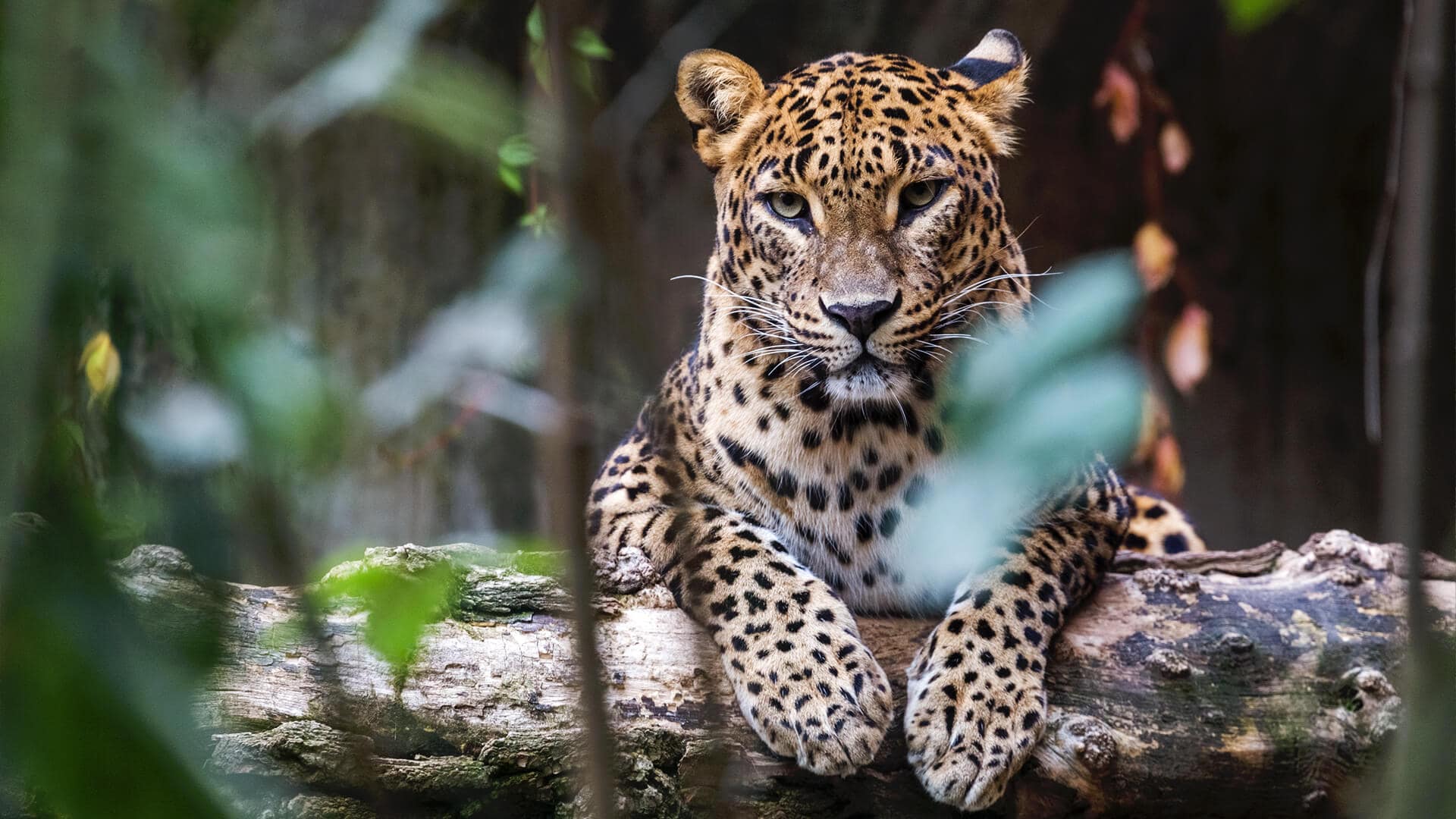
Yala's Block 1 holds one of the highest recorded leopard densities in the world and is at its best from roughly February to July. Block 1 usually closes for an annual drought period from about September to mid-October, so confirm dates before planning. The alternative gates and blocks, and nearby Lunugamvehera, are options when the main block is busy.
- →Quieter alternative to Tissamaharama, with a short run to the park gate.
- →Yala Block 1 is best from roughly February to July.
- →Block 1 usually closes around September to mid-October; confirm each year.
- →Book jeeps and park entry ahead in the high season.
Bundala and the salt pans
Bundala National Park, between Hambantota and Tissamaharama, is Sri Lanka's most important coastal wetland and a Ramsar site. Its lagoons and salt pans hold enormous numbers of migratory shorebirds between roughly September and March, including greater flamingos, which gather in flocks that turn the shallows pink.
It is a completely different safari from Yala: fewer mammals, far fewer jeeps, and a landscape of water, scrub and dune. Elephants, crocodiles and jackals are all present. For anyone with the slightest interest in birds, Bundala in January or February is one of the best half days in the country.
- →Ramsar-listed coastal wetland with lagoons, salt pans and dunes.
- →Migratory shorebirds peak roughly September to March, including flamingos.
- →Far quieter than Yala; elephants, crocodiles and jackals also present.
- →Best visited early morning as a half-day drive.
Kataragama and the inland deep south
Kataragama, roughly half an hour inland, is one of the most important multi-faith pilgrimage sites in Sri Lanka, sacred to Buddhists, Hindus, Muslims and the indigenous Vedda community. The evening puja at the Maha Devale, with drums, fruit offerings and lines of pilgrims, is a genuinely powerful hour and the single best reason to spend a night in this region.
Tissamaharama, the practical hub, has its own ancient dagoba and a large tank whose banks fill with birds at dusk. The whole area sits within the historic Ruhuna kingdom, and the density of tanks, dagobas and ruins in the scrub is much greater than the modern landscape suggests.
- →Kataragama: multi-faith pilgrimage town, roughly 30 minutes inland.
- →The evening puja at the Maha Devale is the region's highlight.
- →Tissamaharama: ancient dagoba, large tank, and the area's practical hub.
- →The Esala festival at Kataragama falls in July or August and is very busy.
Practicalities and safety
The sea at Kirinda is rough with strong currents and is not a swimming beach. Look at the water rather than the sand: this is an exposed coast facing open ocean, and people underestimate it. Nearby Tangalle and its bays are the swimming option in this region.
Accommodation around Kirinda is limited and mostly small, with more choice at Tissamaharama and a growing set of good properties around the Yala gates. Carry cash, expect limited card acceptance, and note that the region is hot and dry with little shade. This coast follows the south coast season, roughly November to April, though Yala's own best months run to July.
- →Kirinda is not a swimming beach; the sea is rough with strong currents.
- →Accommodation is limited; Tissamaharama has more choice.
- →Carry cash; card acceptance is limited outside larger hotels.
- →Hot, dry and exposed. Bring sun protection and plenty of water.
How the deep south fits a trip
Two nights is the right allocation: a dawn Yala drive on one morning, Bundala on the other, and Kataragama's evening puja in between. That gives you leopards, flamingos and one of the most atmospheric religious sites in South Asia within a small radius.
Lankan Stays & Trails runs the deep south from quieter bases than Tissamaharama where possible, and times Kataragama for the evening puja rather than a daytime look at an empty courtyard.
Frequently asked questions
Where is Kirinda in Sri Lanka?
Kirinda is a fishing village on the deep south coast, about 15 kilometres from Tissamaharama and close to Yala National Park's western approach. Kataragama is roughly half an hour inland, and Bundala National Park lies to the west towards Hambantota.
Can you swim at Kirinda?
No. Kirinda faces open ocean with rough seas and strong currents, and it is not a swimming beach. It is a working fishing beach with a rock temple above it. For swimming in this region, go to Tangalle and its sheltered bays further west along the coast.
What is the Great Basses reef?
A submerged sandstone ridge roughly 13 kilometres off Kirinda that has wrecked ships for centuries, marked by a lighthouse completed in 1873. It is one of Sri Lanka's finest dive sites, with strong currents and large fish, diveable only in a brief calm window around March and April.
Is Kirinda a good base for Yala?
It is a quieter alternative to Tissamaharama, where most Yala visitors stay, with a short run to the park's western approach for a dawn drive. Accommodation choice is limited, so many travellers use Tissamaharama or the properties clustered near the Yala gates instead.
Can you see flamingos in Sri Lanka?
Yes, at Bundala National Park on the deep south coast, where greater flamingos gather in the lagoons and salt pans. The migratory season runs roughly September to March, with January and February usually the best months. Bundala is far quieter than Yala.
What is there to do around Tissamaharama?
Yala National Park for leopards, Bundala National Park for migratory birds and flamingos, Kataragama's evening puja at the multi-faith Maha Devale, Kirinda's rock temple, and Tissamaharama's own ancient dagoba and tank, which fills with birds at dusk.
When is the best time to visit Sri Lanka's deep south?
Roughly November to April for the coast, following the south coast season. Yala itself is at its best from about February to July, and Bundala's migratory birds peak from September to March. January and February overlap all three, making them the strongest months.