
Quick answer
Living culture on the culture, wildlife and beach route includes a village lunch and paddy walk near Sigiriya, the evening puja and a Kandyan dance performance in Kandy, a cooking class, the multi-faith evening at Kataragama, the fishing harbours and stilt fishermen of the south coast, and the lanes of Galle Fort. Most can be added without changing the route's nights, by using the free afternoons on days 4, 6 and 11.
Key takeaways
- A village visit near Sigiriya often includes a paddy walk, a tank crossing and a home-cooked lunch.
- Kandy offers drumming and dance, a cooking class and the city's market.
- Kataragama's evening puja shows the island's multi-faith traditions.
- Fishing harbours at Tangalle, Mirissa and Galle are busiest in the early morning.
- The route's free afternoons on days 4, 6 and 11 are the best time for cultural experiences.
Why living culture matters
Ruins tell you how Sri Lankans lived centuries ago; living culture shows how they live now. A meal in a village home, a morning at a fish market or an evening among pilgrims often stays with travellers longer than any monument, and it puts money directly into local households.
The culture, wildlife and beach route has free afternoons built in, which are ideal for these experiences. None of them needs an extra night.
- →Day 4 afternoon at Sigiriya.
- →Day 6 in Kandy.
- →Day 8 evening at Kataragama.
- →Day 11 at Tangalle.
Villages near Sigiriya
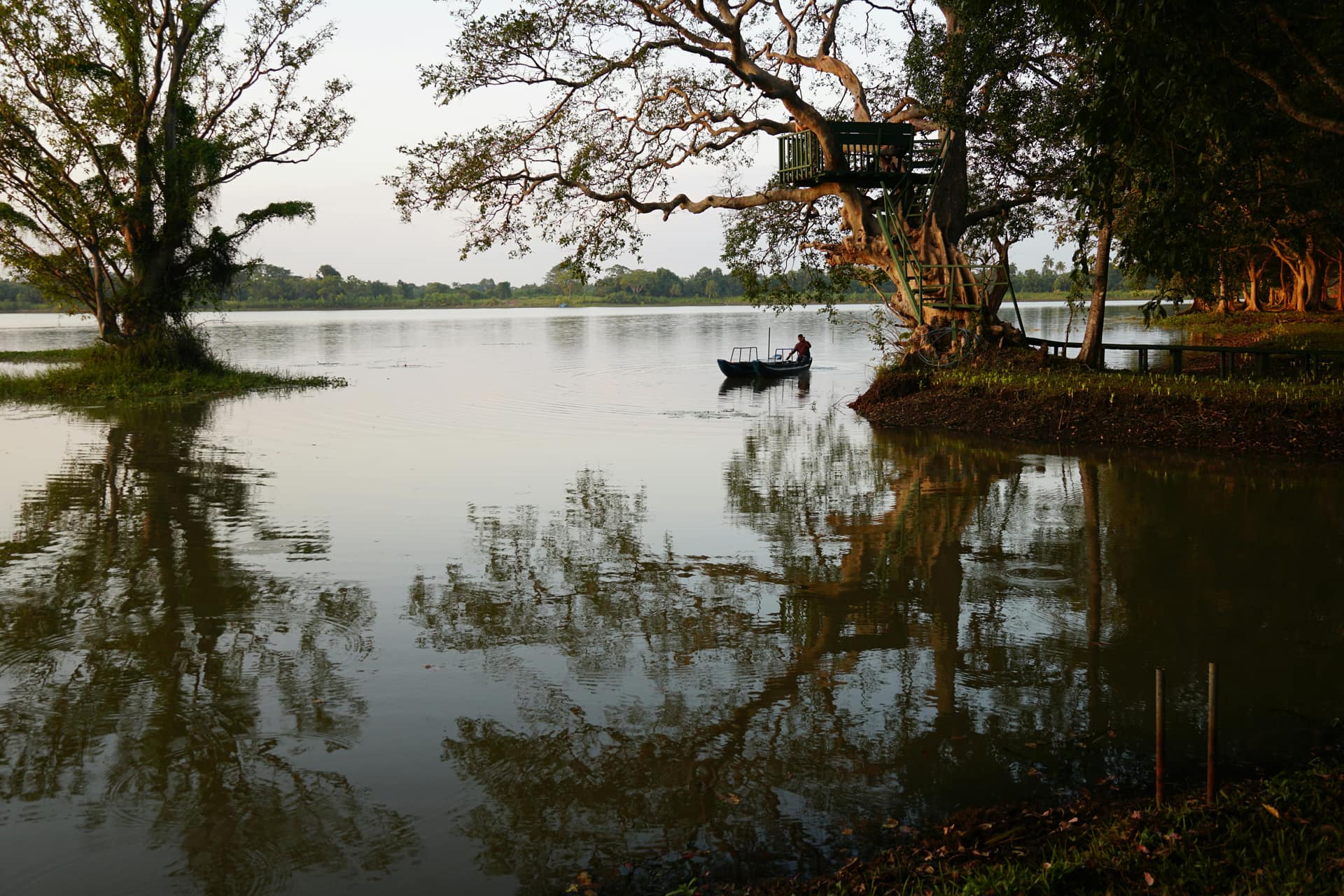
The countryside around Sigiriya and Habarana is farming country, with paddy fields, home gardens and ancient tanks. Village visits typically include a walk through the paddy, a short crossing of a tank in a small boat, and a lunch of rice and curry cooked in clay pots over a wood fire, often served on a lotus leaf.
Choose small, family-run experiences rather than large staged ones with many groups. Some include a chance to help with cooking or to try grinding coconut. Bullock-cart rides are common, but check that the animals are well treated.
The free afternoon of day 4, after Polonnaruwa, is the natural time.
- →Paddy walk and tank crossing.
- →Clay-pot lunch on a lotus leaf.
- →Choose small, family-run hosts.
Kandy's culture
Kandy is the cultural capital of the island. Beyond the Temple of the Tooth, the city offers Kandyan dance performances, with drummers and dancers in traditional costume, and the busy central market, full of fruit, spices and vegetables. Cooking classes, often in family homes, teach how to make several curries and sambols.
Craft villages around Kandy produce brassware, lacquer work and wood carving, and the three temples west of the city show traditional Kandyan architecture. Day 6, the only full day without a move in the first week, has time for two or three of these.
- →Kandyan dance and drumming.
- →The central market.
- →A cooking class.
- →Craft villages and the three temples.
Pilgrimage and the south
Kataragama, near Tissamaharama, is a pilgrimage town shared by Buddhists, Hindus, Muslims and the Vedda people. The evening puja, with drummers, fire and crowds bearing fruit platters, is one of the most vivid cultural experiences on the island, and it can be added to the evening of day 8.
Tissamaharama's ancient stupa and tank are quieter, with pilgrims in the early morning. Mulkirigala rock temple, near Tangalle, shows village Buddhism away from the tour groups.
Village life around Yala is worth a look too. Farmers around Tissamaharama grow rice, bananas and vegetables beside the parks, and many live with the daily challenge of elephants raiding crops. A conversation with a local guide about this conflict adds depth to the safaris.
Fishing harbours and coastal life
Fishing is the heart of life on the south coast. Tangalle, Mirissa and Galle all have harbours where boats return in the early morning and the catch is sold on the quayside. Walking through a harbour at around 6am to 7am, with permission, is a lively and authentic experience.
The stilt fishermen near Koggala are famous, though many now pose for photographs for a fee. Lankan Stays & Trails can arrange early-morning visits to working harbours and introductions to fishing families, which give a truer picture of coastal life. In Galle Fort, the lanes are home to families of many faiths, a living town rather than a museum.
Seafood dinners on the beach, with the day's catch displayed on ice, are the easiest way to enjoy the coast's food culture.
- →Early-morning harbours at Tangalle, Mirissa and Galle.
- →Stilt fishermen near Koggala.
- →Seafood dinners on the beach.
Doing it respectfully
Ask before photographing people, and accept a refusal. Dress modestly in villages and markets as well as temples. Choose experiences where the money goes to the families involved, and avoid those that treat people as attractions.
A few words of Sinhala or Tamil, such as ayubowan or vanakkam for hello, are always appreciated.
Tipping is customary for guides, drivers and hosts, and a small gift or a sincere thank you goes a long way in a village home.
- →Ask before taking photographs.
- →Dress modestly in villages.
- →Choose family-run experiences.
Frequently asked questions
What cultural experiences are on the culture, wildlife and beach route?
A village lunch near Sigiriya, the evening puja and dance in Kandy, a cooking class, Kataragama's multi-faith evening, the fishing harbours of the south coast and Galle Fort's lanes. Most fit into the route's free afternoons without changing the nights.
Are village tours near Sigiriya authentic?
Some are, some are staged. Choose small, family-run visits rather than large operations serving many groups at once. The best include a genuine home-cooked lunch and time to talk with the family, with the money going directly to them.
Where can I take a cooking class on this route?
Kandy and the villages around Sigiriya both offer good cooking classes, often in family homes. Classes usually include a market or garden visit and cooking several curries and sambols. The south coast has classes too, especially around Mirissa and Tangalle.
Are the stilt fishermen real?
The tradition is real, but many of the stilt fishermen near Koggala now pose for photographs for a fee rather than fish. Visiting a working fishing harbour in the early morning gives a more authentic picture of coastal life.
Is Kataragama worth visiting for culture?
Yes. Kataragama is one of the island's most important pilgrimage towns, shared by several faiths, and its evening puja is lively and colourful. It is roughly 20 minutes from Tissamaharama and fits easily into the evening of day 8.
How can I meet local people on the route?
Village visits, cooking classes, homestays and early-morning harbour walks are the easiest ways. A good driver-guide also opens many doors, introducing travellers to families, markets and festivals along the way.