
Quick answer
A 14-day culture, wildlife and beach route will almost always include one poya day, the monthly full-moon Buddhist holiday, when temples fill with white-clad worshippers, alcohol sales stop and some businesses close. The great festivals are Vesak (usually May), Poson at Mihintale (usually June), the Kandy Esala Perahera and Kataragama festival (usually July or August) and Sinhala and Tamil New Year (usually 13 and 14 April). Dates shift each year, so check your calendar.
Key takeaways
- Every full moon is a poya day: a public holiday with alcohol sales stopped.
- A fourteen-day trip almost always includes one poya day.
- Poya days are among the best times to see Anuradhapura, Kandy and Kataragama full of worshippers.
- Vesak, Poson, the Esala Perahera and Kataragama festival are the biggest religious festivals on or near the route.
- Dates shift each year with the lunar calendar, so always check them for your trip.
What happens on a poya day
Poya days mark the full moon and are public holidays across the country. Buddhists visit temples dressed in white, bring flowers and offerings, and some observe the eight precepts, spending the day in meditation. Alcohol sales stop in shops, bars and most hotel restaurants, and many shops and offices close.
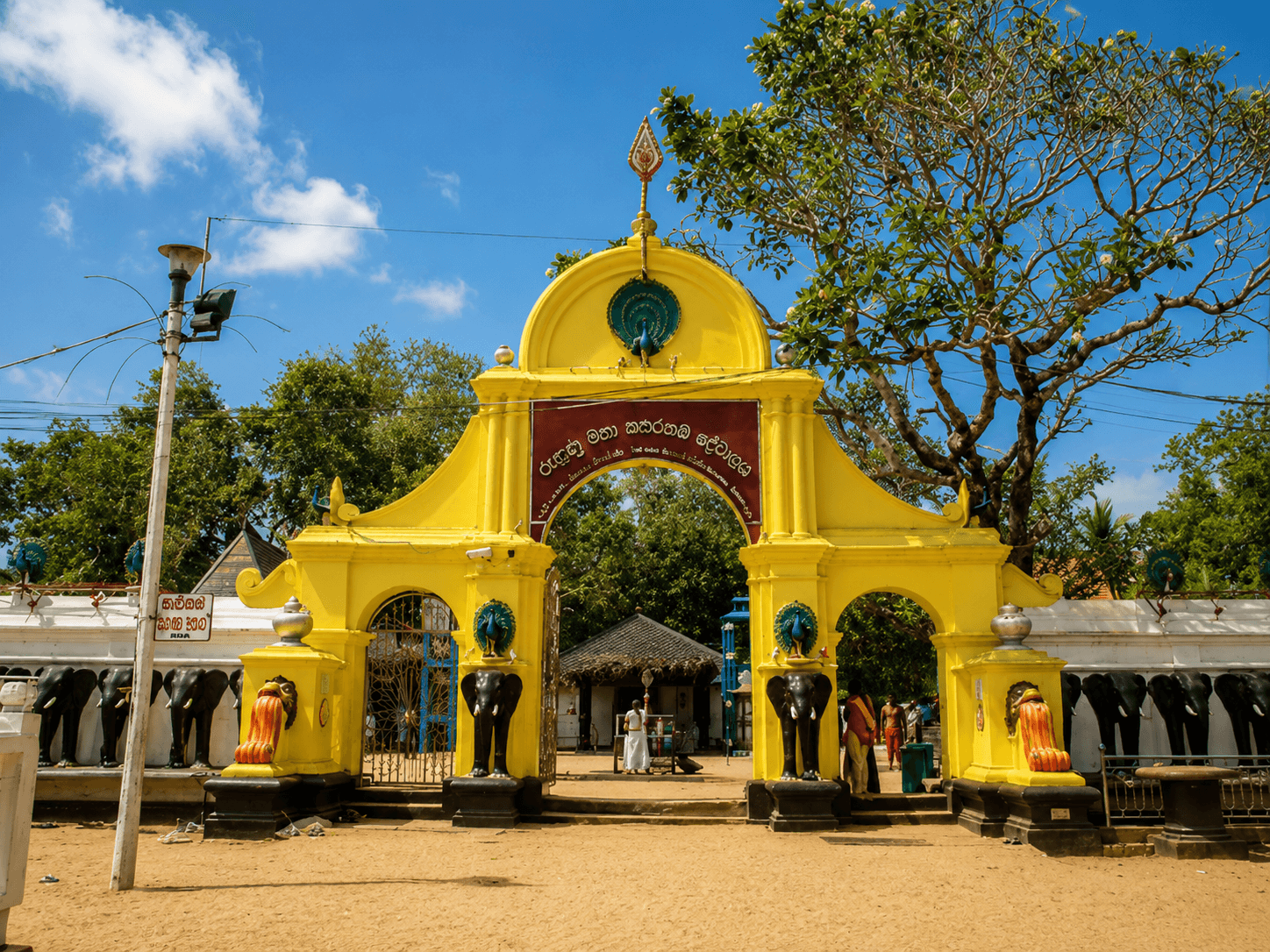
For visitors, a poya day is an opportunity rather than a problem. Temples are full of life, with families, chanting and lamps, and the atmosphere at Anuradhapura, Kandy and Kataragama is especially powerful. Some hotels serve alcohol privately to guests, but do not count on it.
Each poya has its own significance and name, and some are marked by special processions.
The routine of a poya day starts early. Families arrive at temples in the morning with flowers and food offerings, spend time in worship and listening to sermons, and return in the evening when lamps are lit. Visiting at dusk is usually the most beautiful time.
- →Public holiday, every full moon.
- →Alcohol sales stop.
- →Temples busy with worshippers in white.
- →Some shops and restaurants close.
Poya days on the route
Where a poya day falls on the route makes a difference. At Anuradhapura, it is one of the most atmospheric days of the year, but the sacred city is crowded. At Sigiriya and Polonnaruwa, sites are busier with domestic visitors. In Kandy, the Temple of the Tooth is packed. On the coast, the main effect is the lack of alcohol in beach restaurants.
Lankan Stays & Trails checks the poya dates for each trip and suggests where to be. Many travellers like to spend the full moon at Anuradhapura or Kandy; others prefer a safari day, when the parks are unaffected.
- →Anuradhapura: atmospheric, crowded.
- →Kandy: the temple is packed.
- →Safari days: unaffected.
- →Coast: no alcohol sales.
The great festivals
Vesak poya, usually in May, celebrates the Buddha's birth, enlightenment and death, with lanterns, illuminated pandals and free food stalls. Poson poya, usually in June, marks the arrival of Buddhism at Mihintale and draws huge crowds there and to Anuradhapura. Both fall in the route's May to September version.
The Kandy Esala Perahera, usually in July or August, is a series of night processions with dancers, drummers and decorated elephants. The Kataragama festival, at the same time of year, includes processions and acts of devotion such as fire-walking.
Dates shift each year with the lunar calendar, so check before booking and book accommodation early.
- →Vesak: lanterns and pandals, usually May.
- →Poson: Mihintale, usually June.
- →Esala Perahera: Kandy, usually July or August.
- →Kataragama festival: usually July or August.
Festivals in the main season
The route's main December to April window has fewer large festivals, but several worth knowing. Duruthu poya in January brings a perahera to Kelaniya near Colombo. Navam poya in February brings the Navam Perahera at Colombo's Gangaramaya temple. Thai Pongal, the Tamil harvest festival, falls in mid-January.
Sinhala and Tamil New Year, usually on 13 and 14 April, is the biggest family festival of the year, with many businesses closed for several days and busy roads before and after.
Christmas is also widely celebrated, especially in Colombo, Negombo and along the coast, and many hotels on the south coast host festive dinners. Muslim festivals, including the two Eids, are public holidays too, with dates that move through the year.
Tips for festival travel
Book accommodation early for the Esala Perahera, Poson and New Year. Dress in white or light clothing on poya days if visiting temples. Plan long drives away from festival travel days, and carry cash in case ATMs run low in small towns.
If you drink alcohol, buy it the day before a poya. Respect worshippers by giving way, avoiding loud behaviour and asking before photographing.
- →Book early for big festivals.
- →White clothing for temple visits on poya.
- →Buy alcohol the day before poya.
Frequently asked questions
How often are poya days?
Every full moon, roughly once a month, so a two-week trip almost always includes one. Each poya day is a public holiday, with temples busy, alcohol sales stopped and some shops and offices closed. Check the dates for your year.
Can I drink alcohol on a poya day?
Alcohol sales stop on poya days in shops, bars and most restaurants. Some hotels serve guests privately, but this is not guaranteed. If you want a drink, buy it the day before and enjoy it discreetly.
Is it worth being at Anuradhapura on a poya day?
Yes, for travellers who want to see living Buddhism. The sacred city is full of worshippers in white, with flowers, lamps and chanting. It is crowded, so start early. It is one of the most memorable days of the year there.
When is the Esala Perahera?
Usually in July or August, over about ten nights in Kandy, with dates set by the lunar calendar. It is part of the route's May to September version, which ends in Kandy. Book hotels and seats early.
Do poya days affect safaris?
Not significantly. National parks open as usual, though local visitors may be more numerous. Many travellers deliberately schedule a safari on poya day and visit temples on other days, avoiding the biggest crowds.
What happens during Sinhala and Tamil New Year?
Families gather for traditional customs, food and games at auspicious times, usually on 13 and 14 April. Many shops and restaurants close for several days, and roads and trains are busy. Hotels operate normally.
Should I change my route to avoid a poya day?
No. A poya day is a reason to plan, not to avoid. Choose where you want to be: at a temple for the atmosphere, or on safari to avoid the crowds. Only the lack of alcohol and a few closed shops affect most travellers, and those are easily managed.