
Quick answer
Nilaveli and Uppuveli are two long beaches on Sri Lanka's east coast, roughly 6 and 16 kilometres north of Trincomalee respectively. Their season runs from about May to September, the opposite of the south coast, with calm, flat water ideal for swimming and families. Nilaveli is the departure point for Pigeon Island National Park, the country's best reef snorkelling. Uppuveli is closer to Trincomalee and has more restaurants; Nilaveli is wider, quieter and better for a long stay.
Key takeaways
- Nilaveli is about 16 kilometres and Uppuveli about 6 kilometres north of Trincomalee.
- The season runs roughly May to September, opposite to the south and west coasts.
- Nilaveli is the departure point for Pigeon Island National Park, a short boat ride offshore.
- The water is unusually flat and shallow, which makes it among the safest swimming in the country.
- Uppuveli has more restaurants and is closer to town; Nilaveli is wider and quieter.
The season, and why it is the opposite of everywhere else
Nilaveli and Uppuveli run on the east coast calendar. From roughly May to September the south-west monsoon soaks the other side of the island while leaving the east dry, hot and calm, and these beaches enter their best months. June and July are the peak: flat water, clear skies and the best snorkelling visibility of the year at Pigeon Island.
From around November to February the north-east monsoon reverses everything. Rain, wind and rough seas make the beaches unusable, many places close, and the Pigeon Island boats stop. March and April are a transition, improving through April but not yet reliable. If your trip falls between November and April, go to the south or west coast instead.
- →Best months: May to September, with June and July the strongest.
- →Avoid: November to February, under the north-east monsoon.
- →March and April improve steadily but are not yet dependable.
- →Many hotels and restaurants close outside the season.
Nilaveli
Nilaveli is the wider and quieter of the two, a long straight beach about 16 kilometres north of Trincomalee with pale sand and shallow, exceptionally calm water in season. You can wade a long way out, which is why it is one of the best beaches in Sri Lanka for families with young children.
The beach is backed by casuarina and coconut rather than by a strip of development, and although the number of hotels has grown, it still feels open. This is a place to spend days rather than to sightsee: swimming, reading, an early boat to Pigeon Island, and a long walk at either end of the day.
- →Roughly 16 km north of Trincomalee, around 30 minutes by road.
- →Wide, straight beach with shallow, very calm water in season.
- →Excellent for families; you can wade a long way out safely.
- →Departure point for Pigeon Island boats, a short ride offshore.
Uppuveli
Uppuveli sits closer to Trincomalee, roughly 6 kilometres north, and is the more social of the two. It has a greater density of guesthouses, restaurants and beach bars within walking distance, which suits travellers who want to eat somewhere different each night without a tuk-tuk.
The beach is narrower than Nilaveli and the sea is generally still calm, though slightly less flat. Its proximity to Trincomalee makes it the better base if you want to combine beach days with the town: the Koneswaram temple on Swami Rock, the Dutch-era Fort Frederick, and the hot wells at Kanniya are all short trips.
- →Roughly 6 km north of Trincomalee, around 15 minutes by road.
- →More restaurants and guesthouses within walking distance than Nilaveli.
- →Narrower beach, still calm swimming in season.
- →Best base for combining beach with Trincomalee town sights.
Pigeon Island
Pigeon Island National Park is the single biggest reason to choose this coast. A short boat ride from Nilaveli takes you to a small island with a shallow lagoon on its sheltered side, where living coral sits a few metres from the sand and blacktip reef sharks patrol the shallows. They are small, harmless and unforgettable.
It is a national park with an entry fee, boat regulations and daily visitor limits. Take the first boat of the morning: by mid-morning the lagoon is busy and the water less clear. Do not stand on the reef, which is shallow enough that people constantly do, and use a rash vest rather than chemical sunscreen.
- →Short boat ride from Nilaveli; national park entry fee applies.
- →Blacktip reef sharks in the shallows, plus dense reef fish life.
- →Take the first boat of the day for space and clarity.
- →Never stand on coral; wear a rash vest instead of chemical sunscreen.
Whales, wrecks and Trincomalee
Trincomalee's whale and dolphin season runs roughly from May to September, matching the beach season. Blue whales and large spinner dolphin pods are seen offshore, and the trips are generally shorter and less crowded than at Mirissa. Choose an operator who keeps a proper distance and does not chase.
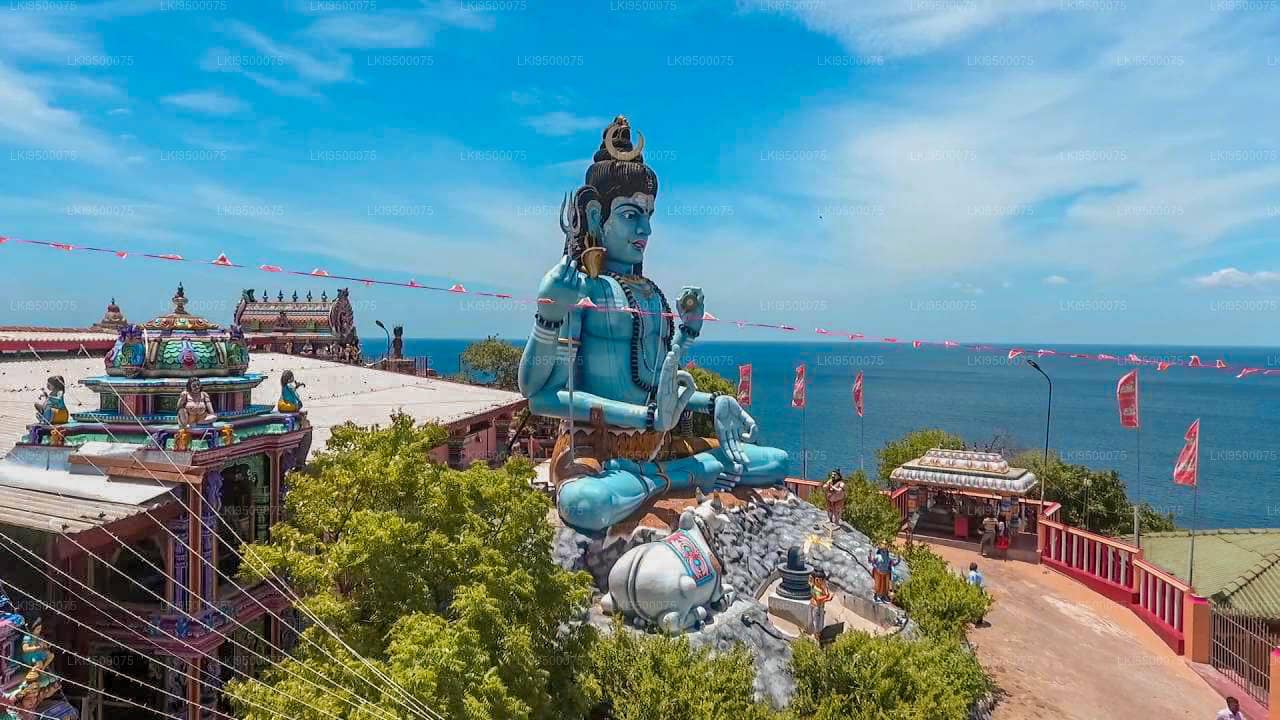
Diving is good here too, with wrecks and reef sites accessible from Uppuveli and Nilaveli. In town, Koneswaram Kovil on Swami Rock is one of Sri Lanka's most dramatically sited Hindu temples, standing on a cliff above the harbour inside the walls of Fort Frederick, where spotted deer wander the roads. The Kanniya hot wells are a curiosity worth half an hour.
- →Whale and dolphin season: roughly May to September from Trincomalee.
- →Wreck and reef diving from both beaches, with several established centres.
- →Koneswaram Kovil and Fort Frederick in Trincomalee, roughly 20 to 40 minutes away.
- →Kanniya hot wells: seven small wells, a short stop rather than an outing.
Getting there and practicalities
Trincomalee is roughly five to six hours from Colombo by road, or around three hours from Sigiriya and Habarana, which is why the Cultural Triangle and the east coast pair so naturally in an itinerary. There is also a train from Colombo to Trincomalee, which is slow but scenic.
Facilities are more limited than on the south coast. There are fewer ATMs, less reliable card acceptance and a smaller choice of restaurants outside the hotel strips, so carry cash. Both beaches are largely unlit at night. The sun on this coast is fierce and there is little natural shade on the sand.
- →Roughly 5 to 6 hours from Colombo; around 3 hours from Sigiriya or Habarana.
- →Carry cash: ATMs are limited and card acceptance is patchy.
- →Bring your own shade or book a hotel with it; the sand is exposed.
- →The train from Colombo to Trincomalee is slow but a pleasant alternative.
How to build a trip around these beaches
The natural shape is Cultural Triangle first, then the coast. Sigiriya, Dambulla, Polonnaruwa and Anuradhapura, then three hours east to Nilaveli or Uppuveli for four or five nights, then back through Kandy. That route follows the dry weather across the whole trip between May and September.
Lankan Stays & Trails books Pigeon Island on the first boat and pairs these beaches with the Cultural Triangle rather than trying to combine them with the south coast, which never works in the same season.
Frequently asked questions
When is the best time to visit Nilaveli and Uppuveli?
Roughly May to September, with June and July the strongest months. This is the opposite of the south and west coasts. From November to February the north-east monsoon brings rain, wind and rough seas, and many hotels and restaurants close.
Nilaveli or Uppuveli, which is better?
Nilaveli is wider, quieter and has flatter, shallower water, which makes it better for families and longer stays, and it is the departure point for Pigeon Island. Uppuveli is closer to Trincomalee with more restaurants within walking distance, so it suits shorter, more social stays.
How far is Nilaveli from Trincomalee?
About 16 kilometres, roughly 30 minutes by road. Uppuveli is closer at around 6 kilometres, roughly 15 minutes. Trincomalee itself is about five to six hours from Colombo, or around three hours from Sigiriya and Habarana in the Cultural Triangle.
Is Nilaveli good for families?
Yes, it is one of the best family beaches in Sri Lanka during its May to September season. The water is unusually shallow and flat, so children can wade a long way out safely, and the beach is wide enough not to feel crowded even in peak weeks.
How do you get to Pigeon Island?
By boat from Nilaveli beach, a short ride offshore. Pigeon Island is a national park with an entry fee, boat regulations and daily visitor limits. Take the first boat of the morning for the clearest water and the fewest people in the shallow snorkelling lagoon.
Can you see whales from Trincomalee?
Yes. The eastern whale and dolphin season runs roughly May to September, matching the beach season, with blue whales and large spinner dolphin pods seen offshore. Trips tend to be shorter and less crowded than at Mirissa on the south coast.
Are there ATMs and restaurants at Nilaveli?
Fewer than you would expect from a south coast beach. ATMs are limited and card acceptance is patchy, so carry cash. Restaurant choice outside the hotels is modest at Nilaveli and better at Uppuveli, and options reduce further outside the May to September season.