
Quick answer
Choose northern Sri Lanka if you want culture: Jaffna's Hindu temples, distinctive food, Dutch fort, islands and a strong sense of place. Choose eastern Sri Lanka if you want beaches: Trincomalee and Nilaveli, Pigeon Island's reefs, Pasikudah's calm bay, Arugam Bay's surf and quiet parks like Kumana and Gal Oya. Both are best roughly May to September; with a week or more, you can combine them via Trincomalee.
Key takeaways
- The north is about culture, food and history; the east is about beaches and nature.
- Both are driest roughly May to September, with rains roughly October to January.
- Jaffna is roughly seven to eight hours from Colombo; Trincomalee roughly five to six.
- The east has more beach hotels; the north has fewer, simpler options.
- The coast road links the two via Mullaitivu and Trincomalee.
Culture and history
The north wins on culture. Jaffna is the heart of Sri Lankan Tamil life, with Nallur Kandaswamy Kovil, the rebuilt public library, a Dutch fort, colonial churches and a cuisine all its own. The islands of Nainativu and Delft add temples, ponies and coral walls.
The east has culture too, but more spread out: Koneswaram temple in Trincomalee, Batticaloa's lagoon and fort, the mosques of Kattankudy and ancient Buddhist sites such as Seruwila, Deegavapi and Kudumbigala. It feels like a mix of communities rather than one strong identity.
If temples, food and a sense of a distinct culture matter most, choose the north.
- →North: Nallur, the library, the fort, the islands.
- →East: Koneswaram, Batticaloa, ancient Buddhist sites.
- →Winner for culture: the north.
Beaches and the sea
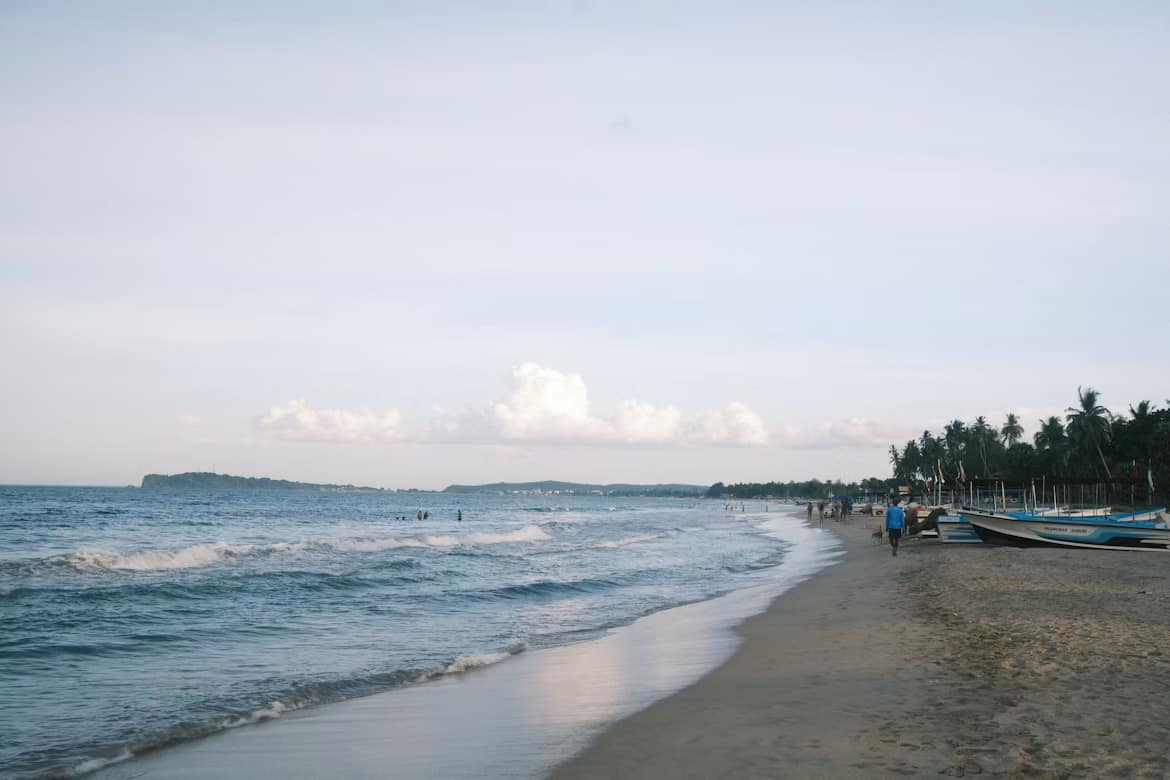
The east wins on beaches. Nilaveli and Uppuveli near Trincomalee, Pasikudah's shallow bay, Kalkudah and Arugam Bay's surf points give a range from calm swimming to waves. Pigeon Island National Park offers the best snorkelling on this side of the island.
The north has beaches, such as Casuarina at Karainagar and the long sands of Mullaitivu, but fewer facilities and less shade. They are pleasant for a swim, not the reason to go.
For a beach holiday in the summer months, the east is the clear choice.
- →East: Nilaveli, Pasikudah, Arugam Bay.
- →North: Casuarina, Mullaitivu.
- →Winner for beaches: the east.
Nature and wildlife
The east has more wildlife. Kumana, beside Yala, is excellent for birds and quiet safaris; Gal Oya offers boat safaris among islands; Lahugala has elephants. Whales and dolphins appear off Trincomalee in some spring months.
The north has birdlife on its lagoons, especially at Chundikulam, Vankalai and Kokkilai in the northern winter, and the wild ponies of Delft, but no major safari park.
Lankan Stays & Trails often pairs the east coast with a safari at Kumana or Gal Oya, which the north cannot offer.
- →East: Kumana, Gal Oya, Pigeon Island.
- →North: lagoon birds, Delft ponies.
- →Winner for wildlife: the east.
Access, cost and pace
Trincomalee is easier to reach, roughly five to six hours from Colombo or three from Sigiriya, and it slots neatly into a Cultural Triangle trip. Arugam Bay is roughly three hours from Ella. Jaffna is further, roughly seven to eight hours from Colombo, but the train makes the journey comfortable.
The north is generally cheaper, with simpler guesthouses and inexpensive food. The east ranges from guesthouses to large resorts at Pasikudah and Nilaveli, with prices rising in the peak summer months.
The north's pace is slower and more local, with fewer travellers. The east is quiet compared with the south coast but busier than the north, especially in Arugam Bay in July and August.
- →Easier: the east.
- →Cheaper: the north.
- →Quieter: the north.
Combining both
With a week or more in the summer months, you can combine both. A route from Anuradhapura to Jaffna, then down the coast road via Mullaitivu to Trincomalee, links them without backtracking. Allow at least three nights in each.
Alternatively, fly or take the train to Jaffna and drive down to Trincomalee, then return via the Cultural Triangle.
- →Jaffna then Trincomalee via Mullaitivu.
- →At least three nights in each.
- →Best roughly May to September.
Food in the north and east
Food is another real difference. Jaffna's kitchens are famous across Sri Lanka for crab curry, odiyal kool, mutton curries and palmyra sweets, and a meal there is part of the reason to go. The east coast's food is more mixed, with excellent seafood in Trincomalee, Muslim biryani in Kattankudy and Tamil dishes in Batticaloa.
If food is a priority, give the north the edge, and plan at least one long lunch in Jaffna.
- →North: crab curry and palmyra sweets.
- →East: seafood and biryani.
- →Winner for food: the north.
Frequently asked questions
Is Jaffna or Trincomalee better?
Jaffna is better for culture, temples, food and a distinct Tamil identity. Trincomalee is better for beaches, snorkelling at Pigeon Island and an easier trip from the Cultural Triangle. Many travellers visit both, linking them via the coast road through Mullaitivu.
When is the best time to visit the north and east of Sri Lanka?
The best time to visit the north and east of Sri Lanka is roughly May to September, when both are dry and the east coast sea is calm. Heavy rain falls roughly October to January. January to April is also good in the north, with cooler mornings.
Can I visit Jaffna and Trincomalee on one trip?
You can visit Jaffna and Trincomalee on one trip. The coast road via Mullaitivu takes roughly four to five hours, or you can go via Vavuniya. Allow at least three nights in each to enjoy them without rushing.
Is the north of Sri Lanka cheaper than the east?
The north of Sri Lanka is generally cheaper than the east, with simpler guesthouses and inexpensive local food. The east has a wider range, including large resorts at Pasikudah and Nilaveli, and prices rise in the summer peak.
Which is better for families, north or east?
The east is usually better for families, with calm swimming at Pasikudah and Nilaveli, snorkelling at Pigeon Island and safaris at Gal Oya or Kumana. The north suits older children interested in culture and food, with fewer beach facilities.
How long should I spend in the north or east?
Spend at least three nights in Jaffna to see the town, peninsula and islands. On the east coast, three nights in Trincomalee or Arugam Bay is a good minimum, with five or more for a proper beach holiday. Add travel days at each end.