
Quick answer
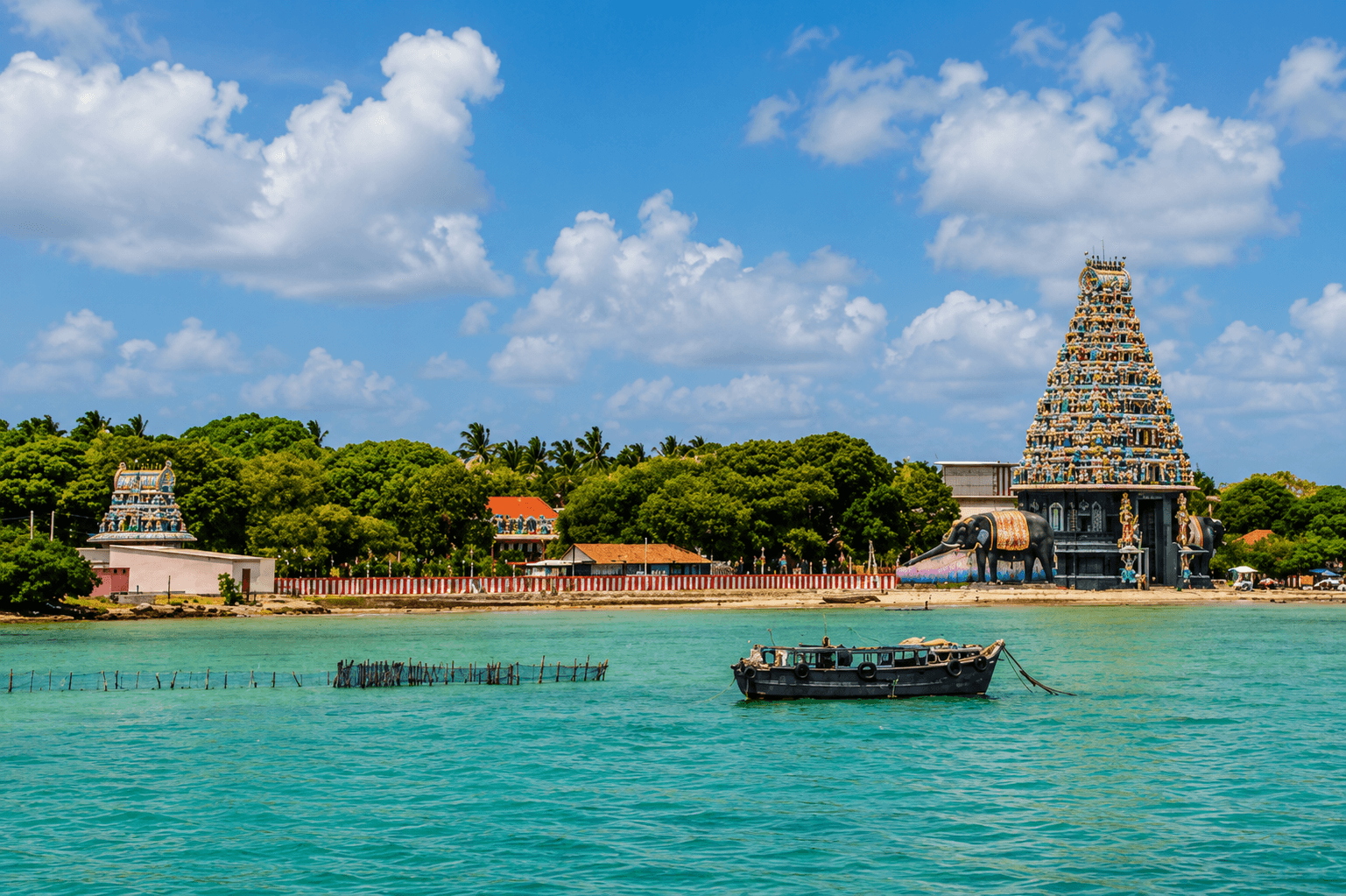
Ram Setu is identified with Adam's Bridge, a chain of shoals about 48 km long between Pamban island in India and Mannar island in Sri Lanka. From the Sri Lankan side, the best view is from Talaimannar at the western tip of Mannar island, about six hours by road from Colombo. You see shallow turquoise water and sandbanks stretching towards India. Boat access to the shoals is restricted, so check current rules locally.
Key takeaways
- Ram Setu is identified with Adam's Bridge, a chain of shoals between India and Sri Lanka.
- Talaimannar, at the tip of Mannar island, is the Sri Lankan viewpoint.
- Mannar is about six hours by road from Colombo.
- Boat trips to the shoals are restricted; check current rules.
- Thiruketheeswaram temple near Mannar pairs well with the visit.
Ram Setu in the epic
In the Yuddha Kanda, Rama reaches the southern shore with his army and asks the ocean to let them pass. When the sea god Samudra appears, he advises that Nala, son of Vishwakarma, can build a bridge. The vanaras haul rocks and trees, and Nala builds the causeway in five days.
In popular retellings, stones inscribed with Rama's name float on the water. A squirrel helps by rolling in sand and shaking it onto the bridge, and Rama strokes its back, leaving three stripes.
The bridge is the moment the army crosses into Lanka, and it carries deep devotional meaning for Hindus as a symbol of faith overcoming the impossible.
On screen
The bridge-building is among the most anticipated scenes in any Ramayana. The new film is expected to bring it to life with vast effects as the army reaches Lanka.
No part of it was filmed in Sri Lanka, as far as published reports show. The real Adam's Bridge is a natural chain of sandbanks and shallow water, not a visible stone causeway, so expectations should be adjusted.
Many fans still find the view moving. Seeing the line of shoals vanishing towards India makes the scale of the story feel real.
The real Adam's Bridge
Adam's Bridge is a chain of limestone shoals and sandbanks, about 48 km long, linking Pamban island near Rameswaram in Tamil Nadu with Mannar island in Sri Lanka. The water around it is shallow, often only a metre or two.
Geologists see it as a natural formation of sand and coral. Many Hindus regard it as the remains of the bridge built by Rama's army. Both views are widely held, and the site is respected on both sides of the strait.
Historical records suggest the shoals could once be crossed on foot at low tide, before storms in the fifteenth century deepened the channels. Today, they are part of protected and security-sensitive waters.
- →Length: about 48 km of shoals.
- →Ends: Pamban island in India, Mannar island in Sri Lanka.
- →Status: protected, with restricted access.
Seeing it from Talaimannar
Talaimannar, at the western tip of Mannar island, is the closest point on the Sri Lankan side. The old pier, once used by the ferry to India, and the lighthouse stand near the shore, with the shallow sea stretching towards the first sandbanks.
On clear days, the colour of the water changes sharply where the shoals begin. Some operators have offered boat trips towards the first sandbanks at times, but access depends on naval and wildlife rules, so check locally before planning on it.
Sunrise and late afternoon are best for light and comfort. The coast is hot and exposed, so bring water and sun protection.
- →Viewpoint: Talaimannar, at the island's tip.
- →Landmarks: old pier and lighthouse.
- →Boat trips: check current rules.
Mannar beyond the bridge
Mannar island is joined to the mainland by a causeway and bridge. Its sights include the old Dutch fort, a giant baobab tree said to have been planted by Arab traders, and wetlands full of flamingos in the north-east monsoon season.
Thiruketheeswaram, one of the island's five ancient Shiva temples, stands at Mantai on the mainland near Mannar. Tradition links it to Ravana's family, and it is a major pilgrimage site.
Lankan Stays & Trails can plan a northern route combining Mannar with Jaffna and Trincomalee, so film fans can see Ram Setu along with other sites from the story.
- →Dutch fort and baobab tree.
- →Flamingos in the wet season.
- →Thiruketheeswaram temple.
Planning the trip
Colombo to Mannar takes about six hours by road. Most visitors stay a night in Mannar, then continue to Jaffna, about two hours away. Rail and bus links exist, but a car is easiest for families.
The best months are usually April to September, when the north is driest. October to January brings more rain.
Combine Mannar with Wilpattu National Park on the way, or with a Jaffna and Trincomalee loop for a fuller northern trip.
Frequently asked questions
Is Ram Setu real?
Adam's Bridge, a 48 km chain of shoals between India and Sri Lanka, is real and visible from both shores. Many Hindus regard it as Rama's bridge; geologists see it as a natural formation. Both views are widely held.
Can we see Ram Setu from Sri Lanka?
Yes. From Talaimannar, at the western tip of Mannar island, you can look out over the shallow sea towards the sandbanks. The view is of water and shoals rather than a visible causeway.
Can we walk on Ram Setu?
Not usually. The shoals lie in protected and security-sensitive waters, and access is restricted. Some boat trips towards the first sandbanks have been offered at times, so check current rules locally.
Was the bridge scene filmed in Sri Lanka?
No. As far as published reports show, the film was shot on sets in Mumbai with visual effects. Adam's Bridge is linked to the story by long tradition and devotion, not filming.
How far is Mannar from Colombo?
About six hours by road. Most visitors stay overnight in Mannar and continue to Jaffna, about two hours further. Combining Mannar with Wilpattu National Park on the way breaks the journey nicely.
What else is there to see in Mannar?
Mannar has a Dutch fort, a giant baobab tree, flamingo wetlands in season and the ancient Thiruketheeswaram Shiva temple nearby. The quiet island makes a calm contrast with busier southern towns.
When is the best time to visit Mannar?
April to September is usually the driest time in the north. Flamingos are often present from about November to March, though that is also wetter. Avoid the peak of the north-east monsoon if you can.