
Quick answer
A northern route for Ramayana movie fans takes about five to six days: drive from Colombo to Mannar for the view towards Ram Setu from Talaimannar and Thiruketheeswaram temple, continue to Jaffna for Naguleswaram and the Tamil Hindu heartland, then cross to Trincomalee for Koneswaram, Ravana's Cleft and Kanniya hot wells. April to September is the best season.
Key takeaways
- Mannar offers the view towards Ram Setu from Talaimannar.
- Thiruketheeswaram near Mannar is an ancient Shiva temple.
- Jaffna is the heart of Tamil Hindu culture in Sri Lanka.
- Koneswaram and Kanniya in Trincomalee honour Ravana's devotion.
- April to September is the best season for the north and east.
Mannar and Ram Setu
Drive from Colombo to Mannar, about six hours, or break the journey at Wilpattu National Park. Mannar island is joined to the mainland by a causeway, and its western tip, Talaimannar, faces the shoals of Adam's Bridge.
From Talaimannar, look out over the shallow sea towards the sandbanks of Ram Setu, the bridge tradition says Rama's army built. The water changes colour where the shoals begin, and on clear days the line seems to stretch towards India.
Mannar also has a Dutch fort, a giant baobab tree and flamingos in the wet season. Stay a night to see the shoals at sunrise or sunset.
The drive north passes through the dry zone, with paddy fields, tanks and palmyra palms replacing the green hills of the south. Stop at Anuradhapura or Wilpattu on the way if you have time, as both break the long journey nicely.
- →Colombo to Mannar: about 6 hours.
- →Viewpoint: Talaimannar.
- →Also see: fort, baobab, flamingos.
Thiruketheeswaram
Thiruketheeswaram stands at Mantai, on the mainland near Mannar. It is one of the Pancha Ishwarams, the five ancient Shiva temples of Sri Lanka, praised in Tamil hymns.
Tradition links the temple to Ravana's family, especially his father-in-law, Mayan, the architect of the asuras. The temple's sacred tank, Palavi, draws pilgrims for ritual bathing.
The temple was destroyed by the Portuguese and rebuilt later. Today, its gopuram and courtyards fill with pilgrims, especially at Maha Shivaratri.
- →Location: Mantai, near Mannar.
- →Link: Ravana's family.
- →Festival: Maha Shivaratri.
Jaffna
Jaffna, about two hours from Mannar, is the heart of Tamil Hindu culture in Sri Lanka. The Nallur Kandaswamy temple, with its golden gopuram, is the city's most famous shrine.
Naguleswaram at Keerimalai, on the northern coast, is another of the five ancient Shiva temples, with a sacred spring by the sea. Jaffna's food, markets and islands make it worth two nights.
Jaffna also has a long tradition of Kamba Ramayanam recitation and Ramayana-themed temple art, which film fans can explore with a local guide.
Delft and Nainativu islands, reached by ferry from the Jaffna peninsula, add a day for those with time. Nainativu has an important Hindu temple to the goddess Nagapooshani Amman, popular with Indian pilgrims.
- →Mannar to Jaffna: about 2 hours.
- →Nallur temple and Naguleswaram.
- →Two nights recommended.
Trincomalee: Koneswaram and Kanniya
From Jaffna, drive to Trincomalee, about four hours. Koneswaram stands on Swami Rock above the sea, one of the five ancient Shiva temples, and honours Ravana as a great devotee of Shiva.
Below the temple, Ravana's Cleft, a fissure in the cliff, is said to have been cut by Ravana's sword. Kanniya hot wells, about 8 km away, are linked to Ravana's devotion to his mother, as tradition says he created them for her last rites.
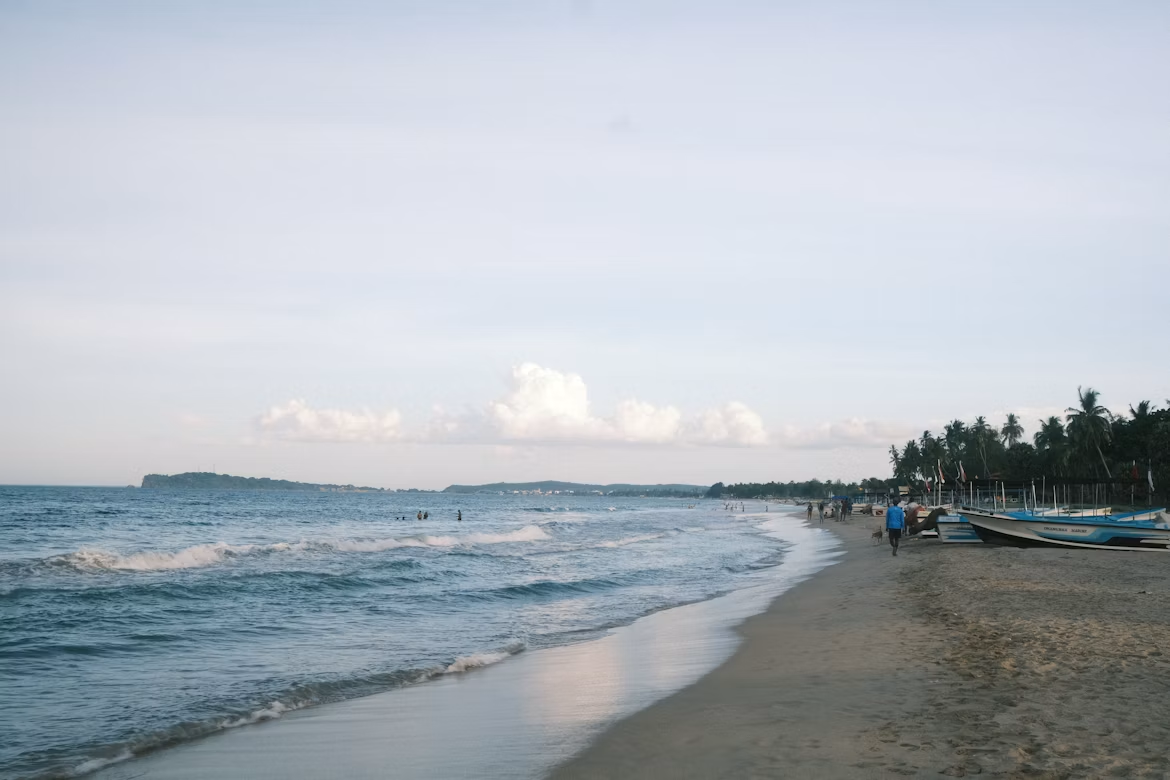
Trincomalee's beaches at Nilaveli and Uppuveli make a restful end to the trip, with snorkelling at Pigeon Island.
- →Jaffna to Trincomalee: about 4 hours.
- →Koneswaram and Ravana's Cleft.
- →Kanniya hot wells.
Planning the trip
Allow five to six days: Colombo to Mannar, Mannar to Jaffna, two nights in Jaffna, Jaffna to Trincomalee, and a beach day before returning via Sigiriya or Kandy.
April to September is the driest time in the north and east. October to January brings the north-east monsoon and heavy rain.
Lankan Stays & Trails can arrange a driver-guide who knows both the Ramayana stories and the Tamil Hindu traditions of the north, which adds much to the trip.
- →Five to six days.
- →Best months: April to September.
- →Return via Sigiriya or Kandy.
Combining with the south
Film fans with two weeks can combine the northern route with the hill country and south coast, covering nearly every major Ramayana place on the island.
A practical order is north first, from Colombo to Mannar, Jaffna and Trincomalee, then south through Sigiriya and Kandy to the hills and Ella, ending on the south coast.
Check the season carefully, as the north and the south have their driest months at different times.
Frequently asked questions
Can we see Ram Setu from northern Sri Lanka?
Yes. From Talaimannar, at the western tip of Mannar island, you can look out over the shallow sea towards the shoals of Adam's Bridge, identified with Ram Setu. Sunrise and sunset are the best times for the view.
What is Thiruketheeswaram?
Thiruketheeswaram is an ancient Shiva temple at Mantai near Mannar, one of Sri Lanka's five Pancha Ishwarams. Tradition links it to Ravana's family. Pilgrims bathe in its sacred tank, and it is busiest at Maha Shivaratri.
How long does the northern route take?
Five to six days covers Mannar, Jaffna and Trincomalee at a comfortable pace, with a beach day at the end. Two weeks lets you combine it with the hill country and south coast.
When is the best time to visit the north?
April to September is usually driest in the north and east. October to January brings the north-east monsoon with heavy rain. Check forecasts and festival dates when planning your trip.
Is the north safe for travellers?
Yes. The north and east are open to travellers, with good roads and friendly people. Jaffna and Trincomalee are popular destinations. As anywhere, follow local advice and respect temple and military area rules.
Can we combine the north with the hill country?
Yes. A two-week trip can cover the north first, then Sigiriya, Kandy, the hill country and the south coast. Check the seasons, as the north and south have their driest months at different times.
Is the north good for vegetarian food?
Yes. Jaffna and Hindu areas of the north and east have excellent vegetarian food, including dosa, idli and Jaffna-style curries. Temple towns are especially easy for pure vegetarian travellers. Ask your guide for favourite local places.