
Quick answer
Thiruketheeswaram is an ancient Shiva temple at Mantai, roughly 10 kilometres from Mannar town in north-west Sri Lanka. It is one of the five Pancha Ishwarams and one of only two Sri Lankan temples praised in the Tevaram hymns. Legends link it to the planet Ketu and to Mandodari's father, which ties it to Ravana's family. Pilgrims bathe in the sacred Palavi tank, and Maha Shivaratri draws the largest crowds of the year.
Key takeaways
- Thiruketheeswaram is one of the five Pancha Ishwarams and is praised in the Tevaram hymns.
- The temple lies at Mantai, roughly 10 kilometres from Mannar town.
- Legends link it to Ketu and to Mandodari's father, Ravana's father-in-law.
- The Palavi tank beside the temple is used for ritual bathing and offerings.
- Mannar is about 6 hours from Colombo, so the temple belongs on a northern extension.
An ancient temple of the Tevaram
Thiruketheeswaram stands near the ruins of Mantai, once a major port where ships from India, Arabia and beyond traded. The temple's age is uncertain, but it was already famous when the Shaiva saints Sambandar and Sundarar composed Tevaram hymns in its praise, probably in the seventh and eighth centuries. Only Koneswaram shares that honour in Sri Lanka.
Like Koneswaram, the temple was destroyed by the Portuguese in the sixteenth century, and its stones were reused in fortifications. Devotees rediscovered the site in the nineteenth century, and the temple was rebuilt over the following decades. Restoration work continued after the long civil conflict that affected the north.
Today the temple is active and well cared for, with a gopuram, courtyards and a sanctum holding the lingam. Tamil pilgrims from Jaffna, Mannar and Colombo visit throughout the year, and a growing number of Indian pilgrims come as part of a Ramayana journey to Ram Setu.
- →Pancha Ishwaram: one of five ancient Shiva temples on the coasts.
- →Paadal Petra Sthalam: praised in the Tevaram hymns.
- →Destroyed by the Portuguese, rebuilt from the nineteenth century.
Ketu, Mandodari and the Ramayana link
The name Ketheeswaram is linked to Ketu, one of the nine planets in Hindu astrology, who is said to have worshipped Shiva here. Devotees with doshas related to Ketu in their horoscopes sometimes visit to offer special prayers, a practice familiar to families who visit navagraha temples in Tamil Nadu.
A second tradition ties the temple to the Ramayana through Mayan, the architect of the asuras and father of Mandodari, Ravana's queen. He is said to have worshipped Shiva here, and some tellings say Ravana and Mandodari married nearby. Other local accounts say Rama also prayed at Ketheeswaram on his way home.
These traditions are honoured in temple accounts and family lore rather than in Valmiki's text. For pilgrims, they make Thiruketheeswaram a place where Ravana's household, not only his enemy, is remembered with reverence, adding depth to a journey that otherwise focuses on Sita and Rama.
The Palavi tank and rituals
Beside the temple lies the Palavi tank, a sacred reservoir said to have been dug by ancient kings. Pilgrims bathe or sprinkle themselves with its water before worship, and families perform rites for ancestors on its banks. On Maha Shivaratri, thousands carry water from the tank to offer at the lingam.
The water is treated with great respect. Visitors should not wash with soap, throw rubbish or leave plastic, and should follow any instructions from temple staff. Many families bring a small vessel to carry Palavi water into the temple for abhishekam, a moving act for devotees who have travelled far.
Women usually bathe fully clothed, and changing facilities are simple. Families often prefer to sprinkle water rather than bathe, especially in the heat. A priest can explain the rites and guide a family through a short ceremony on request, with a dakshina offered afterwards.
- →Bathe or sprinkle with Palavi water before darshan.
- →Carry water into the temple for abhishekam.
- →No soap, rubbish or plastic near the tank.
Maha Shivaratri at Ketheeswaram
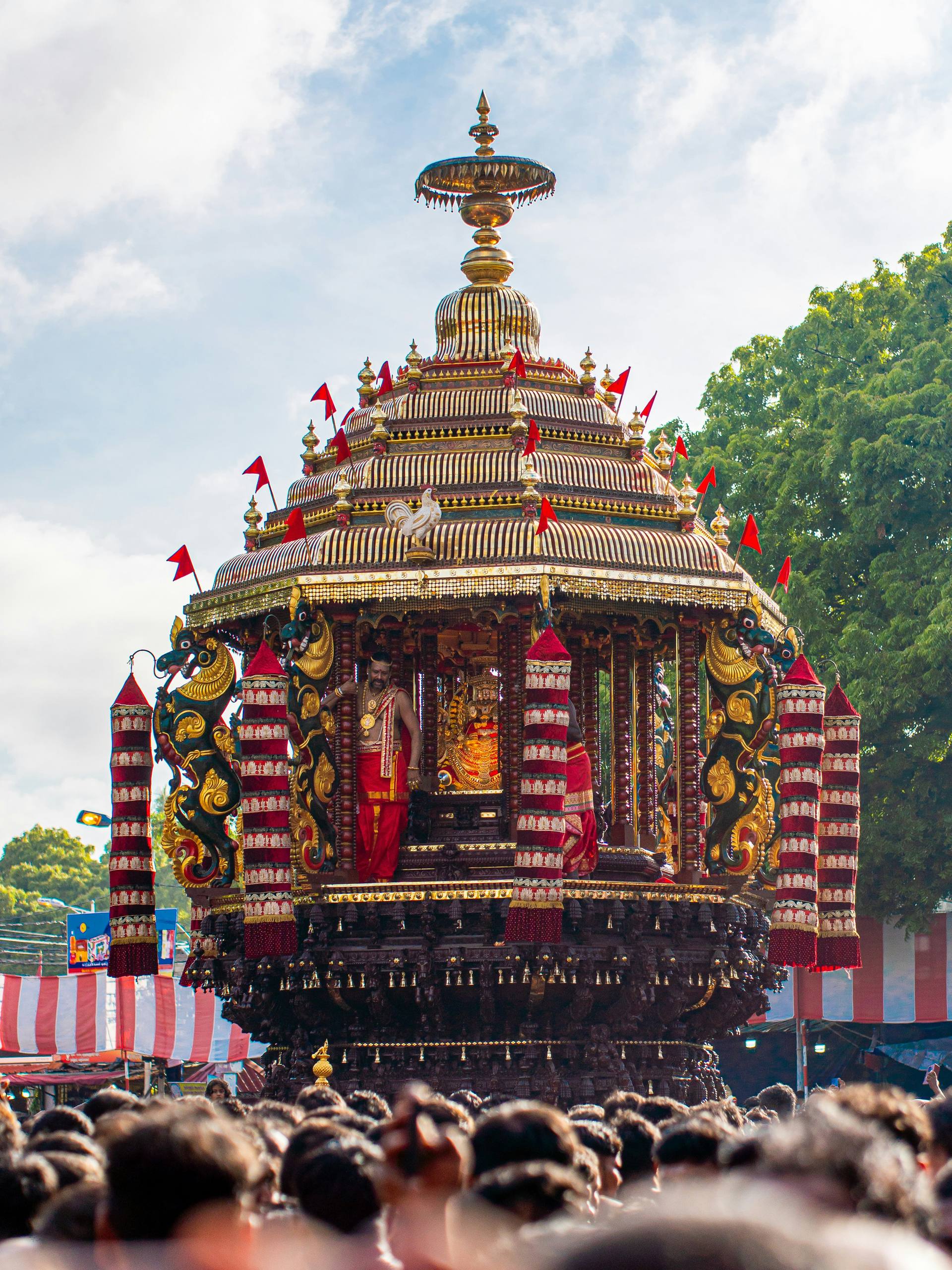
Maha Shivaratri, usually in February or March, is the greatest night of the year at Thiruketheeswaram. Pilgrims arrive from across Sri Lanka, fast through the day, carry Palavi water to the lingam and keep vigil through four night pujas. The atmosphere is intense and joyful, with music and crowds filling the courtyards.
For Indian pilgrims, Shivaratri at Ketheeswaram is a powerful experience but needs planning. Accommodation in Mannar is limited and fills early, roads are busy and the heat can be strong. Families with elders may prefer to visit a day before or after the festival, when the temple is decorated but calmer.
Shivaratri is a public holiday in Sri Lanka, so local travel increases across the north. Book rooms in Mannar, or in Jaffna about 2 hours away, well ahead, and keep the day itself free of long drives.
- →Date: February or March, following the lunar calendar.
- →Four night pujas and a vigil.
- →Book Mannar or Jaffna rooms well in advance.
Visiting with family
The temple is spacious and mostly level, with sandy ground outside and stone floors inside. Shoes stay at the entrance, so the ground can be hot underfoot at midday. Early morning and late afternoon are the best times, both for comfort and for joining a puja.
Dress as for any South Indian Shiva temple: covered shoulders and knees, and men usually shirtless in the inner sanctum. Photography in the sanctum is normally not allowed. Small stalls outside sell flowers, coconuts and camphor, and there is no entry fee, though donations are welcome.
Food choices near the temple are basic, so families often eat pure vegetarian meals in Mannar town before or after. Carry drinking water and sun protection, as the north-west is hot and dry for much of the year.
Pairing with Ram Setu and the north
Thiruketheeswaram sits roughly 10 kilometres from Mannar town, and Thalaimannar, where Ram Setu begins, lies about 30 kilometres further west across the island. A single day can include the temple at dawn, Mannar Fort and the baobab tree, and an evening facing India from Thalaimannar.
Mannar is about 6 hours by road from Colombo and about 2 hours from Jaffna. Many pilgrims combine it with Naguleswaram and Nallur in Jaffna and Koneswaram in Trincomalee, completing four of the five Pancha Ishwarams on a seven to ten day northern route. The north is driest from roughly February to September.
Lankan Stays & Trails arranges northern Ramayana routes with Tamil-speaking guides who know the temple rites. Tell us if you would like to time your visit for Shivaratri, a Ketu puja or a remembrance rite at the Palavi tank.
Frequently asked questions
Where is Thiruketheeswaram temple?
Thiruketheeswaram is at Mantai, roughly 10 kilometres from Mannar town in north-west Sri Lanka. Mannar is about 6 hours by road from Colombo and about 2 hours from Jaffna, so most pilgrims visit it on a northern extension of their trip.
Is Thiruketheeswaram connected to the Ramayana?
Indirectly. Tradition says Mayan, father of Ravana's queen Mandodari, worshipped Shiva here, and some local accounts say Rama also prayed at the temple. These are temple traditions rather than episodes from Valmiki, but they make the temple meaningful for Ramayana pilgrims visiting Ram Setu.
What is the Palavi tank?
The Palavi tank is the sacred reservoir beside Thiruketheeswaram. Pilgrims bathe in or sprinkle themselves with its water before worship, carry water into the temple for abhishekam and perform rites for ancestors on its banks, especially on Maha Shivaratri.
Why do people visit Ketheeswaram for Ketu dosha?
The temple's name is linked to Ketu, who is said to have worshipped Shiva here. Devotees with Ketu-related doshas in their horoscope sometimes offer special prayers, much as families visit navagraha temples in Tamil Nadu. Ask the priest to arrange a suitable puja.
When is the best time to visit Thiruketheeswaram?
For the festival experience, Maha Shivaratri in February or March. For comfortable travel, the north is driest from roughly February to September. Early mornings and late afternoons are best on any day, because the stone and sand grow very hot at midday.
What should we wear at Thiruketheeswaram?
Cover shoulders and knees and remove shoes at the entrance. Men are usually asked to remove shirts in the inner sanctum. Sarees, salwar kameez, dhotis and veshtis are ideal. Light cotton helps in the dry heat of the north-west.
Can we see Ram Setu on the same day?
Yes. Thalaimannar, where the sandbanks of Ram Setu begin, is about 30 kilometres west of Mannar town. Many pilgrims visit Thiruketheeswaram at dawn, see Mannar Fort and the baobab tree, then spend the evening at Thalaimannar facing India.