
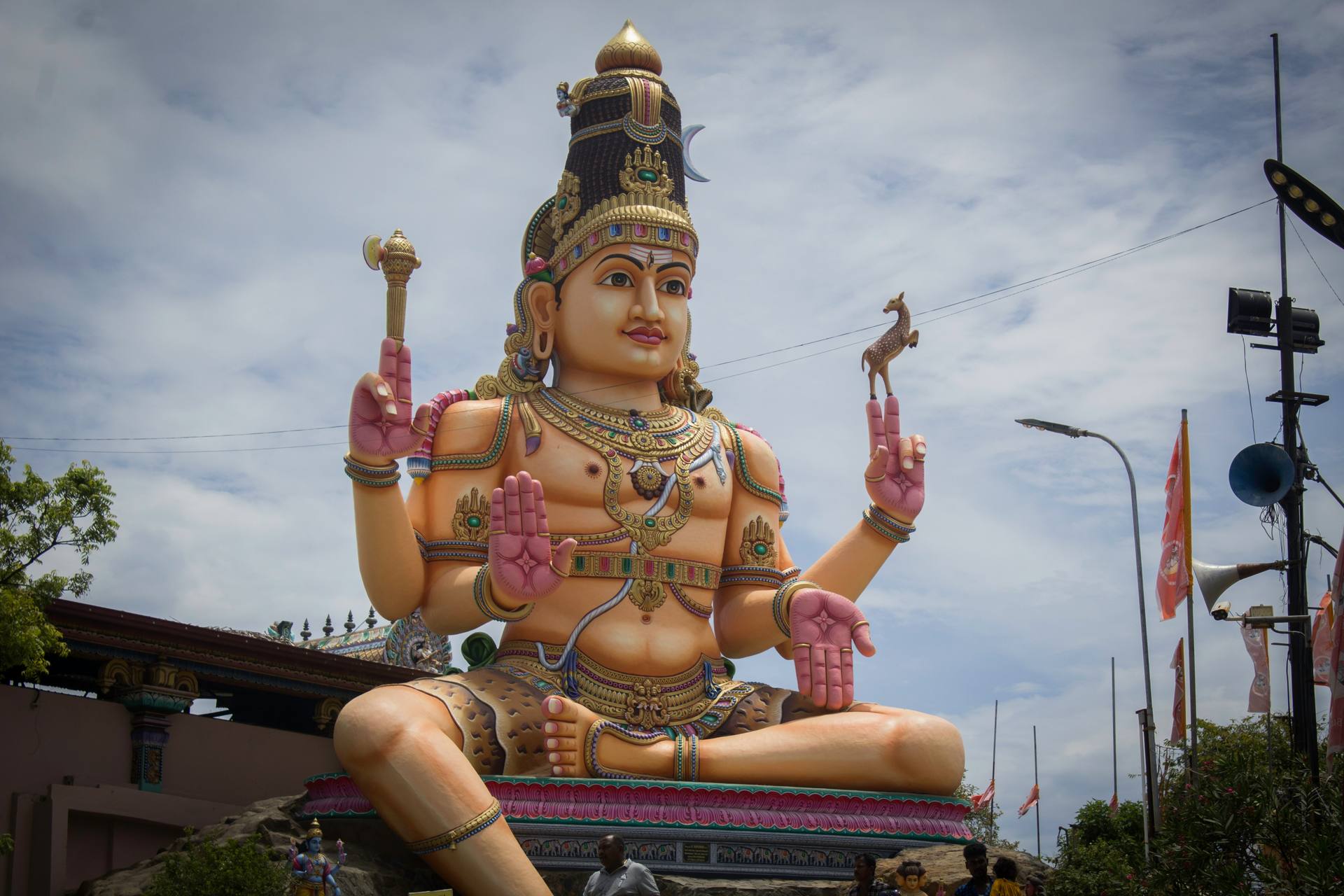
Quick answer
Maha Shivaratri falls in February or March and is a public holiday in Sri Lanka. The largest celebration is at Thiruketheeswaram near Mannar, where thousands carry water from the Palavi tank to the lingam and keep vigil through four night pujas. Koneswaram in Trincomalee, Munneswaram near Chilaw and Naguleswaram at Keerimalai also hold major observances. Expect large crowds, book accommodation early and keep the day free of long drives.
Key takeaways
- Maha Shivaratri falls in February or March and is a public holiday in Sri Lanka.
- Thiruketheeswaram near Mannar holds the largest celebration.
- Koneswaram, Munneswaram and Naguleswaram also hold major observances.
- Devotees fast, carry water to the lingam and keep vigil through four night pujas.
- Book accommodation early and avoid long drives on the day.
The great night of Shiva
Maha Shivaratri falls on the fourteenth night of the dark half of the month of Maasi or Phalguna, usually in February or March. Devotees fast through the day, keep vigil through the night and offer abhishekam to the lingam during four night pujas, or jamams.
In Sri Lanka, where Hinduism follows Tamil Shaiva traditions, Shivaratri is one of the most important festivals of the year. It is a national public holiday, and temples across the island hold special observances.
For Ramayana pilgrims, Shivaratri connects with Rama's worship of Shiva at Munneswaram and Manavari after the war, and Ravana's devotion to Shiva at Koneswaram. It is a night when the epic's Shaiva threads come together.
- →Fourteenth night of the dark half of Maasi.
- →Fasting, vigil and four night pujas.
- →A national public holiday.
Thiruketheeswaram: the largest gathering
Thiruketheeswaram, near Mannar, holds Sri Lanka's largest Shivaratri celebration. Tens of thousands of devotees travel from across the island, bathe in or carry water from the Palavi tank, and offer it to the lingam through the night. The atmosphere is intense and joyful.
The temple is one of the five Pancha Ishwarams and praised in the Tevaram hymns. Legends link it to Mandodari's father, Ravana's father-in-law, giving it a Ramayana connection for pilgrims.
Accommodation in Mannar is limited and fills early. Many pilgrims stay in Jaffna, about 2 hours away, or in Anuradhapura, about 3 hours, and travel in. Roads are very busy on the day.
- →Tens of thousands of devotees.
- →Water from the Palavi tank to the lingam.
- →Book Mannar or Jaffna early.
Koneswaram, Munneswaram and Naguleswaram
Koneswaram in Trincomalee, on Swami Rock above the sea, holds a major Shivaratri observance, with night pujas and devotees from across the east. Ravana's Cleft beside the temple recalls his devotion to Shiva.
Munneswaram near Chilaw, where Rama is said to have worshipped Shiva, draws large crowds from the west coast and Colombo. Its proximity to the airport makes it the easiest Shivaratri temple for pilgrims arriving from India.
Naguleswaram at Keerimalai near Jaffna also holds observances, and many devotees bathe in the sacred spring. Smaller kovils across the island, including in Colombo and the hill country, mark the night with pujas.
- →Koneswaram: night pujas above the sea.
- →Munneswaram: closest to the airport.
- →Naguleswaram: bathing at Keerimalai.
How pilgrims observe Shivaratri
Many devotees fast through the day, taking only water or fruit, and break the fast after the final night puja at dawn. Hotels can prepare fasting food with notice, though bringing fasting foods from home is easier.
Devotees chant Om Namah Shivaya, recite the Rudram, Shiva Panchakshara stotram or Shiva Tandava Stotram, and offer bilva leaves, milk and water to the lingam. Some keep vigil through all four night pujas; others attend one or two.
Families with elders and children may prefer to attend the evening puja and return to their hotel, rather than staying all night in crowds.
Crowds and practical tips
Shivaratri crowds are very large, especially at Thiruketheeswaram. Keep families together, agree meeting points, keep valuables secure and carry water. Elders may find the crowds and heat difficult.
As a public holiday, Shivaratri brings heavy local travel. Book accommodation well ahead, avoid long drives on the day and allow extra time for roads near temples.
February and March are dry in the north and on the west coast, and pleasant in the hill country. The east coast is drying out after the north-east monsoon, with occasional showers.
- →Very large crowds; keep together.
- →Book early; avoid long drives on the day.
- →Dry weather in the north and west.
Planning a Shivaratri visit
Choose your Shivaratri temple based on your route: Munneswaram for convenience from the airport, Koneswaram for an eastern trip, or Thiruketheeswaram for the largest and most intense celebration. Confirm the date for your year, which follows the lunar calendar.
Combine Shivaratri with the Ramayana trail, visiting the hill country sites before or after. February and March are excellent months for Nuwara Eliya and Ella.
Lankan Stays & Trails can plan Ramayana trails around Maha Shivaratri, booking accommodation early near your chosen temple. Tell us which temple you would like to attend, and we will plan the journey.
Frequently asked questions
When is Maha Shivaratri in Sri Lanka?
Maha Shivaratri falls in February or March, on the fourteenth night of the dark half of Maasi. It follows the lunar calendar, so the date changes each year. It is a national public holiday in Sri Lanka.
Where is the biggest Shivaratri celebration in Sri Lanka?
Thiruketheeswaram near Mannar holds the largest celebration, with tens of thousands of devotees carrying water from the Palavi tank to the lingam through the night. Koneswaram and Munneswaram also hold major observances.
Can Indian pilgrims attend Shivaratri in Sri Lanka?
Yes. Indian pilgrims are welcome at all temples. Dress modestly, follow temple customs and be prepared for large crowds. Munneswaram near Chilaw is the most convenient for pilgrims arriving at Colombo airport.
Where should we stay for Shivaratri at Thiruketheeswaram?
Accommodation in Mannar is limited and fills early. Many pilgrims stay in Jaffna, about 2 hours away, or Anuradhapura, about 3 hours. Book well ahead and allow extra time for busy roads on the day.
Is Shivaratri a public holiday in Sri Lanka?
Yes. Maha Shivaratri is a national public holiday, so local travel increases. Book accommodation early, avoid long drives on the day and expect busy roads near major temples. Some shops and offices close for the holiday.
How do pilgrims observe Shivaratri?
Devotees fast through the day, keep vigil through four night pujas, offer bilva leaves, milk and water to the lingam and chant Om Namah Shivaya or recite the Rudram. Some stay all night; others attend one or two pujas.
Is Shivaratri suitable for elderly pilgrims?
Crowds and heat can be difficult for elders, especially at Thiruketheeswaram. Elders may prefer to attend the evening puja at a less crowded temple and return to their hotel. Munneswaram or a local kovil may be easier.