
Quick answer
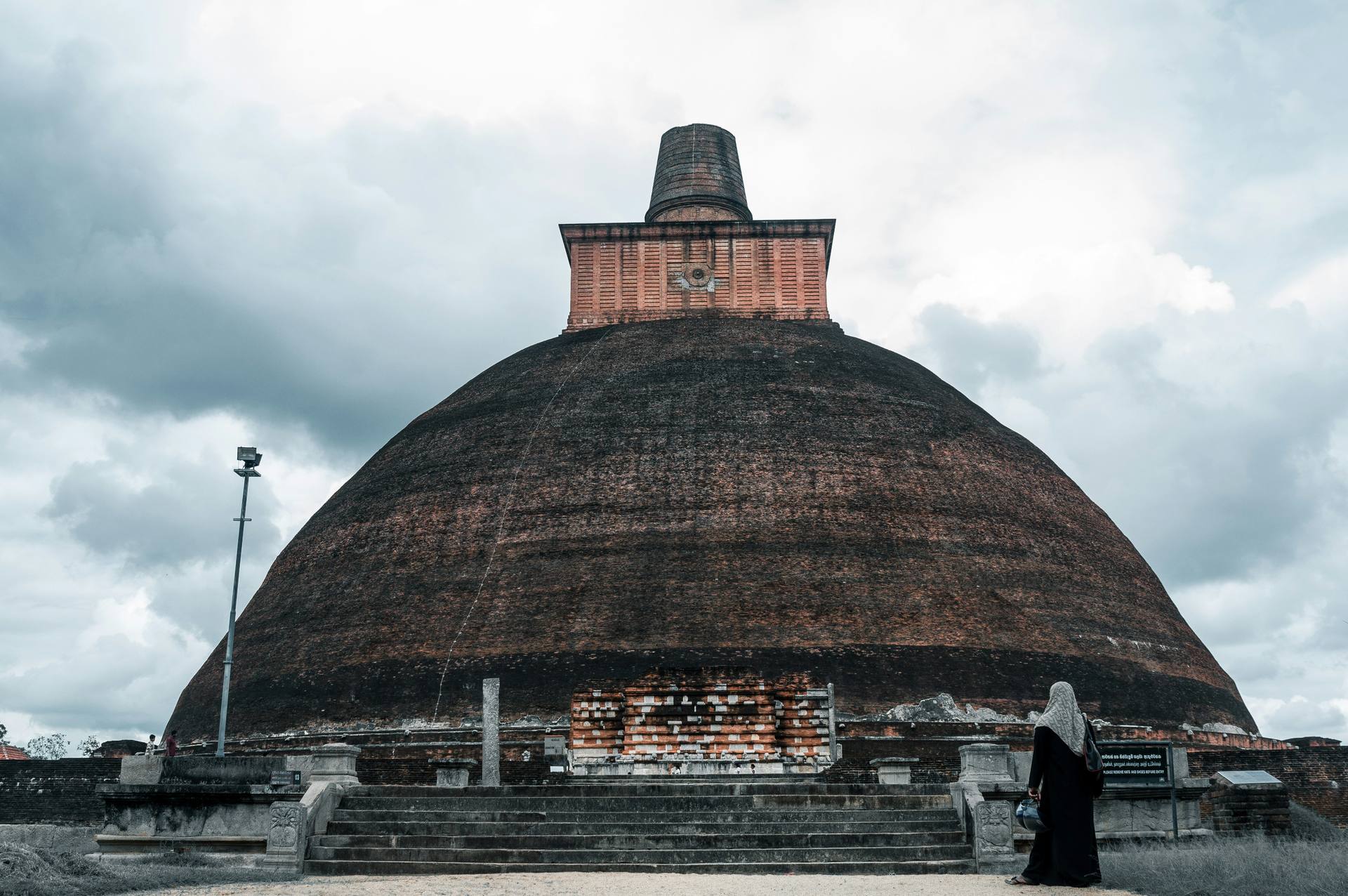
Several Ramayana places in Sri Lanka are Buddhist temples, including Divurumpola near Welimada, where Sita's agni pariksha is remembered, Kelaniya near Colombo, with its Vibhishana devale, and the Ravana Ella temple near Ravana Falls. Hindu pilgrims are welcome. Remove shoes and hats at the entrance, wear white or light clothing covering shoulders and knees, walk clockwise and offer flowers or lamps rather than coconuts. Many Buddhist temples also honour Hindu deities in devales.
Key takeaways
- Divurumpola, Kelaniya and Ravana Ella are Buddhist temples on the Ramayana trail.
- Sri Lankan Buddhism honours many Hindu deities in shrines called devales.
- Remove shoes and hats at the temple entrance and wear light, modest clothing.
- Offer flowers, lamps and incense; coconuts and sindoor are not customary.
- Never pose with your back to a Buddha image for a photograph.
Why Buddhist temples hold Ramayana traditions
Buddhism has been Sri Lanka's majority religion for more than two thousand years, and many ancient sacred sites became Buddhist temples over time. The Ramayana traditions attached to these places survived in local memory, often alongside Buddhist stories, and today the two are told side by side.
Sri Lankan Buddhism also honours many deities of Hindu origin as protectors of the island and of the faith. Vishnu, Kataragama (Skanda), Pattini and Vibhishana are among those worshipped in devales within Buddhist temple grounds. A kapurala, a lay priest, serves these shrines and receives offerings on behalf of devotees.
For Indian pilgrims, this is a reminder that the island's sacred life has long been shared. Hindu and Buddhist devotees visit Kataragama, Kelaniya and Adam's Peak alike, and many Sri Lankan Buddhists know and love the Ramayana stories. Visiting with respect honours both traditions.
- →Ancient sacred sites often became Buddhist temples.
- →Devales honour deities such as Vishnu, Skanda and Vibhishana.
- →Hindu and Buddhist devotees share many pilgrimage places.
The Buddhist sites on the trail
Divurumpola Raja Maha Viharaya, near Welimada, is the place where Sri Lankan tradition locates Sita's agni pariksha. It has a stupa, a bodhi tree and an image house, and villagers still swear oaths here. Hindu pilgrims usually say a quiet prayer to Sita beneath the bodhi tree.
Kelaniya Raja Maha Vihara, near Colombo, holds the Vibhishana devale, where Ravana's righteous brother is honoured as a guardian god. The temple's murals and stupa are among the finest in Sri Lanka, and many families spend an hour or more there. The Ravana Ella temple, near Ravana Falls and the path to Ravana Cave, is a Buddhist cave temple in its own right.
Further afield, the Mahiyangana stupa near Sita Kotuwa and Weragantota, the Japanese Peace Pagoda on Rumassala and the Buddhist ruins at Kanniya all sit beside Ramayana traditions. Each offers a chance to see how the island's faiths meet.
- →Divurumpola: Sita's agni pariksha.
- →Kelaniya: the Vibhishana devale.
- →Ravana Ella temple: near the falls and cave.
Etiquette at Buddhist temples
Remove shoes and hats at the entrance to the temple grounds, not only at the shrine. Wear white or light-coloured clothing that covers shoulders and knees. Men keep their shirts on, unlike in the inner sanctum of a Shiva kovil, and women can wear a pale saree, salwar kameez or long skirt.
Walk clockwise around stupas and bodhi trees, keeping them on your right. Speak quietly, do not point your feet towards a Buddha image when sitting, and never turn your back to an image for a photograph. Photography inside image houses may be restricted, so look for signs or ask.
Monks are treated with great respect. Do not touch a monk, and women should avoid handing objects directly to a monk; place them on a table or give them to a lay attendant. If a monk speaks to you, respond politely and keep your head slightly lower than his if he is seated.
- →Shoes and hats off at the grounds.
- →Walk clockwise around stupas and bodhi trees.
- →No photos with your back to a Buddha image.
Offerings and prayer
Buddhist offerings are simple: flowers, oil lamps and incense, placed at the flower altar in front of the stupa or image house. Stalls outside larger temples sell lotus flowers, jasmine and lamps. Coconuts, sindoor and kumkum are not customary at Buddhist shrines, though they may be offered at devales.
Hindu pilgrims are welcome to pray in their own way, quietly and without disturbing others. Many families recite a verse from the Ramayana, sit for a few minutes beneath the bodhi tree or light a lamp in Sita's name. At devales, a kapurala may accept offerings and say a prayer on your behalf.
A donation to the temple, placed in the box or given at the office, is appreciated. Monks do not handle money directly. Families who wish to offer a meal to monks, called dana, should arrange it in advance through the temple.
Poya days and festivals
Poya days, the monthly full moon holidays, are the most important days in the Buddhist calendar. Temples fill with devotees dressed in white, and many spend the day in meditation and observance. Liquor and meat sales are restricted island-wide.
Visiting a Buddhist temple on poya can be moving, but expect crowds and a quieter, more devotional atmosphere. Keep voices low, dress in white if possible and allow devotees space. Some temples hold special programmes and processions on major poyas.
The Duruthu Perahera at Kelaniya, usually in January, is a grand procession with elephants and dancers. Vesak, in May, lights up the whole island with lanterns and is one of the most beautiful times to visit, though travel and accommodation are busy.
Planning visits with family
Brief family members before each Buddhist stop about the differences from kovils, especially shirts for men, white clothing and photography. Children enjoy the stupas and bodhi trees, and a simple story about the Buddha helps them understand where they are.
Divurumpola fits neatly into a morning from Nuwara Eliya with the Seetha Amman Temple and Hakgala. Kelaniya suits a first or last morning in Colombo. The Ravana Ella temple can be visited on the same morning as Ravana Falls and Ravana Cave near Ella.
Lankan Stays & Trails guides explain both Hindu and Buddhist traditions at shared sites, so that every family member understands what they see. We remind families of etiquette before each stop and help with offerings.
Frequently asked questions
Are some Ramayana sites in Sri Lanka Buddhist temples?
Yes. Divurumpola, where Sita's agni pariksha is remembered, is a Buddhist temple, as is Kelaniya, which holds the Vibhishana devale. The Ravana Ella temple near Ravana Falls is also Buddhist. Hindu pilgrims are welcome at all of them.
Can Hindus pray at Buddhist temples in Sri Lanka?
Yes. Hindu pilgrims can pray quietly in their own way, light a lamp, offer flowers or recite verses. At devales, which honour deities such as Vishnu, Skanda and Vibhishana, a kapurala may accept offerings and say a prayer on your behalf.
What is a devale?
A devale is a shrine to a deity, often of Hindu origin, within or near a Buddhist temple in Sri Lanka. Deities such as Vishnu, Kataragama, Pattini and Vibhishana are honoured there as protectors. A lay priest called a kapurala serves the shrine.
What should we wear at a Buddhist temple?
Wear white or light-coloured clothing covering shoulders and knees. Remove shoes and hats at the entrance to the grounds. Men keep shirts on. Pale sarees, salwar kameez and kurtas are ideal, and white is especially appreciated on poya days.
Can we offer coconuts at Buddhist temples?
Coconuts are not a customary offering at Buddhist shrines. Flowers, oil lamps and incense are usual, placed at the flower altar. Coconuts may be offered at some devales, but follow the kapurala's guidance and local practice.
Why can't we take photos with our back to a Buddha image?
Turning your back to a Buddha image for a photograph is considered disrespectful in Sri Lanka, and visitors have faced serious trouble for it. Take photos facing the image or from the side, and follow any signs restricting photography.
Is it busy at Buddhist temples on poya days?
Yes. Poya days, the monthly full moons, bring many devotees in white to temples. The atmosphere is devotional and quiet. Visitors are welcome but should dress in white if possible, keep voices low and allow devotees space.