
Quick answer
In the Cultural Triangle, wear loose, light clothing that covers your shoulders and knees, because almost every site, including the ruins of Anuradhapura and Polonnaruwa, contains active shrines. Linen or cotton trousers, a long skirt or a sarong with a T-shirt work well in temperatures that often pass 30°C. Choose slip-on shoes, since you remove them at every temple, carry socks for hot stone, and bring a scarf to cover shoulders quickly. Hats come off at shrines.
Key takeaways
- Shoulders and knees must be covered at the Cultural Triangle's temples and at the shrines inside Anuradhapura and Polonnaruwa.
- Shoes and hats are removed at each shrine, so slip-on sandals save a lot of time on a Polonnaruwa or Anuradhapura day.
- Dry-zone daytime temperatures in the Cultural Triangle often reach 30 to 35°C, so loose linen or cotton is far more comfortable than denim.
- White or light clothing is appreciated at sacred sites such as the Sri Maha Bodhi, though it is not compulsory for visitors.
- A sarong can be bought cheaply in Dambulla or Habarana and works as a skirt, a shoulder cover and a seat on hot stone.
The Cultural Triangle dress code
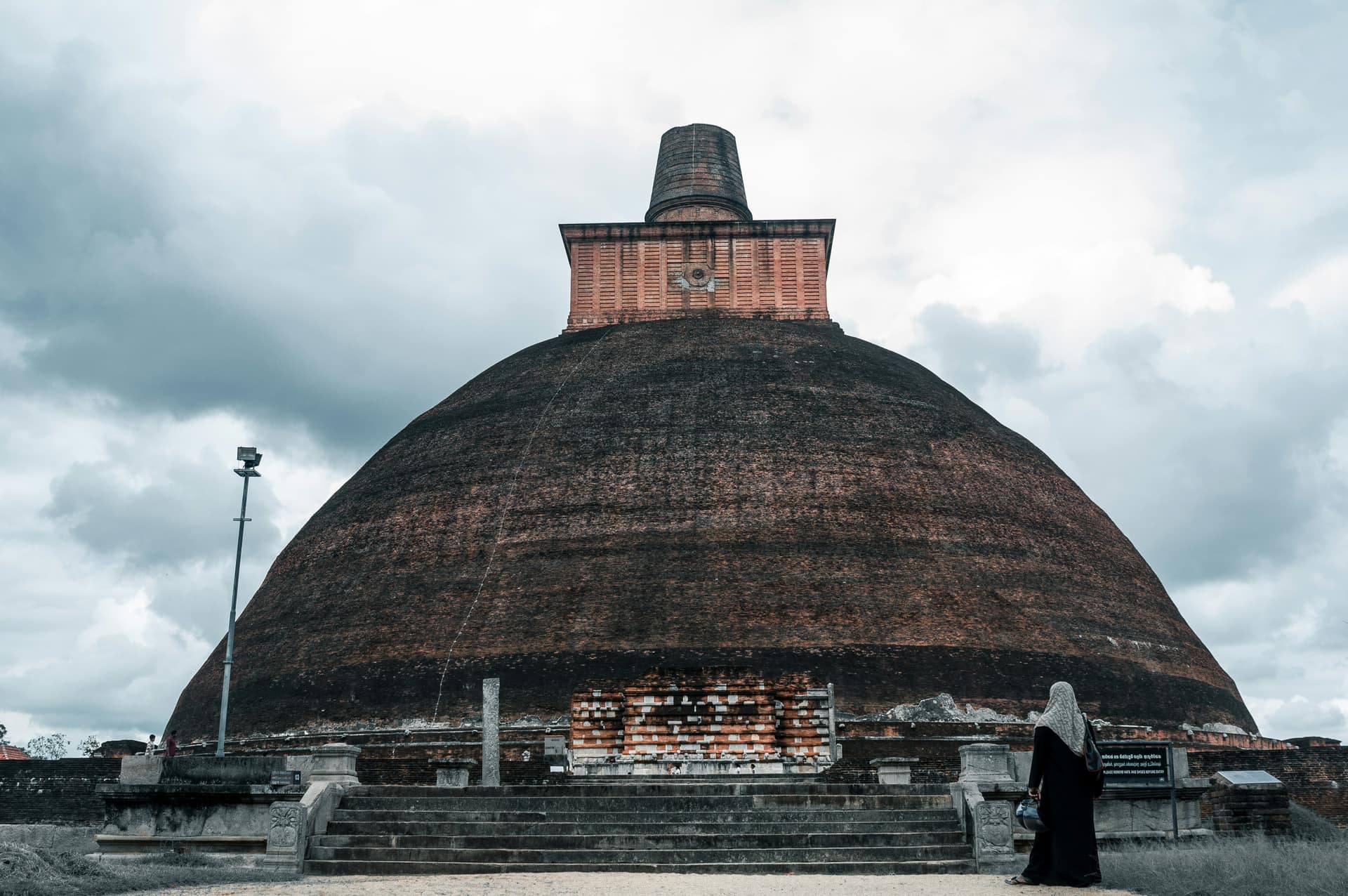
The Cultural Triangle dress code is simple: shoulders and knees covered, shoes and hats off at shrines. It applies at working temples such as Dambulla's cave temple and the Sri Maha Bodhi, and also at the stupas, image houses and Bo tree shrines inside the archaeological parks of Anuradhapura and Polonnaruwa.
Guards at the busiest sites check clothing at the entrance and will turn visitors away, or ask them to buy or borrow a wrap. Tight or sheer clothing, short shorts and strappy tops are the usual problems. Men are asked to cover their knees too, which surprises some.
The rule is about respect rather than fashion. Clothing with Buddha images, or visible Buddha tattoos, can cause offence and has led to visitors being refused entry, so cover them.
- →Cover shoulders: T-shirts are fine, vests and strappy tops are not.
- →Cover knees: long shorts that reach below the knee usually pass.
- →Remove hats and caps at the shrine entrance.
- →Remove shoes, and often socks, inside image houses.
Dressing for dry-zone heat
The Cultural Triangle sits in Sri Lanka's dry zone, where daytime temperatures commonly reach 30 to 35°C and the sun is strong from mid-morning. Loose, breathable fabrics such as linen and cotton keep you far cooler than synthetic sportswear or denim.
Long, loose trousers or a long skirt are cooler than they sound, because they keep the sun off your skin. Light colours reflect heat, and white is also the colour pilgrims wear to temples, which makes it a sensible choice for both reasons.
- →Linen trousers or a maxi skirt: cool and temple-ready.
- →A loose cotton shirt with sleeves: sun cover without overheating.
- →A wide-brimmed hat for the open ruins, removed at shrines.
- →Sunglasses and high-factor sun cream for long stretches without shade.
Shoes and socks for temple days
Footwear matters more in the Cultural Triangle than anywhere else on the island, because you take your shoes off at every shrine. On a Polonnaruwa day that can mean a dozen times. Slip-on sandals or easy trainers save effort, and the shoe-minding stalls at the larger temples charge a small fee.
Bare feet on sun-baked stone and sand at midday can burn, especially on the open terraces at Anuradhapura and the Polonnaruwa Vatadage. A pair of thin white socks is usually acceptable on outdoor terraces and makes a real difference, though some image houses ask you to remove them too.
For Sigiriya or Pidurangala, wear proper trainers with grip. Flip-flops are risky on the rock steps.
Simple outfits that work
A small rotation of clothes covers a three or four day Cultural Triangle visit. Most travellers find two pairs of loose trousers or skirts, three or four sleeved tops and one light layer is plenty, because hotels in Sigiriya, Habarana and Dambulla offer quick laundry.
Carry a large scarf or sarong in your day bag at all times. It covers shoulders, wraps over shorts, protects your neck from the sun and gives you something to sit on. Lankan Stays & Trails guests often buy one in Dambulla on day one and use it every day afterwards.
- →For women: loose trousers or a maxi skirt, sleeved tops and a scarf.
- →For men: lightweight trousers or knee-length shorts plus a sarong, and a T-shirt.
- →For children: the same rules apply, though guards are more relaxed with toddlers.
Changes by season
Between January and September the Cultural Triangle is mostly dry, and the guidance above applies almost every day. March and April are the hottest months, so prioritise the lightest fabrics then.
From October to December rain is more frequent. A compact umbrella is more useful than a raincoat in the warmth, and quick-drying fabrics help. Sandals that cope with wet stone are worth having, and early mornings can feel fresh enough for a light layer.
- →January to April: lightest fabrics, maximum sun cover.
- →May to September: dry and windy, dust in the air.
- →October to December: umbrella, quick-dry clothing, grippy sandals.
Frequently asked questions
Can I wear shorts in the Cultural Triangle?
Only shorts that cover the knee, and even then a sarong is useful for the stricter temples. Short shorts are refused at shrines in Anuradhapura, Polonnaruwa and Dambulla. Long, loose trousers are cooler than most people expect and avoid the question.
Do I have to wear white at Sri Lankan temples?
No. White is the colour Sri Lankan pilgrims wear, especially on poya days, and visitors who wear it are appreciated, but it is not required. Any modest clothing that covers your shoulders and knees is accepted at Cultural Triangle temples.
Can I wear socks at temples in the Cultural Triangle?
Usually yes on outdoor terraces and stupa platforms, where socks protect your feet from hot stone. Some image houses and shrine rooms ask you to remove them as well. Follow what local visitors do and any signs at the entrance.
What shoes are best for Polonnaruwa?
Slip-on sandals or easy trainers, because you remove them at each shrine in the Sacred Quadrangle and at Gal Vihara. If you are cycling, make sure they stay on securely. Thin socks help on the hot stone terraces around midday.
Is it rude to wear a hat at temples?
Yes, at the shrine itself. Take off hats and caps before entering a temple's sacred area or approaching a Buddha image. Wear them freely while walking between ruins in the open, where shade is limited in the dry-zone heat.
Where can I buy a sarong in the Cultural Triangle?
Shops in Dambulla, Habarana and Sigiriya village sell sarongs and light scarves cheaply, and stalls near the main temples sell them too. Many hotels also lend wraps. Buying one on your first day is the easiest way to be ready for every site.