
Quick answer
Eight of Sri Lanka's ten best-known places work in every season: Sigiriya, Dambulla, Anuradhapura, Polonnaruwa, Kandy, Nuwara Eliya, Ella and the safari parks at Yala or Udawalawe. Only the two coastal stops, Galle and Mirissa, are genuinely season-dependent, being at their best roughly December to March. In other months the coastal stop moves east to Trincomalee, so the shape of a first trip stays intact.
Key takeaways
- The Cultural Triangle sits in the dry zone and works year-round, with rain most likely in the inter-monsoon months.
- The hill country is wettest during the south-west monsoon, roughly May to September, but remains visitable throughout.
- Only the coastal stop is genuinely season-dependent, and it can be moved between the south and the east.
- Yala Block 1 typically closes for around September and October; confirm dates when booking.
- Rain in Sri Lanka is usually concentrated in afternoon downpours rather than all-day drizzle, so mornings often stay clear.
How rain actually behaves in Sri Lanka
The word monsoon suggests continuous rain, and that is rarely what a visitor experiences in Sri Lanka. Even in the wetter months, rain tends to arrive as heavy afternoon or evening downpours lasting an hour or two, with clear mornings before them.
This is why sightseeing in Sri Lanka is built around early starts regardless of season. A morning at Sigiriya or Polonnaruwa is usually dry even in a wet month, and the rain arrives when most visitors would have stopped anyway.
The exception is the coast, where rain matters less than sea conditions. A wet afternoon in Kandy costs an hour indoors; a monsoon swell at Mirissa means the sea is unsafe for the whole stay. That asymmetry is the reason the coast is the only genuinely season-dependent part of a first trip.
- →Rain usually arrives as heavy afternoon downpours rather than all-day drizzle.
- →Mornings are often clear even in the wetter months.
- →Inland, rain costs an afternoon; on the coast, swell costs the whole stay.
- →Early starts mitigate weather in every season, not just the wet ones.
The Cultural Triangle: effectively year-round
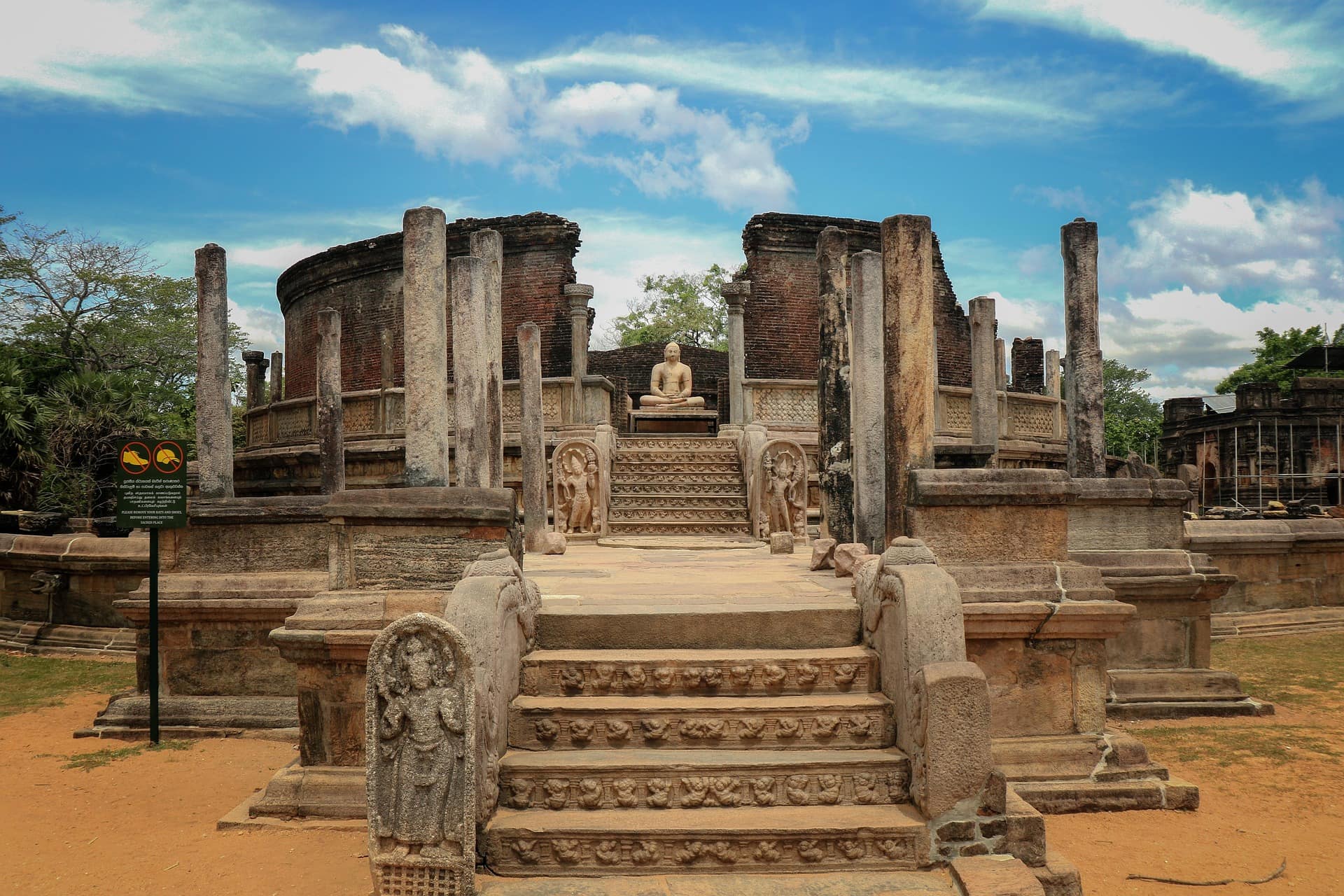
Sigiriya, Dambulla, Anuradhapura and Polonnaruwa all sit in the dry zone of the northern plain, which receives considerably less rain than the rest of the island and is the closest thing Sri Lanka has to a genuinely all-season region.
The wettest period here is the north-east monsoon, roughly November to February, and even then the rain is usually intermittent. The larger seasonal factor is heat rather than rain: the dry zone is hot throughout, and the months around March to May can be punishing on an exposed climb.
The practical seasonal advice for the Cultural Triangle is therefore about timing the day rather than the month. Climb Sigiriya at opening, around seven in the morning, in any season, and the difference between February and July matters far less than the difference between seven and eleven.
- →The dry zone receives less rain than the rest of the island.
- →Wettest roughly November to February, and still usually intermittent.
- →Heat is the bigger seasonal factor, particularly around March to May.
- →Timing the day matters more than choosing the month.
The hill country: wetter but always visitable
Kandy, Nuwara Eliya and Ella all sit in the wet zone and catch the south-west monsoon between roughly May and September. This is the part of the standard route most affected by rain, and travellers in those months should expect cloud and showers.
What that actually costs is specific: cloud can hide the World's End view at Horton Plains, which is the single most weather-dependent experience on a first trip, and the Ella viewpoints are sometimes obscured. Both are morning problems, and both are mitigated by starting early, since cloud typically builds through the day.
None of this makes the hill country unvisitable. The tea estates are arguably at their most atmospheric in mist, the temperature stays comfortable, and the train journey runs regardless. Travellers in the wet months should simply hold the World's End walk loosely rather than building the trip around it.
- →The hill country catches the south-west monsoon roughly May to September.
- →World's End at Horton Plains is the most weather-dependent experience on the route.
- →Cloud builds through the day, so early starts matter more in wet months.
- →Tea estates and the train journey are unaffected and arguably better in mist.
The safari parks: year-round with one closure
Yala and Udawalawe both operate through most of the year, and wildlife viewing does not stop in the wet season. What changes is the concentration of animals: in drier months, wildlife gathers around remaining waterholes, which makes sightings more predictable.
For Yala, roughly February to July is generally the stronger window for leopard sightings. Yala Block 1 also typically closes for around September and October each year, though exact dates vary and should be confirmed when booking. Udawalawe and other blocks generally remain open during that period.
At Minneriya and Kaudulla near the Cultural Triangle, the seasonality runs the other way. The elephant Gathering is generally strongest in the drier months from roughly June to September, when receding reservoir water draws large numbers of elephants to the shoreline.
- →Both Yala and Udawalawe operate through most of the year.
- →Drier months concentrate wildlife around waterholes, improving sightings.
- →Yala Block 1 typically closes around September and October; confirm dates.
- →The Minneriya Gathering is generally strongest roughly June to September.
The two places that genuinely depend on season
Galle and Mirissa are the only two of the ten that a first trip should reconsider based on dates. Both sit on the south coast, which is at its best roughly December to March and under the south-west monsoon roughly May to September.
Galle is the more resilient of the two, because the fort is pleasant in rain and considerably quieter in the wet months. A Galle stop in July is a reasonable proposition; a Mirissa beach stop in July generally is not, since swimming is often unsafe and whale trips largely stop.
The answer is substitution rather than omission. Between roughly May and September the coastal stop moves to Trincomalee or Nilaveli on the east, where the season is reversed. The trip keeps its coast, its rest days and its shape; only the location changes.
- →Galle and Mirissa are the only genuinely season-dependent stops of the ten.
- →Galle works in rain and is quieter in the wet months; Mirissa does not.
- →Between May and September, move the coastal stop east to Trincomalee or Nilaveli.
- →The trip keeps its shape; only the coast changes location.
Planning around fixed dates
The practical consequence of all this is liberating for anyone whose dates cannot move. Eight of the ten places are available regardless of month, so a first trip in any season can include Sigiriya, Dambulla, an ancient capital, Kandy, the hill country and a safari without compromise.
The only real decision the calendar forces is which coast, and Sri Lanka's two monsoons mean there is nearly always one in good condition. Lankan Stays and Trails plans first trips by fixing the inland route and then attaching whichever coast suits the month, which is why our July itineraries look almost identical to our January ones until the last three nights.
Frequently asked questions
Which places in Sri Lanka can you visit year-round?
Sigiriya, Dambulla, Anuradhapura, Polonnaruwa, Kandy, Nuwara Eliya, Ella and the safari parks all work in any season. Only the coastal stops are genuinely season-dependent, and the coast can be moved between the south and the east according to the month.
Does the monsoon affect Sigiriya?
Very little. Sigiriya sits in the dry zone of the northern plain, which receives considerably less rain than the rest of the island. Heat is the larger seasonal factor, particularly around March to May, and an opening-time climb mitigates it in any month.
Is Sri Lanka worth visiting in the rainy season?
Yes, with adjusted expectations. Rain usually arrives as heavy afternoon downpours rather than all-day drizzle, so mornings often stay clear. The Cultural Triangle, hill country and safari parks all remain fully visitable; only the coastal stop needs to move.
When is Yala National Park closed?
Block 1 typically closes for around September and October each year, though exact dates vary and should be confirmed when booking. Other blocks and nearby parks such as Udawalawe generally remain open, so a safari is still possible during that period.
Does rain ruin the hill country in Sri Lanka?
No, though it affects viewpoints. Cloud can hide the World's End view at Horton Plains and sometimes obscures the Ella viewpoints. Cloud builds through the day, so early starts help. Tea estates and the train journey are unaffected and arguably better in mist.
When is the elephant Gathering at Minneriya?
Generally strongest in the drier months from roughly June to September, when receding reservoir water draws large numbers of elephants to the shoreline. It depends on rainfall and is never guaranteed, and whether Minneriya or Kaudulla is better varies with water levels.
Can I plan a Sri Lanka trip around fixed dates?
Yes. Eight of the ten main places are available in any month, so the inland route stays intact whatever your dates. The only decision the calendar forces is which coast, and the two monsoons mean one side of the island is nearly always in good condition.