
Quick answer
If your Sri Lanka dates are fixed, the main swap is the coastal stop: replace Mirissa or Unawatuna with Trincomalee or Nilaveli between roughly May and September, and reverse that between December and March. Other useful swaps are Udawalawe or Wilpattu for Yala during its September and October closure, Haputale for Ella if crowds are a concern, and Dambulla for Sigiriya in extreme heat.
Key takeaways
- The coastal stop is the only part of a first trip that genuinely needs swapping by season.
- Between May and September, Trincomalee and Nilaveli replace the south coast directly.
- Udawalawe or Wilpattu covers the safari slot when Yala Block 1 closes around September and October.
- Haputale substitutes for Ella when crowds rather than weather are the concern.
- Swapping a place is almost always better than deleting one, since the trip keeps its shape.
Swap, do not delete
When a fixed date runs into a seasonal problem, travellers tend to respond by removing the affected stop and redistributing the nights. That usually makes the trip worse, because the removed stop was doing a job that nothing else in the itinerary covers.
A first trip is built from four elements: ancient sites, hill country, one safari and one coast. Removing the coast because the south is wet does not give you more of the other three; it gives you an itinerary with no rest in it. The better move is to find a different coast.
Almost every seasonal problem in Sri Lanka has a same-function substitute, largely because the island is small and geographically varied. The swaps below all preserve the element rather than replacing it with something that does a different job.
- →A first trip needs ancient sites, hill country, one safari and one coast.
- →Deleting a stop removes its function, not just its nights.
- →Sri Lanka's size and variety mean most elements have a substitute.
- →Preserve the element; change only the location.
The coastal swap, which matters most
Between roughly May and September the south-west monsoon makes Mirissa, Unawatuna and the south coast beaches unreliable for swimming, and whale trips largely stop. The direct substitution is Trincomalee, Nilaveli or Uppuveli on the east coast, where the season is reversed and runs roughly May to September.
The swap is not cost-free. Trincomalee sits roughly five to six hours from Bandaranaike International Airport against three to four for the south coast, so the transfer needs a day. It sits much closer to the Cultural Triangle, at roughly three to three and a half hours, which is why it works best attached there as a spur.
Between roughly December and March the swap runs the other way: the east is under the north-east monsoon and the south coast is correct. In the shoulder months of April, October and November, neither is reliable, and the better response is to shorten the coastal stop rather than relocate it.
- →May to September: swap the south coast for Trincomalee, Nilaveli or Uppuveli.
- →December to March: the south coast is correct and the east should be avoided.
- →Trincomalee sits roughly three to three and a half hours from the Cultural Triangle.
- →April, October and November: shorten the coastal stop rather than moving it.
Safari swaps
Yala Block 1 typically closes for around September and October each year, and exact dates vary, so confirm them when booking. Travellers with fixed dates in that window have two straightforward substitutes.
Udawalawe is the easier swap. It sits on broadly the same route between the hill country and the south coast, remains open, and offers near-certain elephant sightings in open grassland with far fewer vehicles than Yala carries. For families this is often an upgrade rather than a compromise.
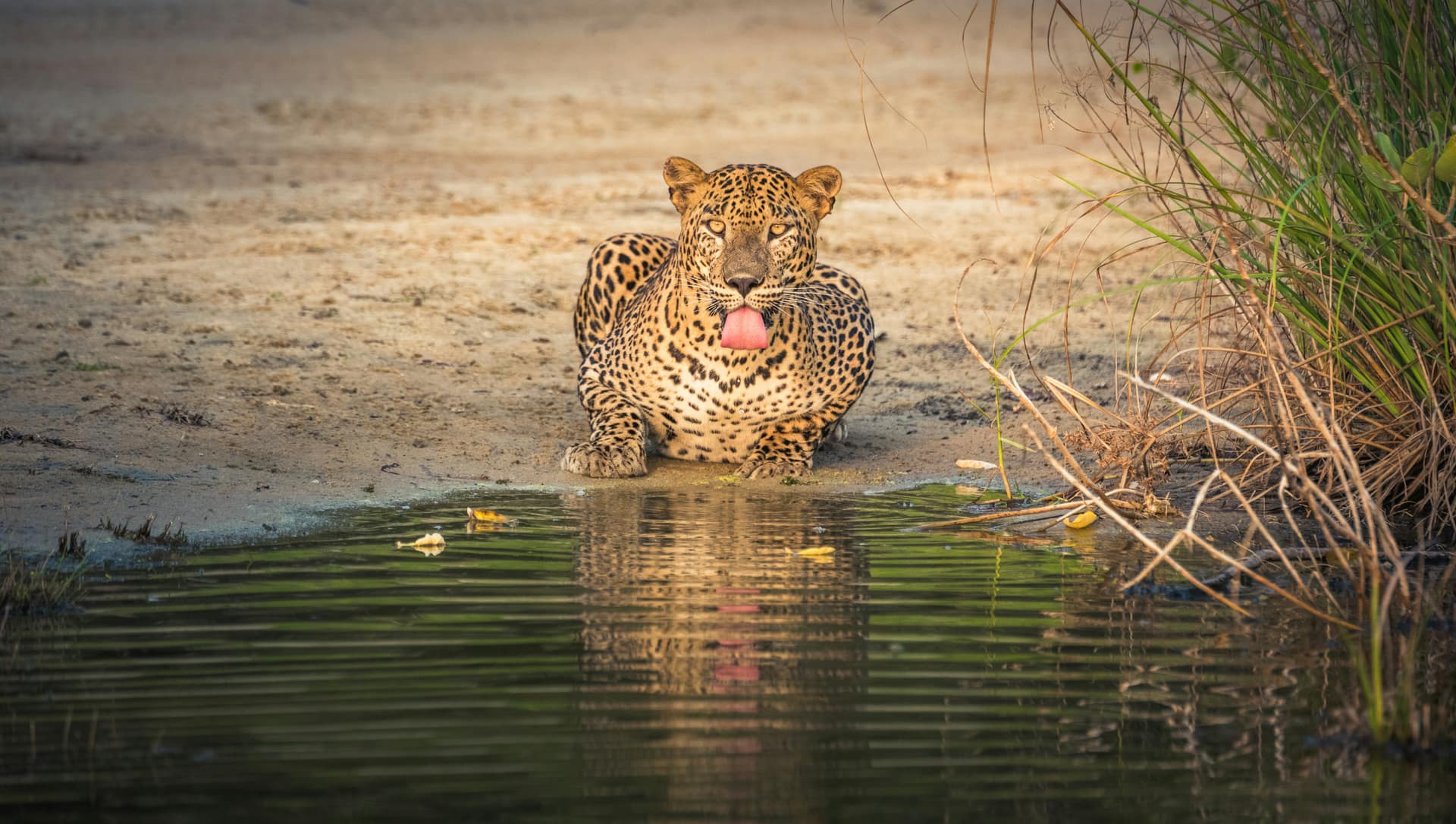
Wilpattu is the swap for travellers who specifically want leopard country. It is Sri Lanka's largest national park, quieter and wilder than Yala, with natural lakes called villus. It sits in the north-west, so it suits itineraries routing through Anuradhapura rather than the southern loop.
- →Yala Block 1 typically closes around September and October; confirm dates when booking.
- →Udawalawe: same general route, open, near-certain elephants, fewer vehicles.
- →Wilpattu: quieter leopard country, but suits north-western routings.
- →Minneriya or Kaudulla can add a second wildlife experience from the Cultural Triangle.
Hill country swaps
The hill country rarely needs a weather-driven swap, since it remains visitable year-round, but it often needs a crowd-driven one. Travellers whose fixed dates fall in the December to March peak and who dislike busy places can substitute Haputale for Ella.
Haputale sits on the same general route, offers comparable tea country views, and gives access to Lipton's Seat, which delivers a viewpoint experience with a fraction of the visitors the Nine Arch Bridge carries. The trade-off is fewer restaurants and less to do in the evening.
In the wet months, the swap worth knowing is within the Nuwara Eliya stay rather than instead of it: if Horton Plains is likely to be clouded in, replace that morning with a tea estate and factory visit, which is unaffected by weather and often more interesting than a white view over an invisible escarpment.
- →Haputale substitutes for Ella when crowds rather than weather are the issue.
- →Lipton's Seat gives a comparable viewpoint with far fewer visitors.
- →Haputale has fewer restaurants and less evening activity than Ella.
- →In wet months, swap a clouded Horton Plains morning for a tea factory visit.
Swaps for heat and crowds
For fixed dates falling around March to May, when the dry zone is at its hottest, the useful substitution is within the Cultural Triangle rather than away from it. Dambulla replaces Sigiriya for travellers who would struggle with roughly 1,200 steps in that heat, at about fifteen to twenty minutes of stepped path.
Polonnaruwa also handles heat better than Anuradhapura, because the site is compact and the cycling route between monuments is largely shaded, where Anuradhapura involves long exposed transitions between clusters.
For crowd avoidance at fixed peak dates, the most effective swaps are not places at all but times: Sigiriya at opening rather than mid-morning, the Nine Arch Bridge at dawn, Galle Fort after five in the afternoon. These change the experience more than substituting a destination would.
- →Dambulla replaces Sigiriya when heat makes a long climb unwise.
- →Polonnaruwa handles heat better than Anuradhapura, being compact and shaded.
- →For crowds at fixed dates, swap the hour rather than the place.
- →Opening time and after five in the afternoon transform the busiest sites.
Building a trip around dates you cannot change
The method that works is to fix the four elements first, then choose a location for each based on the month, rather than choosing destinations and then discovering the season is wrong. Ancient sites are always the Cultural Triangle, hill country is always available, the safari and the coast are the two that move.
Lankan Stays and Trails builds every itinerary this way, which is why we ask for dates before preferences. A July enquiry that names Mirissa gets an honest answer about Trincomalee, and a January enquiry that names Trincomalee gets the reverse, because in both cases the element matters more than the place.
Frequently asked questions
What should I swap if my Sri Lanka dates fall in the monsoon?
The coastal stop, which is the only part genuinely affected. Between roughly May and September replace Mirissa or Unawatuna with Trincomalee or Nilaveli on the east coast, where the season is reversed. The inland route stays unchanged.
What can I do instead of Yala when it is closed?
Udawalawe is the easiest substitute, on broadly the same route with near-certain elephant sightings and far fewer vehicles. Wilpattu is the alternative for leopard country, though it sits in the north-west and suits itineraries routing through Anuradhapura instead.
Is there a quieter alternative to Ella?
Haputale, which offers comparable tea country views and access to Lipton's Seat with a fraction of the visitors. The trade-off is fewer restaurants and less to do in the evening than Ella, which has developed a substantial cafe and guesthouse scene.
What if it is too hot to climb Sigiriya?
Substitute Dambulla cave temple, which takes roughly fifteen to twenty minutes of stepped path instead of around 1,200 steps, and is indoors once you reach the caves. Alternatively climb Sigiriya at opening, typically around seven, when the stone is still cool.
Should I delete a stop if the season is wrong?
Rarely. A first trip needs ancient sites, hill country, one safari and one coast, and deleting a stop removes its function rather than just its nights. Almost every seasonal problem in Sri Lanka has a same-function substitute somewhere else on the island.
How far is Trincomalee from the Cultural Triangle?
Roughly three to three and a half hours from Sigiriya or Habarana, which is why an east coast stop works best attached to the Cultural Triangle as a spur. Trincomalee sits much further from the airport, at roughly five to six hours.
Can I avoid crowds in Sri Lanka during peak season?
Largely, by changing the hour rather than the place. Sigiriya at opening, the Nine Arch Bridge at dawn and Galle Fort after five in the afternoon are all substantially quieter, and these adjustments change the experience more than substituting a destination would.