
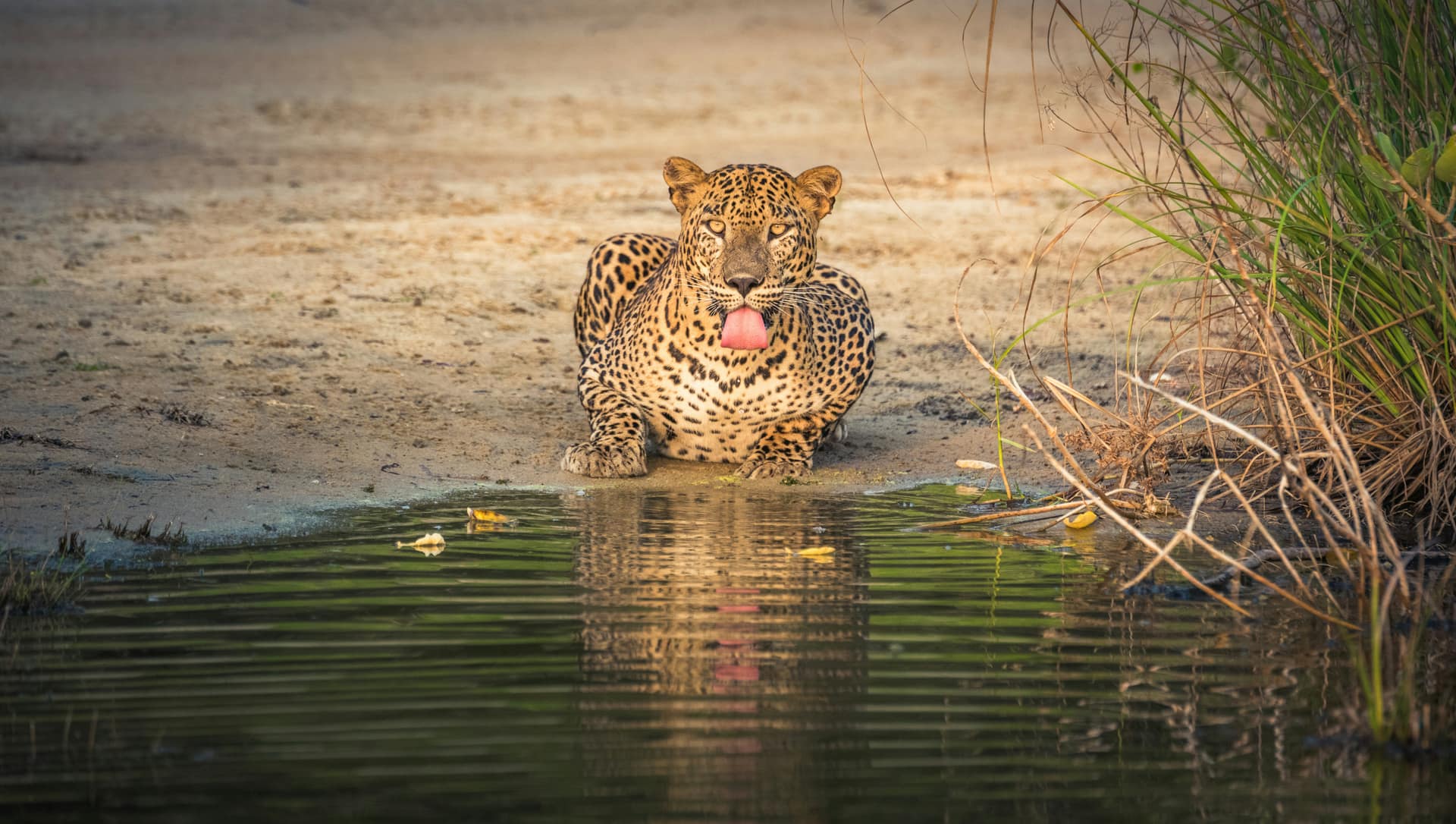
Quick answer
The wildlife-heavy version of the culture, wildlife and beach route runs Wilpattu 2, Sigiriya 3, Kandy 1, Udawalawe 1, Tissamaharama 3 and Mirissa 3. It includes four national parks (Wilpattu, Minneriya or Kaudulla, Udawalawe and Yala), plus Bundala and whale watching. Anuradhapura is seen on the drive from Wilpattu to Sigiriya rather than overnight, Kandy is cut to one night and Tangalle is dropped. It suits roughly February to April, when both leopard parks are good.
Key takeaways
- The nights split as Wilpattu 2, Sigiriya 3, Kandy 1, Udawalawe 1, Tissamaharama 3 and Mirissa 3.
- Wilpattu, roughly three to three and a half hours from the airport, is quieter than Yala and good for leopards and sloth bears.
- Three nights near Yala allow two full days, or one day in Yala and one split between Bundala and a quieter block.
- Anuradhapura's main sites are seen on the drive from Wilpattu to Sigiriya.
- February to April suits both Wilpattu and Yala, and the south coast is calm for the whales.
Who this version suits
Wildlife photographers, birdwatchers and anyone whose highlight of a previous trip was a safari will get the most from this version. Four parks give a real range of habitats, from Wilpattu's forest and lakes to Udawalawe's grassland and Yala's scrub and coast, and three nights near Yala give the best chance of seeing a leopard well.
The trade is culture. Anuradhapura becomes a half day and Kandy a single night, and the quiet beaches of Tangalle go. For travellers who want both depth of history and depth of wildlife, three weeks is a better length.
- →Wildlife photographers.
- →Birdwatchers.
- →Travellers who loved a previous safari.
- →Not ideal for history lovers.
The route, night by night
Day 1 heads from the airport to Wilpattu, roughly three to three and a half hours, with an afternoon to settle in. Day 2 is a full day in the park, with dawn and afternoon drives. On day 3, drive roughly 45 minutes to an hour to Anuradhapura, see the sacred city and Sri Maha Bodhi in the late morning, and continue roughly one and a half to two hours to Sigiriya.
Sigiriya's three nights cover the rock, Polonnaruwa and an elephant safari. One night in Kandy allows the Temple of the Tooth and the lake. The long drive to Udawalawe follows, with a dawn safari, then three nights at Tissamaharama and three at Mirissa with the whales.
The order means wildlife features at the start, middle and end, with culture in the first week.
- →Wilpattu 2: dawn and afternoon drives.
- →Sigiriya 3: the rock, Polonnaruwa, elephants; Anuradhapura on the way in.
- →Kandy 1: the temple and lake.
- →Udawalawe 1: elephants at dawn.
- →Tissamaharama 3: Yala, Bundala and a quieter block.
- →Mirissa 3: whales and the beach.
Why Wilpattu
Wilpattu National Park, in the north-west, is the largest park in Sri Lanka and far quieter than Yala. Its landscape of forest and natural lakes, called villus, is quite different from the southern parks. Leopards and sloth bears live here, and while sightings are less frequent than in Yala's Block 1, the sense of wilderness, with few other jeeps, is a real reward.
Wilpattu is best roughly February to October. In December and January the north-east monsoon can make tracks muddy and some areas may be closed. For this reason, the wildlife-heavy version works best from February.
- →Largest park in Sri Lanka.
- →Forest and natural lakes (villus).
- →Leopards, sloth bears, elephants and birds.
- →Best roughly February to October.
Three nights near Yala
Three nights at Tissamaharama give two full days for wildlife. A common pattern is a dawn drive in Yala's Block 1 on the first day, an afternoon at Bundala's wetlands, and on the second day a dawn drive in a quieter block followed by a slow afternoon. Kataragama's evening puja and the Tissamaharama stupa add a little culture.
The extra Yala time is the single most effective way to improve leopard sightings, and it gives photographers the chance to return to promising areas in different light.
What it gives up
Anuradhapura becomes a half day on the drive from Wilpattu, enough for the main stupas and the Bo tree but not for the full cycling circuit or Mihintale. Kandy is cut to one night, which drops Peradeniya and the dance show unless you fit them in on arrival. Tangalle and the Rekawa turtle watch go entirely.
Lankan Stays & Trails can adjust the balance, for example keeping two nights in Kandy by cutting Mirissa to two, or adding a Tangalle night by dropping Udawalawe. The important thing is to decide which theme you are willing to trim.
Costs are slightly higher than the standard route, because each extra safari adds jeep hire and park fees.
- →Anuradhapura: half day only.
- →Kandy: one night instead of two.
- →Tangalle and Rekawa: dropped.
Frequently asked questions
How is the wildlife-heavy version different from the standard route?
It replaces the Anuradhapura night with two nights at Wilpattu, adds a third night near Yala and a third in Mirissa, and drops a Kandy night and Tangalle. The result is four national parks plus Bundala and whale watching, with a little less culture and quieter beach time.
Is Wilpattu better than Yala for leopards?
Yala usually has more frequent leopard sightings, especially in Block 1, but Wilpattu is far quieter, with fewer jeeps and a wilder feel. Seeing both gives the best of each. This version includes two days in each park for a strong chance of good sightings.
When is the best time for the wildlife-heavy version?
Roughly February to April. Wilpattu is best from about February, after the north-east monsoon, and Yala is in its best season from about February to July. The south coast is usually calm for whale watching until about April.
Can I still see Anuradhapura on this route?
Yes, on the drive from Wilpattu to Sigiriya. A late morning visit covers Sri Maha Bodhi, Ruwanwelisaya and the main stupas, and Anuradhapura is roughly 45 minutes to an hour from Wilpattu. The full cycling circuit and Mihintale need the standard route's overnight stay.
How many safaris does this version include?
Typically six or seven: two at Wilpattu, one in the Cultural Triangle, one at Udawalawe and three around Yala and Bundala, plus a morning of whale watching. That is a lot of early starts, so build in rest afternoons.
Is this version good for photographers?
Yes. Multiple drives in each park allow photographers to return to areas in better light, and the variety of habitats gives a broad portfolio. A long lens, a beanbag for the jeep and a good tracker matter more than anything else.