
Quick answer
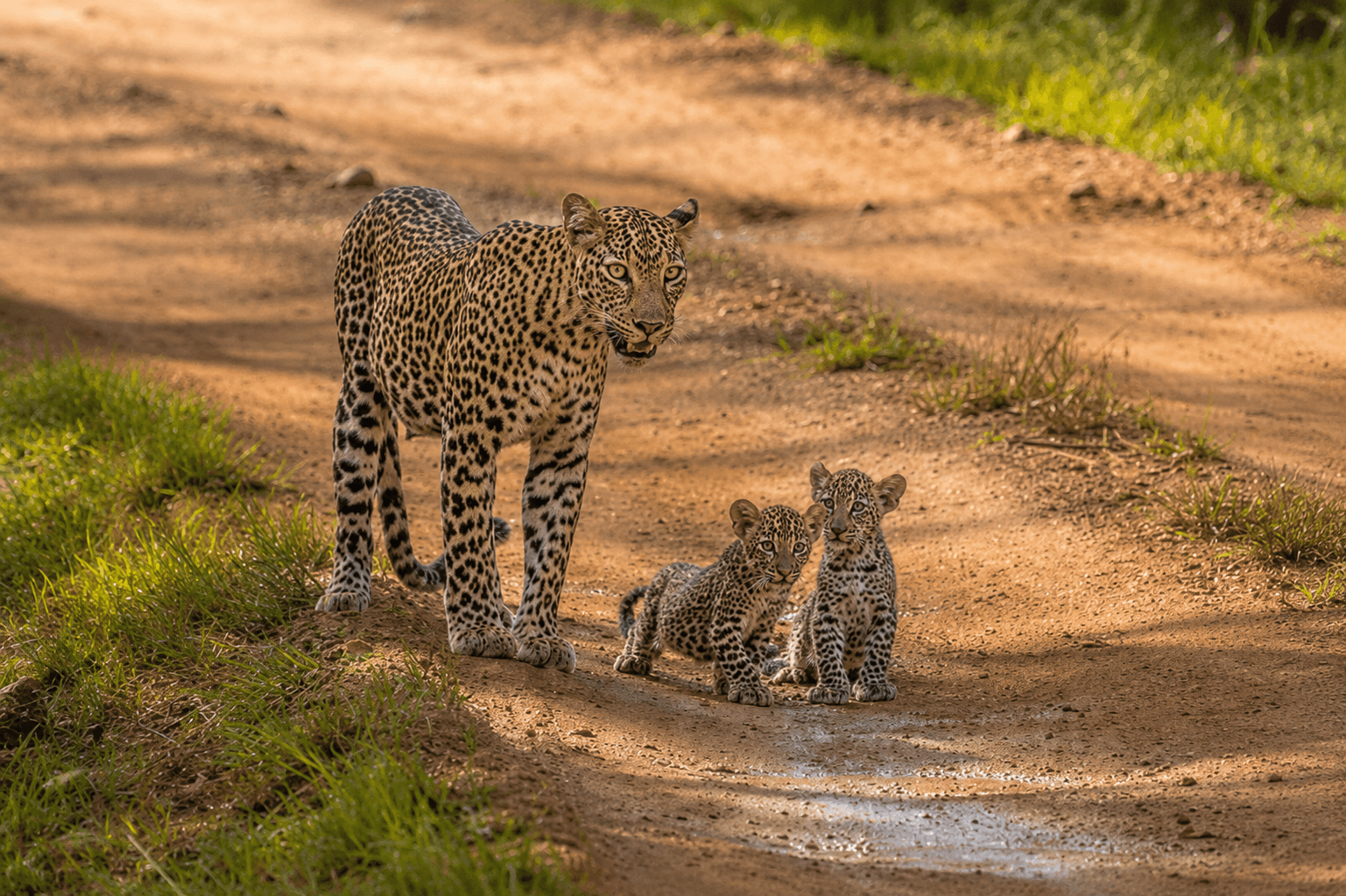
Yala National Park's habitats are dry thorn scrub, patches of dry monsoon forest, open plains, granite rock outcrops, freshwater tanks and waterholes, brackish coastal lagoons, and a long coast of dunes and beach. Each supports different wildlife: leopards rest on the rock outcrops, elephants and buffalo use the waterholes, wading birds crowd the lagoons and sea turtles nest on the beaches. The mix, packed into Block I, is why a three-hour drive can show so much.
Key takeaways
- Thorn scrub covers much of Yala, and its low, dense growth is why most sightings happen on or beside the tracks and at clearings.
- Granite rock outcrops are leopard landmarks in Yala, used as lookouts, resting places and shade in the heat of the day.
- Yala's waterholes and ancient tanks become the centre of the park's life from roughly June, as the dry season shrinks them.
- Brackish lagoons near Yala's coast hold painted storks, spoonbills, flamingos in some seasons and saltwater crocodiles.
- Yala's beaches and dunes are part of the park, and sea turtles nest on them, though visitors see them only at designated stops.
Why Yala's mix of habitats matters
Yala National Park sits in Sri Lanka's dry zone, where most rain falls in a few months around the north-east monsoon and the rest of the year is hot and dry. That climate produces a patchwork rather than a single forest, and each patch suits different animals.
Block I in particular packs scrub, plains, rock, fresh water, salt water and coast into a small area. A three-hour drive crosses several of them, which is why Yala can show leopards, elephants, crocodiles and dozens of bird species in a single morning.
Thorn scrub and dry forest
Thorn scrub is Yala's most common habitat: dense, low, grey-green growth with scattered taller trees, much of it thorny. It is hard to see into, which is why most sightings happen on the track itself or at the edge of a clearing. Leopards, sloth bears and deer all move through it unseen for much of the day.
Patches of taller dry monsoon forest grow along watercourses and in the less visited blocks, especially Block III. Palu trees, whose fruit draws sloth bears from roughly May to July, are among the species to ask your tracker about.
- →Thorn scrub: dense and low; look for animals on the track edges.
- →Dry monsoon forest: taller, along rivers and in the northern blocks.
- →Palu trees: their fruit draws sloth bears from roughly May to July.
Rock outcrops and open plains
Granite outcrops rise out of Yala's scrub like islands, some low and smooth, others tall enough to be landmarks. Leopards use them as lookouts in the cool of the morning and as shaded resting places in the heat, and the most photographed sightings in the park are of cats draped over a rock.
Open plains and grassy clearings, many of them old village or tank land, give the long views that make Yala easier to watch than most dry-zone parks. Spotted deer graze here in herds, and the plains are where elephants and wild buffalo are most often seen in the open.
- →Rock outcrops: scan the tops and shaded ledges for leopards.
- →Open plains: herds of spotted deer, buffalo and elephants.
- →Clearings: the best places for a driver to wait quietly.
Waterholes, tanks and lagoons
Fresh water decides where Yala's animals go. Some waterholes are natural, others are ancient tanks restored for wildlife, and as the dry season advances from about June they shrink into the centre of the park's life. Mugger crocodiles, buffalo, elephants and wading birds gather at them, and leopards come to drink.
Near the coast, brackish lagoons form where streams meet the sea. They hold painted storks, spoonbills and herons, flamingos in some seasons, and saltwater crocodiles. The light over the lagoons early in the morning is one of the reasons photographers favour the Palatupana side of Block I.
The beach and dunes
Yala's southern edge is a long, empty coast of dunes and beach facing the Indian Ocean. It is part of the park, used by elephants and jackals, and sea turtles nest on its sands. The 2004 tsunami came ashore here, and the memorial at Patanangala stands on a rocky headland above the beach.
Visitors see the coast only from the tracks and at designated stops such as Patanangala. Swimming is not allowed, and the sea here is rough, so treat it as a view rather than a beach.
Reading Yala's habitats from the jeep
Knowing the habitats helps you look in the right places. On a cool morning, scan rock tops for a resting cat; in the heat, look into shaded ledges and under trees. At waterholes, watch the edges rather than the water. On the plains, a herd of deer staring in one direction is worth a pause.
Lankan Stays & Trails asks drivers to explain the habitat they are working in as they go, so you understand why the jeep stops where it does. It turns a drive into a lesson in reading a landscape.
- →Morning: rock tops and open tracks.
- →Midday: shade, ledges and the undersides of trees.
- →All day: waterhole edges and alarm calls from deer and langurs.
Frequently asked questions
What kind of landscape is Yala National Park?
Yala is dry-zone country: mostly thorn scrub with patches of dry monsoon forest, broken by open plains, granite rock outcrops, waterholes and ancient tanks, brackish lagoons near the coast and a long stretch of dunes and beach along the Indian Ocean.
Why do leopards sit on rocks in Yala?
Leopards in Yala use rock outcrops as lookouts, resting places and shade. In the cool of the morning a rock top gives a view over the scrub; later, shaded ledges and crevices keep a cat cool. That habit is why many of the best sightings are of leopards on rocks.
Is there a beach in Yala National Park?
Yes. Yala's southern boundary is a long coast of beach and dunes facing the Indian Ocean. Visitors see it from the tracks and at designated stops such as Patanangala. Swimming is not allowed and the sea is rough, so it is a view, not a bathing beach.
Are there lakes in Yala?
Yala has many waterholes and ancient tanks, some restored for wildlife, plus brackish lagoons near the coast. They are not large lakes, but they are the centre of the park's life in the dry season, drawing elephants, buffalo, crocodiles, wading birds and leopards.
What trees grow in Yala?
Yala's scrub is a mix of thorny shrubs and scattered trees, with taller dry monsoon forest along watercourses. Palu, weera and satinwood are among the trees your tracker may name. Palu fruit, ripening from roughly May to July, draws sloth bears into the open.
Is Yala green or dry?
Both, depending on the month. After the rains of roughly October to January, Yala is green and the waterholes full. By roughly July and August it is dry and dusty, the grass is brown and animals gather at the remaining water, which makes them easier to see.