
Quick answer
Anuradhapura has four museums worth knowing: the Archaeological Museum, with statues, carvings and models that explain the whole sacred city; the Abhayagiri museum, with finds from the northern monastery and links to the Chinese pilgrim Faxian; the Jetavana museum, with jewellery, beads and trade goods; and the Folk Museum, showing rural life. First-time visitors usually choose one or two, ideally at midday between morning and afternoon visits to the ruins. Opening days vary, so confirm locally.
Key takeaways
- Anuradhapura's Archaeological Museum is the best single introduction to the sacred city, with statues, carvings and models.
- The Abhayagiri museum displays finds from the northern monastery and honours the 5th-century visit of the Chinese pilgrim Faxian.
- The Jetavana museum shows beads, gems, gold and trade goods that reveal Anuradhapura's links across the Indian Ocean.
- The Anuradhapura Folk Museum displays tools, pottery and household objects from traditional dry-zone village life.
- Museums are the best midday stops in Anuradhapura, when open stupa terraces are too hot for bare feet.
Why visit the museums
Anuradhapura's museums turn a field of ruins into a city. The sacred city covers a wide area, and much of what was found there, from jewellery to statues, is displayed indoors. Seeing these objects helps first-time visitors imagine the monasteries full of monks, the streets busy with traders and the kings' wealth.
The museums also solve a practical problem. From about 11am to 3.30pm, the open stupa terraces are hot and the light is harsh. A museum visit fills that gap usefully, in shade and often with fans or air conditioning.
Most first-time visitors choose one or two museums rather than all four. The Archaeological Museum gives the broadest overview, while the Abhayagiri and Jetavana museums go deeper into one monastery each.
- →Context: objects that explain the ruins.
- →Shade: a cool midday stop.
- →Choice: one or two museums are enough for most.
The Archaeological Museum
The Anuradhapura Archaeological Museum, housed in an old colonial building near the centre of the sacred city, is the best general introduction. It displays Buddha and Bodhisattva statues, carved guardstones and moonstones, inscriptions, coins and a model reconstructing a vatadage with its roof, which helps when visiting Thuparamaya.
Some exhibits surprise visitors, including elaborately carved urinal stones from the western forest monasteries, which some scholars read as a deliberate gesture of contempt by ascetic monks towards wealth. Others, such as reliquaries and small bronzes, show fine craftsmanship.
Allow 45 minutes to an hour. Photography rules vary, so check signs before using a camera inside.
- →Statues, guardstones and moonstones.
- →A vatadage model.
- →Inscriptions, coins and reliquaries.
- →Carved urinal stones from forest monasteries.
The Abhayagiri museum
The Abhayagiri museum, built with Chinese support and sometimes called the Fa-Hien museum, sits near the Abhayagiri stupa in northern Anuradhapura. It displays finds from the Abhayagiri monastery excavations: beads, pottery, coins, bronze figures and carved stonework.
The museum honours Faxian, the Chinese monk who stayed at Abhayagiri in the early 5th century and recorded around 5,000 monks. It suits visitors spending the afternoon in the northern sacred city, before the Samadhi Buddha and Kuttam Pokuna.
- →Finds from the Abhayagiri excavations.
- →Bronze Buddha and Bodhisattva figures.
- →Links to Faxian and China.
The Jetavana museum
The Jetavana museum, near Jetavanaramaya in the east of the sacred city, displays finds from the Jetavana monastery. Highlights include gold jewellery, gems, beads and seals, some traded from as far as the Mediterranean, India and the Middle East.
The collection shows Anuradhapura as a wealthy, connected capital on Indian Ocean trade routes. It is small and quick to visit, and pairs naturally with an early morning at Jetavanaramaya.
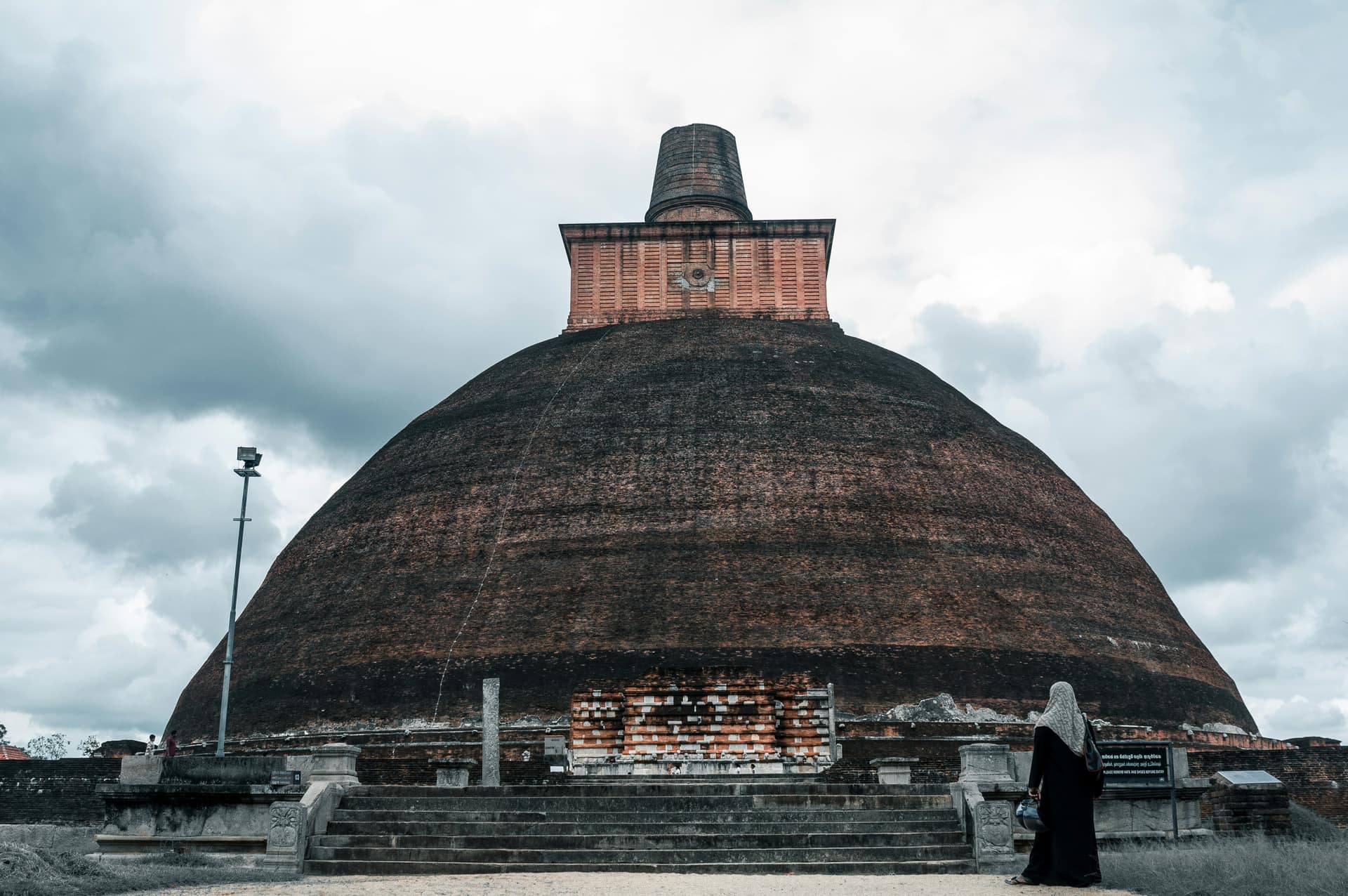
Lankan Stays & Trails guides often use the Jetavana museum as a cool break before continuing to Ruwanwelisaya and the Sri Maha Bodhi.
- →Gold jewellery and gems.
- →Beads and seals from distant trade.
- →Pairs with Jetavanaramaya.
The Folk Museum
The Anuradhapura Folk Museum displays objects from traditional village life in the dry zone: farming tools, pottery, brassware, baskets and household items. It is a contrast to the monumental ruins and shows how ordinary people lived around the tanks and paddy fields.
It is the least visited of Anuradhapura's museums and quick to see. It suits travellers interested in rural culture, or families who want a short, varied stop.
Planning your museum visits
Plan Anuradhapura museum visits for the middle of the day. A typical first-time day starts at Jetavanaramaya or Ruwanwelisaya at 7am, moves to the Archaeological or Jetavana museum around 11am, breaks for lunch, then continues to Abhayagiri after 3.30pm.
Museum opening days and hours vary, and some close one day a week or on public holidays. Ask your hotel or guide the day before. Whether entry is covered by the sacred city ticket also varies by museum, so confirm locally.
- →Visit between about 11am and 3pm.
- →Check closing days in advance.
- →Confirm whether your ticket covers entry.
- →Allow 30 minutes to an hour each.
Frequently asked questions
What is the best museum in Anuradhapura?
The Archaeological Museum is the best general introduction, with statues, carvings, coins and a vatadage model explaining the sacred city. The Abhayagiri and Jetavana museums are excellent if you are spending time at those monasteries. Most visitors choose one or two.
Are Anuradhapura museums included in the ticket?
Arrangements vary by museum and change over time. Some are covered by the sacred city ticket, others may charge separately or need the ticket shown. Confirm at the ticket office or with your guide before you go.
When are Anuradhapura museums open?
Generally during the day, roughly from morning to late afternoon, but opening days vary and some close one day a week or on public holidays. Ask your hotel or guide the day before your visit.
How long do you need at the Anuradhapura Archaeological Museum?
Forty-five minutes to an hour is enough for most visitors. It covers statues, carvings, inscriptions and models. Visit around midday, between morning and afternoon sessions at the open sites. Pair it with a long lunch nearby.
What is in the Jetavana museum?
Finds from the Jetavana monastery, including gold jewellery, gems, beads, seals and items traded from across the Indian Ocean world. It is small, quick to visit and pairs well with Jetavanaramaya stupa nearby.
Can I take photos in Anuradhapura museums?
Rules vary. Some museums ban photography inside, others allow it without flash. Check signs at the entrance and ask staff. Never photograph exhibits with your back to a Buddha image.
Are the museums good for children?
Yes, in short doses. The Folk Museum's tools and pottery and the Archaeological Museum's statues and models interest many children. Combine a museum with a bicycle ride and a swim to keep the day varied.